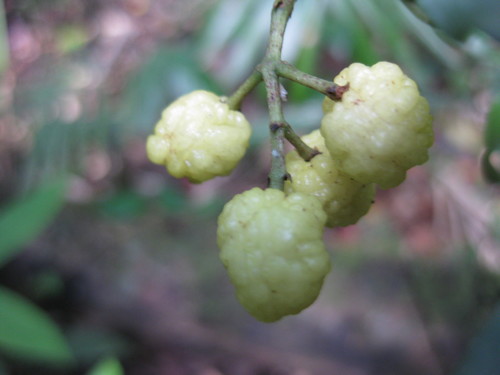
Flindersia maculosa
(Lindl.) Benth.
Leopardwood tree

(c) Kym Nicolson, some rights reserved (CC BY), uploaded by Kym Nicolson
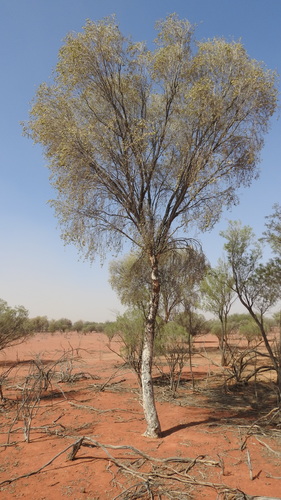
(c) Bruce McLennan, some rights reserved (CC BY-NC), uploaded by Bruce McLennan
What to Eat
Edible parts: Gum
A clear, amber gum exudes freely from damaged areas of the trunk. Eaten raw, it has a very pleasant taste.
Where to Find It
It is a subtropical plant. It grows in sandy plains and rocky areas.
Australia*,
How to Identify
A tree. It grows 15 m tall. The bark is mottled. The leaves are dark green above and dull and lighter green underneath. The fruit is woody and 3 cm long. It splits into separate sections.
How to Grow
A tree of arid and semi-arid regions, found mainly in subtropical areas but just extending into the tropics. It can grow in areas with an annual average rainfall of less than 250 mm.
Medicinal Uses
Leopardwood is a useful fodder tree in drought periods but as the tree does not recuperate well, it should only be pollarded. The wood of the tree is sometimes used to construct fence posts and pick handles. Nectar from the buds and gum from the bark have been used to make a sweet drink. The drink from the gum has been used as a remedy for diarrhea.
Other Uses
A clear, amber gum exudes freely from damaged areas of the trunk. It contains 80% arabin. It dissolves completely in water, forming a good quality adhesive mucilage. The bright yellow wood is exceedingly tough, very elastic. It is used for shingles, staves of tallow casks, pick handles, the poles and shafts of drays, buggies, etc. In the rough state (with the bark on) it is used for fencing, but it is useless for building purposes, as a coleopterous insect soon destroys it. About Wilcannia, N.S.W., it is, however, considered very durable by some, when sawn and used for inside work. We do not have any more information on the wood of this species. However, the following is a general description of the wood from species in this genus:- The heartwood is brownish-pink, darkening upon exposure to a medium brown shade; it is demarcated from the narrow band of grayish sapwood. The texture is medium; the grain often interlocked, sometimes wavy or curly, producing a wide range of figure; the lustre is silky; the wood is slightly scented when freshly cut. The heartwood is rated as not durable. The wood seasons satisfactorily, with some tendency to warp and collapse. It works well in most hand and machine operations; torn grain is common when planing quartered surfaces; it takes a good finish; nails and glues well. The wood is used for purposes such as fine furniture and cabinetwork, decorative veneers, interior joinery, paneling, musical instruments, rifle stocks.
Wikipedia
Source ↗Flindersia maculosa, commonly known as leopardwood or leopard tree, is a species of tree in the family Rutaceae and is endemic to inland areas of eastern Australia. It has mottled bark, simple leaves arranged in opposite pairs, white to cream-coloured flowers and fruit studded with rough points.
Names & Synonyms
Bagala
References (5)
- Hunter, J. T. et al, Budjiti traditional use of plants on Naree Station. p 7
- Hunter, J., 2012, Vegetation and Floristics of Gilwarny and Wingadee Nature Reserves. A Report to the New South Wales National Parks and Wildlife Service p 117
- Hunter, J., 2015, Vegetation and flora of Naree and Yantabulla. A Draft Report to the Bush Heritage Australia
- Hunter, J.T., 2017, Is there a relationship between contemporary high Aboriginal plant resource locations and mapped vegetation communities? Cunninghamia 17:27-34. The Royal Botanic Garden Sydney. ISSN 2200 - 405X
- McKerney, M. & White, H., 2011, Bush Tucker, Boomerangs & Bandages. Border River-Gwyder Catchment Management Authority p 75