Melaleuca bracteata
F. Muell.
Black tea-tree, Honey myrtle
(c) Reiner Richter, some rights reserved (CC BY-NC-SA), uploaded by Reiner Richter

(c) Sue Jaggar, some rights reserved (CC BY-NC), uploaded by Sue Jaggar
(c) Dubravka Skalamera, some rights reserved (CC BY-NC), uploaded by Dubravka Skalamera
What to Eat
Edible parts: Flower nectar
No edible uses are known for this plant.
Where to Find It
It is a subtropical plant.
Asia, Australia*, Indonesia, SE Asia,
How to Identify
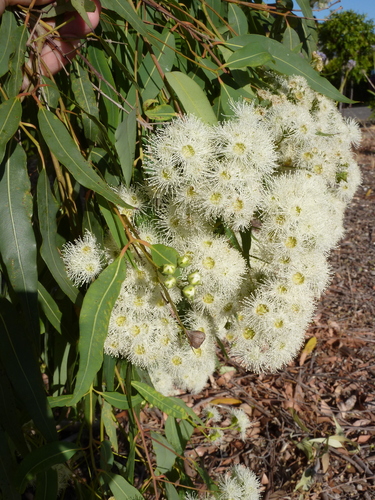
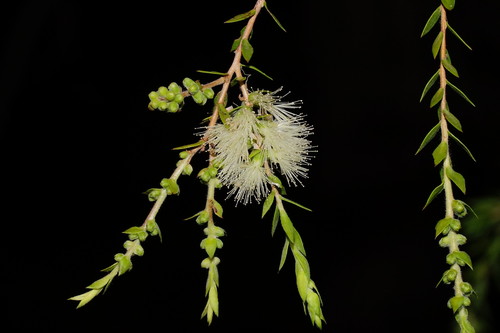
A shrub or small tree. It grows 15 m tall. The crown is dense. The leaves are twisted and 2 cm long. The flowers are white or cream. They are in cylinder shaped spikes. The fruit are round and 2-3 mm across.
How to Grow
We do not have much information on this species and do not know if it will be hardy in Britain. If it does succeed outdoors then it is only likely to do so in the very mildest parts of the country. It tolerates temperatures down to at least -7°c in Australian gardens but this cannot be translated directly to British gardens because of our cooler summers and longer colder and wetter winters. Requires a fertile, well-drained moisture retentive lime-free soil in full sun. Prefers a soil that does not contain much nitrogen. Plants succeed in wet soils when they are grown in Australian gardens. Seed takes about 12 months to develop on the plant, the woody seed capsules persist for 3 or more years. Any pruning is best done after the plants have flowered with the intention of maintaining a compact habit. Hybridizes freely with other members of this genus. Plants in this genus are notably resistant to honey fungus.
Propagation: Surface sow seed in spring or autumn onto a pot of permanently moist soil in a warm greenhouse, submerging the pot in 5cm of water; do not water from overhead. Grow on until seedlings reach 0.5cm tall, then remove from the water and pot up a week later. Seedlings are prone to damping off under these conditions, so sow thinly and maintain good ventilation and hygiene. Grow plants on for at least their first winter in a greenhouse, then plant out in late spring or early summer after the last expected frosts, with consideration given to protecting them from cold during their first few winters outdoors. Alternatively, take half-ripe lateral shoot cuttings with a heel in July/August in a frame.
Medicinal Uses
An essential oil obtained from the fresh leaves and twigs is antiseptic.
Other Uses
An essential oil from the leaves is germicidal and is used in insecticides to increase their potency. The oil is heavier than water.
Wikipedia
Source ↗Melaleuca bracteata, commonly known as the black tea-tree, river tea-tree or mock olive is a plant in the myrtle family, Myrtaceae and is endemic to northern Australia. It usually occurs as a large shrub but under ideal conditions can grow into a tree up to 10 m (30 ft) tall. It is an adaptable species in cultivation and a number of cultivars have been developed.
Names & Synonyms
Mock olive, Nguu, Pohon teh-tehan itam, River tea olive
References (3)
- Cancilla, D., 2018, Ethnobotanical and Ethnozoological Values Desktop Assessment - Eliwana Project. p 13
- McKerney, M. & White, H., 2011, Bush Tucker, Boomerangs & Bandages. Border River-Gwyder Catchment Management Authority p 91
- Sukarya, D. G., (Ed.) 2013, 3,500 Plant Species of the Botanic Gardens of Indonesia. LIPI p 389