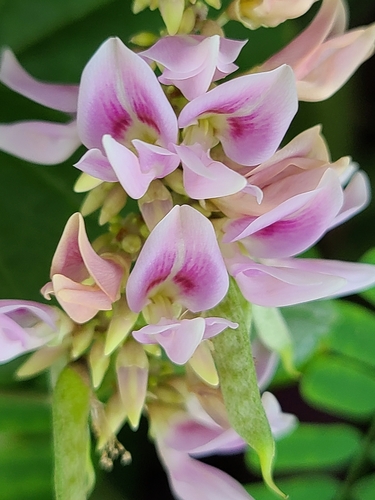
Cajanus crassus
(Prain ex King) Maesen
Thick stemmed cajanus
FabaceaeSeeds/Nuts

wikimedia · cc-by-sa
Wikimedia Commons - Dinesh Valke from Thane, India
Wikimedia Commons - Dinesh Valke from Thane, India

wikimedia · cc-by-sa
Wikimedia Commons - Dinesh Valke from Thane, India
Wikimedia Commons - Dinesh Valke from Thane, India
What to Eat
Edible parts: Seeds
The seeds are eaten.
Where to Find It
It is a tropical plant.
Andaman Is., Asia, Bangladesh, China, Himalayas, India, Indonesia, Laos, Malaysia, Myanmar, Nepal, New Guinea, Northeastern India, Pakistan, Philippines, Thailand, Vietnam,
Countries: United Arab Emirates, Afghanistan, Armenia, Azerbaijan, Bangladesh, Bahrain, Brunei, Bhutan, China, Georgia, Indonesia, Israel, India, Iraq, Iran, Jordan, Japan, Kyrgyzstan, Cambodia, North Korea, South Korea, Kuwait, Kazakhstan, Laos, Lebanon, Sri Lanka, Myanmar, Mongolia, Maldives, Malaysia, Nepal, Oman, Philippines, Pakistan, Qatar, Saudi Arabia, Singapore, Syria, Thailand, Tajikistan, Timor-Leste, Turkmenistan, Turkey, Taiwan, Uzbekistan, Vietnam, Yemen
How to Identify
A climbing shrub. It has a thick stem and keeps growing from year to year. The leaves have 3 leaflets. The flowers are like pea flowers and are yellow.
Names & Synonyms
Jangli baler, Van moong
Atylosia crassa KingAtylosia crassa PrainAtylosia volubilis (Blanco) GambleCajanus crassus var. burmanicus (Collett & Hemsl.) Maesenand others
References (3)
- Dobriyal, M. J. R. & Dobriyal, R., 2014, Non Wood Forest Produce an Option for Ethnic Food and Nutritional Security in India. Int. J. of Usuf. Mngt. 15(1):17-37 (As Atylosia volubilis)
- Kew Plants of the World On line
- Pandy, R. K. & Saini, S. K., 2007, Edible plants of tropical forests among tribal communities of Madhya Pradesh. Indian Journal of Traditional Knowledge. 6(1), pp 185-190 (As Atylosia volubilis)