Berberis liophylla
C. K. Schneid.

gbif · cc0
President and Fellows of Harvard College
President and Fellows of Harvard College

gbif · cc0
President and Fellows of Harvard College
President and Fellows of Harvard College

gbif · cc0
President and Fellows of Harvard College
President and Fellows of Harvard College
What to Eat
Edible parts: Fruit, Flower
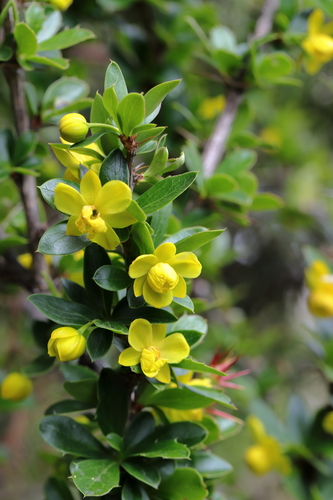
The flowers are eaten as a vegetable, and the fruit is also edible.
Where to Find It
It is a subtropical plant. It grows on the edges of forests and in thickets between 2,100-2,800 m above sea level. It grows in wetlands. It grows in Sichuan and Yunnan.
Asia, China,
Countries: United Arab Emirates, Afghanistan, Armenia, Azerbaijan, Bangladesh, Bahrain, Brunei, Bhutan, China, Georgia, Indonesia, Israel, India, Iraq, Iran, Jordan, Japan, Kyrgyzstan, Cambodia, North Korea, South Korea, Kuwait, Kazakhstan, Laos, Lebanon, Sri Lanka, Myanmar, Mongolia, Maldives, Malaysia, Nepal, Oman, Philippines, Pakistan, Qatar, Saudi Arabia, Singapore, Syria, Thailand, Tajikistan, Timor-Leste, Turkmenistan, Turkey, Taiwan, Uzbekistan, Vietnam, Yemen
How to Identify
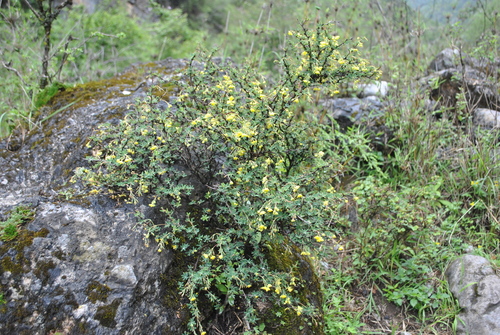
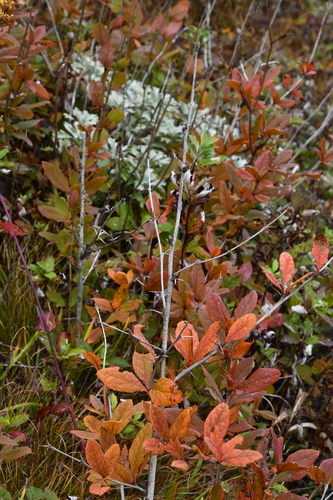
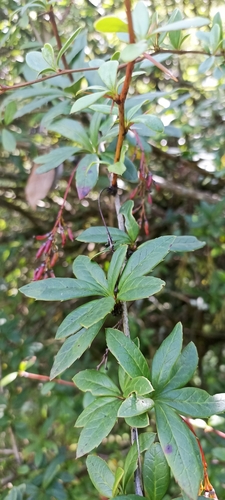
A shrub. It keeps its leaves throughout the year. It grows 1-2 m tall. It has spines. The leaves are 3-6 cm long by 1-2 cm wide. They are brownish yellow underneath. There are spiny teeth along the edge. The flowers are in groups of 2-10. The fruit are oval berries 7-8 mm long by 3-4 mm wide.
References (2)
- Zhang, L. et al, 2013, An Ethnobotanical Study of Traditional Edible Plants Used by Naxi People in Northwestern Yunnan, China. - A Case Study in Wenhai Village. Plant Diversity and Resources. p 484
- Zhang, L., et al, 2016, Ethnobotanical study of traditional edible plants used by the Naxi people during droughts. Journal of Ethnobiology and Ethnomedicine. 12:39