Polygonatum acuminatifolium
Kom.
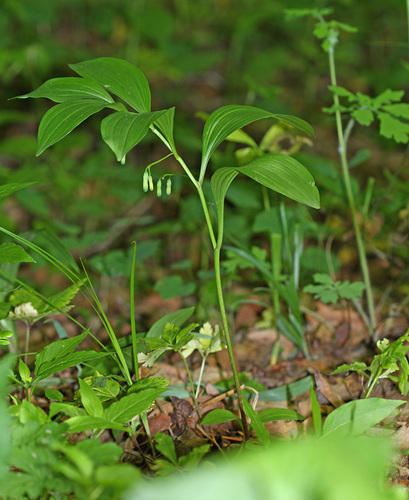
(c) V.S. Volkotrub, some rights reserved (CC BY-NC), uploaded by V.S. Volkotrub
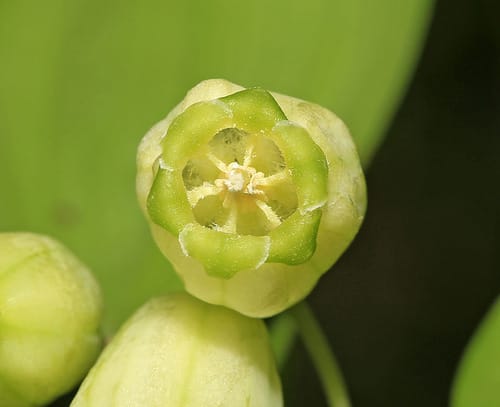
(c) V.S. Volkotrub, some rights reserved (CC BY-NC)
What to Eat
Edible parts: Root, Shoot
The roots or rhizome are steamed or roasted and eaten as a snack. The shoots are eaten raw in salads, pickled, cooked in soups, or fried.
Known Hazards
Where to Find It
It is a temperate plant. It grows in forests in north China between 1,100-1,400 m above sea level.
Asia, China, Korea, Russia,
How to Identify
A herb. It has a rhizome 4 mm thick. The stem is erect and 20-30 cm tall. There are 4-5 leaves. They are alternate. The leaves are oval and 5-9 cm long by 2-4 cm wide. There are 2 flowers on a flowering stalk. The flowers hang down.
Medicinal Uses
The berries may be poisonous to humans. The traditional use of Polygonatum in the treatment of diabetes was first observed in 1930 by Hedwig Langecker. After experiments, she concluded that it was effective in fighting nutritional hyperglycemia, though not that caused by adrenaline release, probably due to its glucokinin content. P. verticillatum is used in Ayurveda as an aphrodisiac. It is also used to treat pain, fever, inflammation, allergy, and weakness. An herbal remedy called rhizoma polygonati is a mix of Polygonatum species used in traditional Chinese medicine, where it is called huangjing or huangqing (simplified Chinese: 黄精; traditional Chinese: 黃精; pinyin: huángjīng). It is supposed to strengthen various organs and enhance the qi. Polygonatum is believed to be restorative to mental vitality, especially when the mind has been overworked, overstressed, or is in a state of exhaustion. P. cyrtonema is a compound that is often used in Traditional Chinese Theory as a treatment for depression, which is thought to originate from problems in the liver and the kidney. Post Traumatic Stress Disorder, which is considered by TCT to be a form of depression is also sometimes treated with P. cyrtonema. There is some evidence that P. cyrtonema can inhibit Post Traumatic Stress by regulating oxidative stress and inflammation associated with the NLRP3 gene.
References (1)
- Wujisguleng, W., et al, 2012, Ethnobotanical review of food uses of Polygonatum (Convallariaceae) in China. Acta Societatis Botanicorum Poloniae 81(4):239-244