Polygonatum filipes
Merr.
AsparagaceaeRoots
iNaturalist · cc-by-nc
(c) 江国彬, some rights reserved (CC BY-NC), uploaded by 江国彬
(c) 江国彬, some rights reserved (CC BY-NC), uploaded by 江国彬

iNaturalist · cc-by-nc
(c) MP Zhou, some rights reserved (CC BY-NC)
(c) MP Zhou, some rights reserved (CC BY-NC)

iNaturalist · cc-by-nc
(c) MP Zhou, some rights reserved (CC BY-NC)
(c) MP Zhou, some rights reserved (CC BY-NC)
What to Eat
Edible parts: Rhizome, Sprout
The rhizome is steamed, roasted as a snack, or cooked as a vegetable. The shoots and sprouts are also cooked and eaten as a vegetable.
Where to Find It
It is a temperate plant. It grows in forests and thickets and grassy slopes between 200-600 m above sea level.
Asia, China,
Countries: United Arab Emirates, Afghanistan, Armenia, Azerbaijan, Bangladesh, Bahrain, Brunei, Bhutan, China, Georgia, Indonesia, Israel, India, Iraq, Iran, Jordan, Japan, Kyrgyzstan, Cambodia, North Korea, South Korea, Kuwait, Kazakhstan, Laos, Lebanon, Sri Lanka, Myanmar, Mongolia, Maldives, Malaysia, Nepal, Oman, Philippines, Pakistan, Qatar, Saudi Arabia, Singapore, Syria, Thailand, Tajikistan, Timor-Leste, Turkmenistan, Turkey, Taiwan, Uzbekistan, Vietnam, Yemen
How to Identify
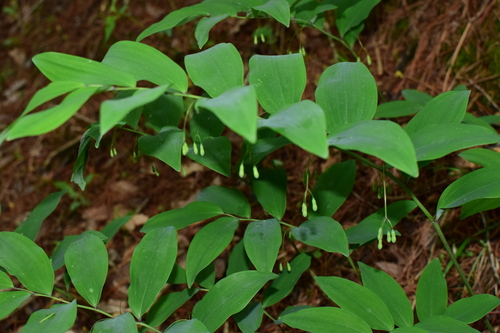
A herb. The rhizome is 1.5 cm thick. The stems are erect and 30-70 cm tall. The leaves are alternate. The leaves are narrowly oval and 6012 cm long by 3-7 cm wide. The flowers are hanging. They are yellowish green.
References (1)
- Wujisguleng, W., et al, 2012, Ethnobotanical review of food uses of Polygonatum (Convallariaceae) in China. Acta Societatis Botanicorum Poloniae 81(4):239-244