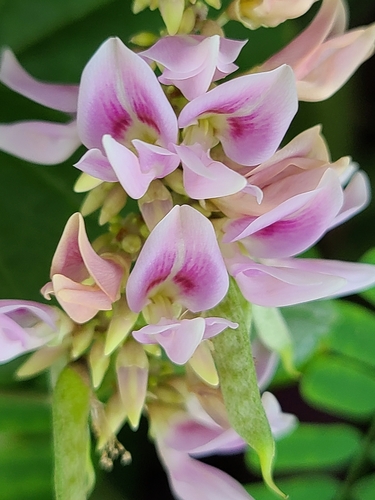
Lathyrus pratensis
L.
(c) ocanire, some rights reserved (CC BY-NC), uploaded by ocanire
(c) Jerry Lanfear, some rights reserved (CC BY), uploaded by Jerry Lanfear
(c) Zdeňka Nováková, some rights reserved (CC BY-NC), uploaded by Zdeňka Nováková
What to Eat
Edible parts: Seeds, shoots, Leaves
None known
Known Hazards
Where to Find It
It is a temperate plant.
Armenia, Asia, Britain, Caucasus, Central Asia, Europe, Ireland, Luxembourg, Mongolia, Nepal, Pakistan, Tajikistan,
How to Identify
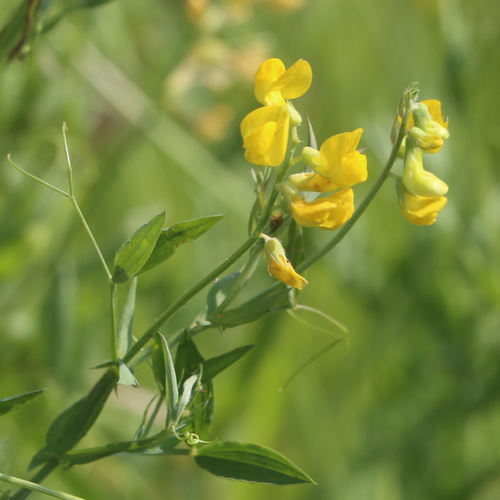
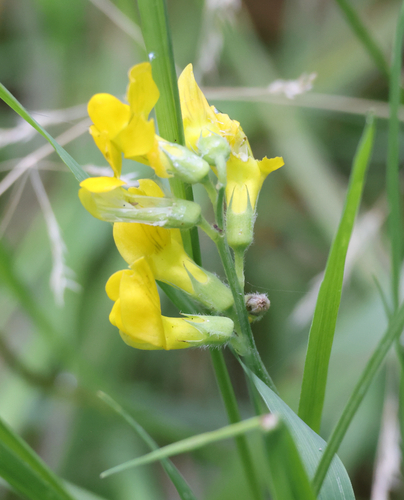
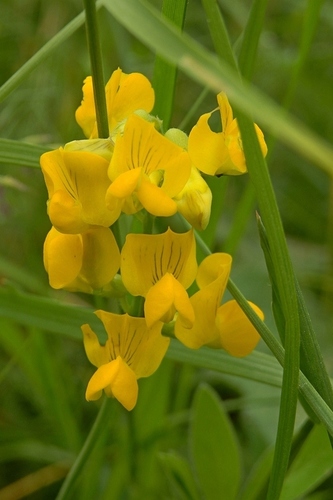
A herb. It keeps growing from year to year. It is a scrambling plant and forms dense masses. The leaves have long stalks and 2 grey-green sword shaped leaflets. These are 1-2.5 cm long and have tendrils. The flowers are yellow. There are 5-12 in a group on long stalks. The pods are 3-4 cm long.
How to Grow
An easily grown plant, succeeding in any moderately good garden soil but preferring a position in full sun. Succeeds on wet soils. This species has a symbiotic relationship with certain soil bacteria, these bacteria form nodules on the roots and fix atmospheric nitrogen. Some of this nitrogen is utilized by the growing plant but some can also be used by other plants growing nearby.
Propagation: Pre-soak seed for 24 hours in warm water, then sow in early spring in a cold frame. Prick seedlings out into individual pots once large enough to handle and plant out in summer. With sufficient seed, sow in situ in mid spring. Divide in spring, taking care as the plant may not transplant well.
Medicinal Uses
The seeds are used as a resolvent in Spain.
Other Uses
The plant is said to repel mice.
Wikipedia
Source ↗Lathyrus pratensis or meadow vetchling, yellow pea, meadow pea and meadow pea-vine, is a perennial legume that grows to 1.2 m in height. The hermaphrodite flowers are pollinated by bees. As a perennial, this plant reproduces itself over many years, spreading out from the point it was introduced, especially in damp grassy areas. This plant has been propagated in the past as animal fodder. Lathyrus pratensis is also a host plant for ovipositioning of the wood white butterfly (Leptidea sinapis).
Other Information
It is sold in local markets.
Names & Synonyms
Chilo, Tchpruk
References (4)
- Irving, M., 2009, The Forager Handbook, A Guide to the Edible Plants of Britain. Ebury Press p 234
- Jha, P. K., et al, 1996, Plant genetic resources of Nepal: A guide for plant breeders of agricultural, horticultural and forestry crops. Euphytica 87:189-210
- Nanagulyan, S., et al, 2020, Wild plants and fungi sold in the markets of Yerevan (Armenia). Journal of Ethnobiology and Ethnomedicine 16:26
- Urgamal, M., Oyuntsetseg, B., Nyambayar, D. & Dulamsuren, Ch. 2014. Conspectus of the vascular plants of Mongolia. (Editors: Sanchir, Ch. & Jamsran, Ts.). Ulaanbaatar, Mongolia. “Admon“ Press. 334pp. (p. 121-143).