Agave weberi
J. F. Cels ex J. Poiss.
Maguey liso

(c) The Ruth Bancroft Garden, some rights reserved (CC BY-NC)
(c) James Maughn, some rights reserved (CC BY-NC), uploaded by James Maughn
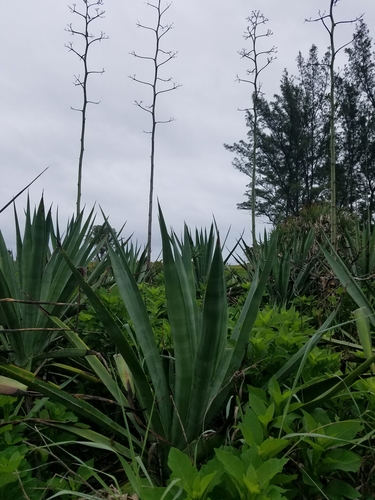
(c) jschipper, some rights reserved (CC BY-NC), uploaded by jschipper
What to Eat
Edible parts: Plant base
The plant base is eaten.
Where to Find It
It is a subtropical plant. It grows in sandy soils.
Mexico, North America, USA,
How to Identify
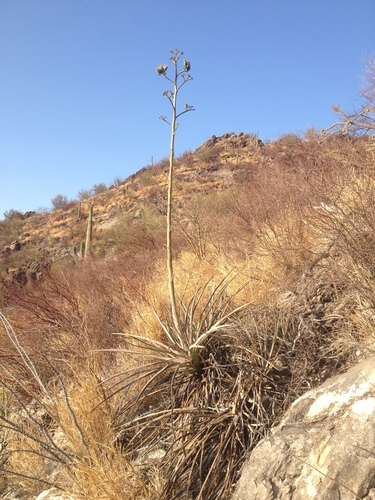
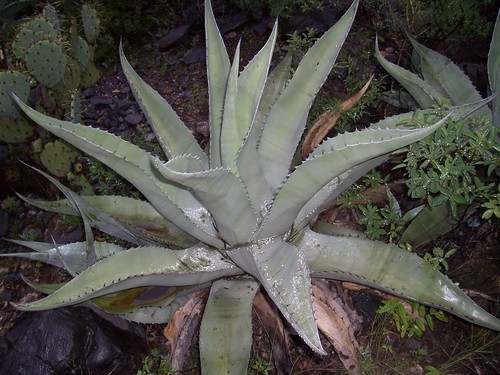
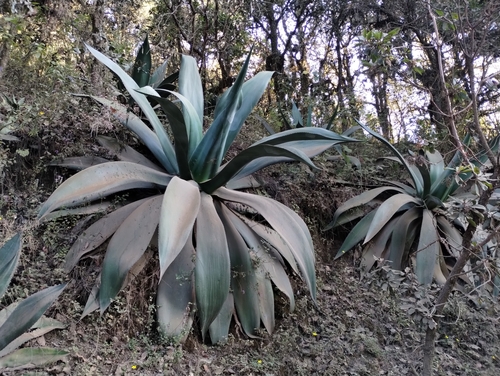
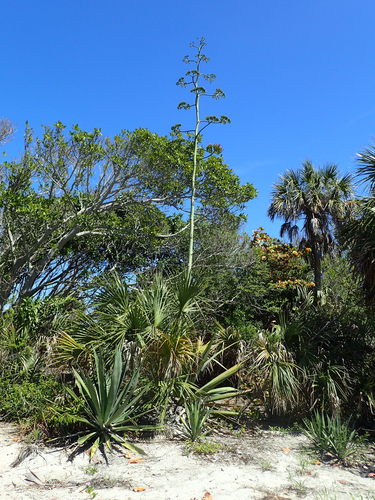
A succulent plant. It keeps growing from year to year. The trunk can be 1 m tall. The leaves can be 1.6 m tall. The flowering stalk can be 8 m tall. The flowers are yellow and 8 cm long.
Wikipedia
Source ↗Agave weberi, known as maguey liso in Spanish and as Weber's agave in English, is a succulent perennial plant in the family Asparagaceae, subfamily Agavoideae. Under the synonym Agave neglecta, it is known as wild century plant and Small's agave—the latter in honor of its discoverer in Florida, John Kunkel Small. Naturalized populations in Florida were considered to be a separate species but are now treated as synonymous with A. weberi.
Names & Synonyms
References (3)
- Kermath, B. M., et al, 2014, Food Plants in the Americas: A survey of the domesticated, cultivated and wild plants used for Human food in North, Central and South America and the Caribbean. On line draft. p 35
- Piedra-Malagón, E. M. et al, 2022, Edible native plants of the Gulf of Mexico Province. Biodiversity Data Journal 10: e80565 p 12
- World Checklist of Useful Plant Species 2020. Royal Botanic Gardens, Kew