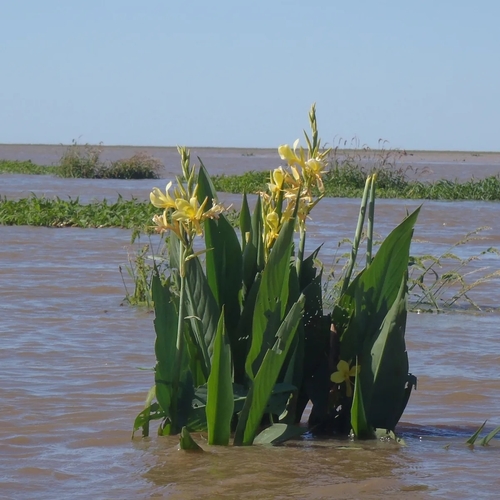
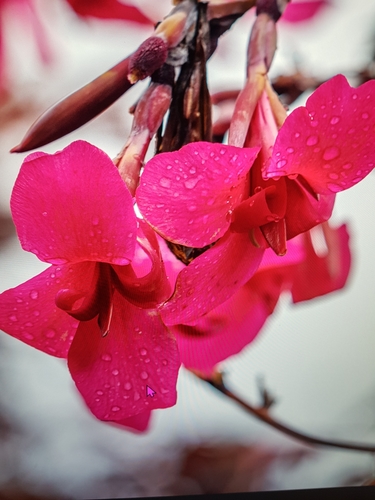
Canna flaccida
Salisb.
Golden canna
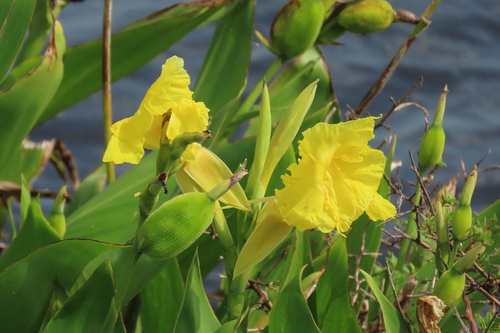
(c) obrock, some rights reserved (CC BY-NC), uploaded by obrock

(c) lillybyrd, some rights reserved (CC BY-NC), uploaded by lillybyrd
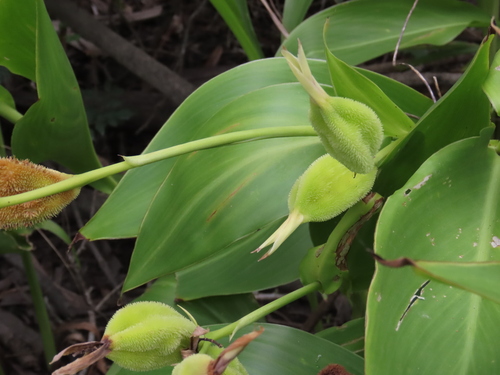
(c) Tom Austin, some rights reserved (CC BY-NC), uploaded by Tom Austin
What to Eat
Edible parts: Rhizome
An edible starch is extracted from the rhizome.
Where to Find It
It is a temperate plant.
Asia, Myanmar, North America, SE Asia, USA,
How to Identify
A temperate herb in the Cannaceae family that is grown for its rhizomes.
Wikipedia
Source ↗Canna flaccida, sometimes referred to as the bandanna of the Everglades, is a species of the Canna genus, a member of the family Cannaceae. The species is indigenous to the wetlands of the south-central and south-eastern United States from Texas to South Carolina. It is also reportedly naturalized in India, the Philippines, Mexico, Panama, Cuba, the Dominican Republic, Peru and southern Brazil. Canna flaccida was a parent to many of the early-hybridised cannas originally known as orchid flowered cannas, but now correctly named as Italian Group cannas. It grows well as a water canna. Originally described by the early American explorer, William Bartram, when he found these plants blooming near the rivers of coastal Georgia. The seed floats down the rivers and becomes easily established on shorelines. Introduced to England in 1788. Canna flaccida is a perennial growing to 1.5 m (4 ft 11 in). It is hardy to zone 10 and is frost tender. In the north latitudes it is in flower from August to October, and the seeds ripen in October. The flowers are hermaphrodite.
References (1)
- Kermath, B. M., et al, 2014, Food Plants in the Americas: A survey of the domesticated, cultivated and wild plants used for Human food in North, Central and South America and the Caribbean. On line draft. p 174