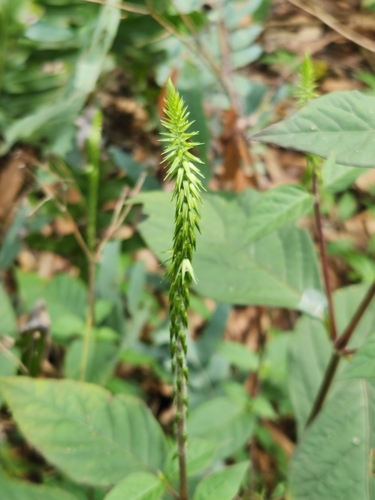
Chenopodium hircinum
Schrad.
Avian goosefoot

iNaturalist · cc-by-nc-sa
(с) Smithsonian Institution, National Museum of Natural History, Department of Botany, некоторые права защищены (CC BY-NC-SA)
(с) Smithsonian Institution, National Museum of Natural History, Department of Botany, некоторые права защищены (CC BY-NC-SA)
What to Eat
Edible parts: Leaves, Seeds
The leaves and seeds are eaten.
Where to Find It
It is a tropical plant.
Andes, Argentina, Brazil, Chile, Ecuador, Hawaii, Pacific, Paraguay, South America, Uruguay,
Countries: Argentina, Australia, Bolivia, Brazil, Chile, Colombia, Ecuador, Fiji, Micronesia, French Guiana, Guyana, Kiribati, Marshall Islands, Nauru, New Zealand, Peru, Papua New Guinea, Palau, Paraguay, Solomon Islands, Suriname, Tonga, Tuvalu, United States, Uruguay, Venezuela, Vanuatu, Samoa
How to Identify
An herb of the Amaranthaceae family, 30 cm to 2 m tall, found in tropical regions. It is the wild ancestor of quinoa.
Notes
It is the wild ancestor of quinoa.
Names & Synonyms
Chenopodium bonariense Ten.and others
References (2)
- Kermath, B. M., et al, 2014, Food Plants in the Americas: A survey of the domesticated, cultivated and wild plants used for Human food in North, Central and South America and the Caribbean. On line draft. p 216
- Leon-Lobos, P., et al, 2022, Patterns of Traditional and Modern Uses of Wild Edible Native Plants of Chile: Challenges and Future Perspectives. Plants (Basel) v 11 (6) Table S1