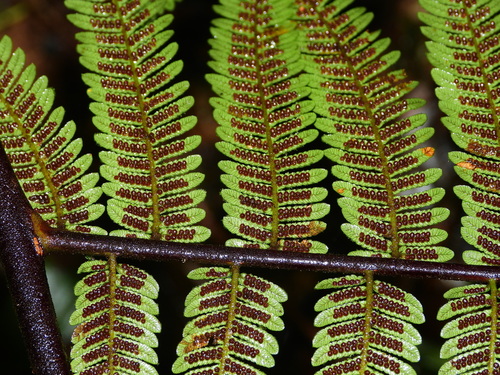
Cyathea microdonta
(Desv.) Domin

iNaturalist · cc-by
(c) Alex Popovkin, Bahia, Brazil from Brazil, some rights reserved (CC BY)
(c) Alex Popovkin, Bahia, Brazil from Brazil, some rights reserved (CC BY)

iNaturalist · cc-by
(c) Alex Popovkin, Bahia, Brazil from Brazil, some rights reserved (CC BY)
(c) Alex Popovkin, Bahia, Brazil from Brazil, some rights reserved (CC BY)

iNaturalist · cc-by
(c) Alex Popovkin, Bahia, Brazil from Brazil, some rights reserved (CC BY)
(c) Alex Popovkin, Bahia, Brazil from Brazil, some rights reserved (CC BY)
What to Eat
Edible parts: Pith starch
The pith starch is eaten.
Known Hazards
Where to Find It
It is a temperate plant.
Andes, Bolivia, Central America, Guianas, Mexico, South America, Venezuela,
How to Identify
A temperate tree fern with edible starch extracted from its pith. It serves as a famine food in its native region.
Other Information
It is a famine food.
Names & Synonyms
Tasi
Alsophila aculeata J. Sm.Alsophila ferox C. PreslAlsophila microdonta (Desv.) Desv.Alsophila rufa FeePolypodium microdontum Desv.Trichipteris microdonta (Desv.) R. M. Tryon
References (1)
- Kermath, B. M., et al, 2014, Food Plants in the Americas: A survey of the domesticated, cultivated and wild plants used for Human food in North, Central and South America and the Caribbean. On line draft. p 287