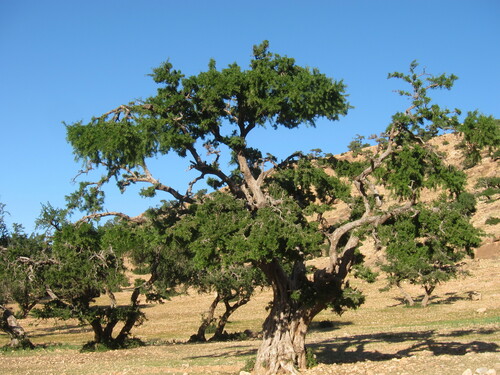
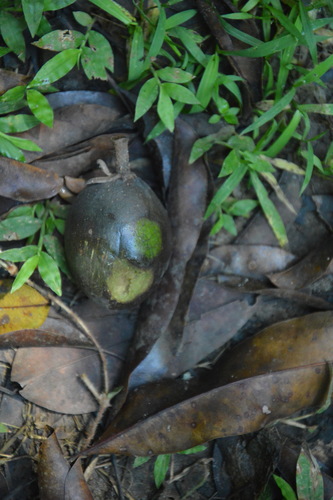
Ecclinusa ramiflora
Mart.
Guaca, Guaquapari
SapotaceaeFruit
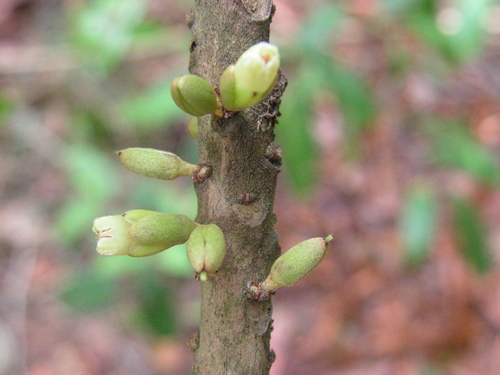
iNaturalist · cc-by-nc
(c) Tarciso Leão, some rights reserved (CC BY-NC), uploaded by Tarciso Leão
(c) Tarciso Leão, some rights reserved (CC BY-NC), uploaded by Tarciso Leão

iNaturalist · cc-by-nc
(c) Geovane Siqueira, some rights reserved (CC BY-NC)
(c) Geovane Siqueira, some rights reserved (CC BY-NC)

iNaturalist · cc-by-nc
(c) Geovane Siqueira, some rights reserved (CC BY-NC)
(c) Geovane Siqueira, some rights reserved (CC BY-NC)
What to Eat
Edible parts: Fruit
The fruit pulp is eaten.
Where to Find It
It is a tropical plant. It grows in Atlantic rainforest. It grows in low lying areas that are subject to flooding.
Amazon, Bolivia, Brazil, Colombia, French Guiana, Guianas, Peru, South America, Suriname, Venezuela,
How to Identify
A tree. It grows 10 m tall. The trunk is 8 cm across. It can be larger. It has white latex. The leaves are large. The fruit are round and 2.5 cm across. They are yellow when ripe. There is a thin edible pulp around the seeds.
Names & Synonyms
Abiu-fofo, Abiurana, Aca-preto, Balata barbacona, Balatilla, Barpeba preta, Coquirana braba grande, Doekali, Moregum negro
Chrysophyllum abbreviatum (Ducke) BaehniChrysophyllum ramiflorum (Mart.) A. DC.Ecclinusa abbreviata DuckeEcclinusia costata Pierreand others
References (6)
- Grandtner, M. M. & Chevrette, J., 2013, Dictionary of Trees, Volume 2: South America: Nomenclature, Taxonomy and Ecology. Academic Press p 214
- Kermath, B. M., et al, 2014, Food Plants in the Americas: A survey of the domesticated, cultivated and wild plants used for Human food in North, Central and South America and the Caribbean. On line draft. p 327
- NTBG herbarium "edible"
- Roa, J. A. G. & Boada, D. S. G., 2018, Fundación para el Fortalecimiento de la Fruticultura y Plantas Alimenticias no Convencionales en Colombia.
- Van Roosmalen, M.G.M., & Garcia, O. M., 2000, Fruits of the Amazonian Forest. Part 2: Sapotaceae. Acta Amazonica 30(2): 187-290
- www.colecionandofrutas.org