Opuntia matudae
Scheinvar
Sour prickly pear

(c) Pedro Nájera Quezada, some rights reserved (CC BY-NC), uploaded by Pedro Nájera Quezada
(c) Pedro Nájera Quezada, some rights reserved (CC BY-NC)
What to Eat
Edible parts: Fruit, Stems
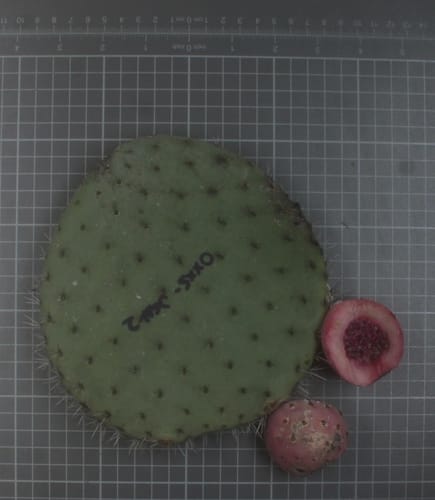
Fruit - raw or cooked. An acid flavour, it is mainly used as a spice and flavouring in cooking. The fruits are known as 'xoconostles' in Mexico, where they are valued for their more acid flavour and are often consumed, though more as a vegetable and flavouring than as a raw fruit. A common recipe is to slice and mix xoconostles with tomatoes, onions and hot peppers. Adding diced xoconostle to salsas gives them a special zesty acidic flavour, whilst they can also be used as a base for refreshing drinks. The tender young stem segments are often cooked as a vegetable. Known as ‘nopals’ in Mexico, where they are a common ingredient in numerous dishes, they can be eaten raw or cooked, used in marmalades, soups, stews and salads.
How to Identify
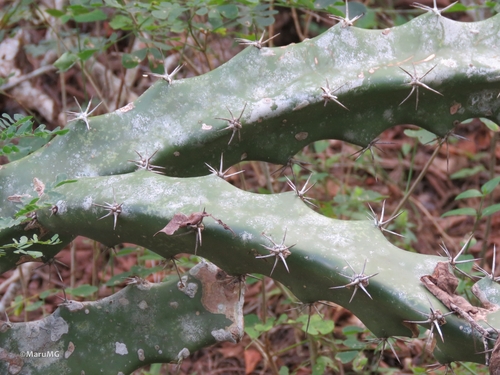
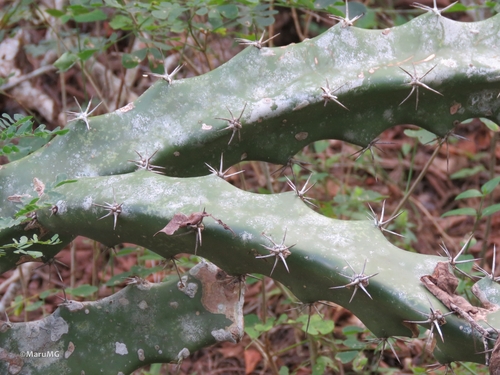
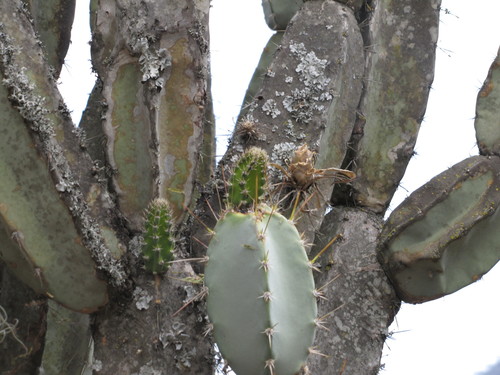
A cactus in the Cactaceae family found in subtropical regions. Both the fruits and stems are edible.
How to Grow
The mature fruit is persistent on the plant, it has been observed to remain on the cladodes for 12 months or more in edible condition
Medicinal Uses
Opuntia matudae is the most commercially important species of cactus referred to as 'xoconostle'. Opuntia joconostle is also referred to as 'xoconostle'. The cactus fruit is consumed as a traditional medicine and food in Mexico.
Wikipedia
Source ↗Opuntia matudae, or xoconostle, is a cactus native to Mexico. It is sometimes treated as a synonym of Opuntia hyptiacantha. In 2019, a genetic study supported keeping the taxa distinct.
Notes
It is an unresolved name in The Plant List.
Names & Synonyms
Cueron, Xoconostle
References (6)
- Cruz, I. M., et al, 2015, Edible fruits and seeds in the State of Mexico. Revista Mexicana de Ciencias Agricolas. Vol. 6. Num. 2 pp 331-346
- Gallegos-Vazquez, C., et al, 2012, Morphological diversity of xoconostles (Opuntia spp.) or acidic cactus pears: A Mexican contribution to functional foods. Fruits, Vol. 67, p. 109-220
- Hernandez-Fuentes, A. D., et al, 2015, Physicochemical variability and nutritional and functional characteristics of xoconostles (Opuntia spp.) accessions from Mexico. Fruits, Vol. 70(2), p. 109-116
- Kermath, B. M., et al, 2014, Food Plants in the Americas: A survey of the domesticated, cultivated and wild plants used for Human food in North, Central and South America and the Caribbean. On line draft. p 588
- Mapes, C. & Basurto, F., 2016, Biodiversity and Edible Plants of Mexico. Chapter 5 in R. Lira, et al. (eds.), Ethnobotany of Mexico, Ethnobiology, Springer. p 96
- Segura, S. et al, 2018, The edible fruit species in Mexico. Genet Resour Crop Evol (2018) 65:1767–1793