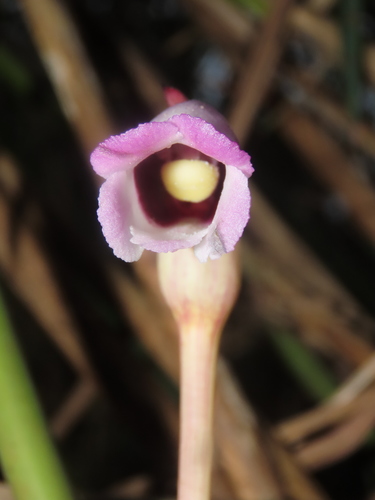
Aphyllon tuberosum
(A. Gray) A. Gray
Chaparral broomrape
OrobanchaceaeRoots

iNaturalist · cc-by
(c) Ken-ichi Ueda, some rights reserved (CC BY)
(c) Ken-ichi Ueda, some rights reserved (CC BY)

iNaturalist · cc-by-nc
(c) Remington Jackson, some rights reserved (CC BY-NC), uploaded by Remington Jackson
(c) Remington Jackson, some rights reserved (CC BY-NC), uploaded by Remington Jackson

iNaturalist · cc-by
(c) Ken-ichi Ueda, some rights reserved (CC BY)
(c) Ken-ichi Ueda, some rights reserved (CC BY)
What to Eat
Edible parts: Roots
The roots are edible.
Where to Find It
It is a temperate plant.
North America, USA,
Countries: Antigua & Barbuda, Barbados, Bahamas, Belize, Canada, Costa Rica, Cuba, Dominica, Dominican Republic, Grenada, Guatemala, Honduras, Haiti, Jamaica, St Kitts & Nevis, St Lucia, Mexico, Nicaragua, Panama, Puerto Rico, El Salvador, Trinidad & Tobago, United States, St Vincent
How to Identify
A herb that grows attached to other plants. It has a thick root. The base of the stem in fattened and twisted. It grows 30 cm tall. It lacks leaves. It is dark purple to black and has small white hairs. There are about 20 flowers in a tight group. The flowers are tube shaped. They are yellow to purple. The fruit is a capsule with small seeds.
Names & Synonyms
Myzorrhiza tuberosa (A. Gray) Rydb.Orobanche bulbosa BeckPhelipaea tuberosa A. Gray
References (1)
- Kermath, B. M., et al, 2014, Food Plants in the Americas: A survey of the domesticated, cultivated and wild plants used for Human food in North, Central and South America and the Caribbean. On line draft. p 591 (As Orobanche bulbosa)