Caution — Parts of this plant may be toxic or require specific preparation. Verify with multiple sources before consuming.
iNaturalist · cc-by-nc-sa (c) Mary Keim, some rights reserved (CC BY-NC-SA)
iNaturalist · cc-by-nc-sa (c) Mary Keim, some rights reserved (CC BY-NC-SA)
iNaturalist · cc-by-nc (c) Benjamin Schwartz, some rights reserved (CC BY-NC), uploaded by Benjamin Schwartz
What to Eat
Some part of the plant is added to teswino beer.
Known Hazards
Although we have found no reports of toxicity for this species, a number of ferns contain carcinogens so some caution is advisable.
Many ferns also contain thiaminase, an enzyme that robs the body of its vitamin B complex. In small quantities this enzyme will do no harm to people eating an adequate diet that is rich in vitamin B, though large quantities can cause severe health problems. The enzyme is destroyed by heat or thorough drying, so cooking the plant will remove the thiaminase.
Where to Find It
It is a subtropical plant. In Argentina it grows below 200 m above sea level.
Africa, Argentina, Australia, Bahamas, Brazil, Canary Is., Central America, Colombia, Cuba, Dominican Republic, French Guiana, Guyana, Haiti, Hawaii, India, Jamaica, Leeward Is., Marshall Islands, Micronesia, North America, Pacific, Puerto Rico, South Africa, South America*, Sri Lanka, St Helena, Suriname, Trinidad-Tobago, USA, Venezuela, Winward. Is.,
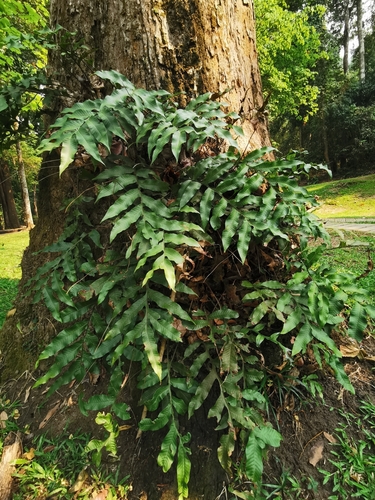
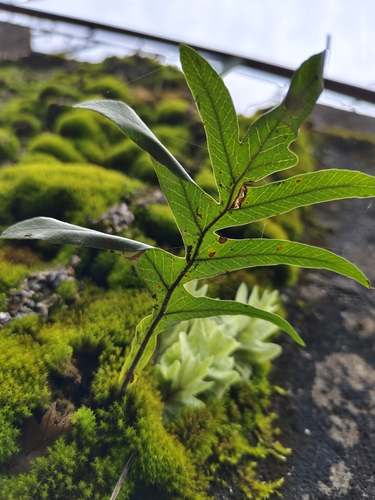
Phlebodium aureum (golden polypody, golden serpent fern, cabbage palm fern, gold-foot fern, blue-star fern, hare-foot fern; syn. Polypodium aureum, Polypodium leucotomos) is an epiphytic fern native to tropical and subtropical regions of the Americas.
Kermath, B. M., et al, 2014, Food Plants in the Americas: A survey of the domesticated, cultivated and wild plants used for Human food in North, Central and South America and the Caribbean. On line draft. p 676 (As Polypodium aureum)
Kew Plants of the World Online
Vander Velde, N, 2003, The Vascular Plants of Majuro Atoll, Republic of the Marshall Islands. Atoll research Bulletin. No. 503. Smithsonian Institute.