Pouteria trigonosperma
Eyma
SapotaceaeFruit

gbif · cc-by-nc
Rapid Reference Collection (RRC) | Field Museum of Natural History - Keller Science Action Center
Rapid Reference Collection (RRC) | Field Museum of Natural History - Keller Science Action Center

gbif · cc-by-nc
Field Museum of Natural History - Botany Department | GDI 2013-2015
Field Museum of Natural History - Botany Department | GDI 2013-2015
What to Eat
Edible parts: Fruit
The fruit is eaten.
Where to Find It
It is a tropical plant.
Amazon, Brazil, Guianas, Guyana, South America, Suriname,
How to Identify
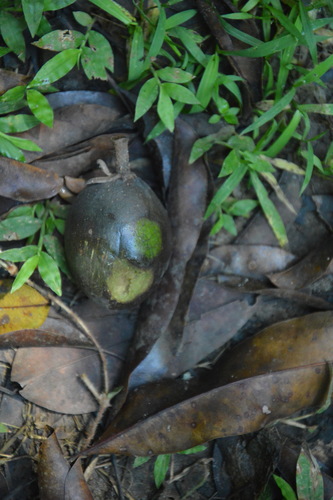
A tree. It can grow 40 m tall. The trunk is 65 cm across. Young shoots are hairy and spreading. The hairs are red. The leaves are 11-19 cm long by 6.5-10 cm wide. They can be in loose clusters. There are 1-3 flowers in groups below the leaves. The fruit are 6-7 cm long. The ripe fruit are green with a pale yellow pulp.
Names & Synonyms
Abenbele, Boesi koesoewe, Bosch koesoewe, Iawe hepajapa, Janboka, Jawahe papaja, Jawohe paikelia, Kamahora, Mabijara, Mpijara, Mapilan, Mapiran, Mapiran warian, Mapirian, Mapiwalan, Sabana-djoebortri, Sabana mabiara
Radlkoferella trigonosperma (Eyma) Aubrev.Richardella trigonosperma (Eyma) Baehni
References (2)
- Kermath, B. M., et al, 2014, Food Plants in the Americas: A survey of the domesticated, cultivated and wild plants used for Human food in North, Central and South America and the Caribbean. On line draft. p 698
- Van Roosmalen, M.G.M., & Garcia, O. M., 2000, Fruits of the Amazonian Forest. Part 2: Sapotaceae. Acta Amazonica 30(2): 187-290