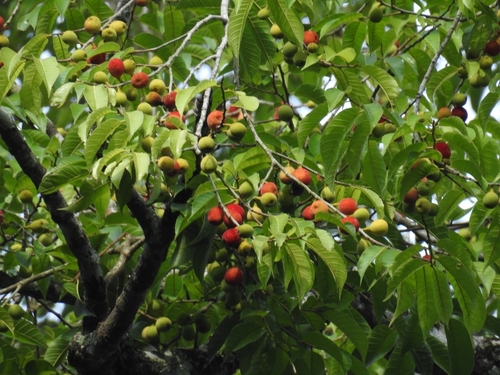
Pseudolmedia rigida
(Klotzsch & H. Karst.) Cuatrec.
Rigid false olmedia
MoraceaeFruit
iNaturalist · cc-by-nc-sa
(c) Mateo Hernandez Schmidt, some rights reserved (CC BY-NC-SA)
(c) Mateo Hernandez Schmidt, some rights reserved (CC BY-NC-SA)
iNaturalist · cc-by-nc-sa
(c) Mateo Hernandez Schmidt, some rights reserved (CC BY-NC-SA)
(c) Mateo Hernandez Schmidt, some rights reserved (CC BY-NC-SA)
iNaturalist · cc-by-nc
(c) Riley Fortier, some rights reserved (CC BY-NC)
(c) Riley Fortier, some rights reserved (CC BY-NC)
What to Eat
Edible parts: Fruit
The fruit is eaten.
Where to Find It
It is a tropical plant.
Amazon, Andes, Bolivia, Brazil, Central America, Colombia, Costa Rica, Ecuador, Panama, Peru, South America*, Venezuela,
How to Identify
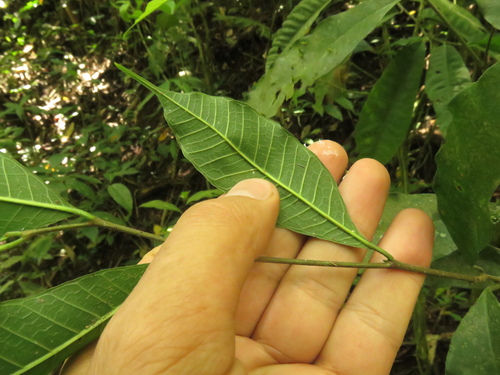
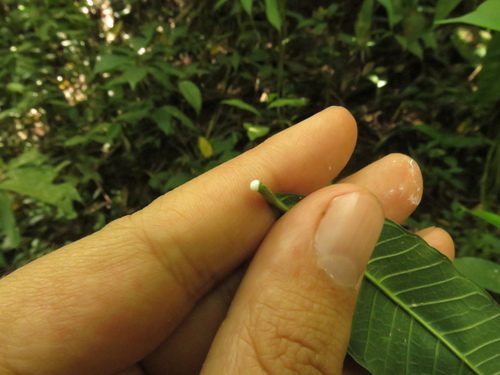
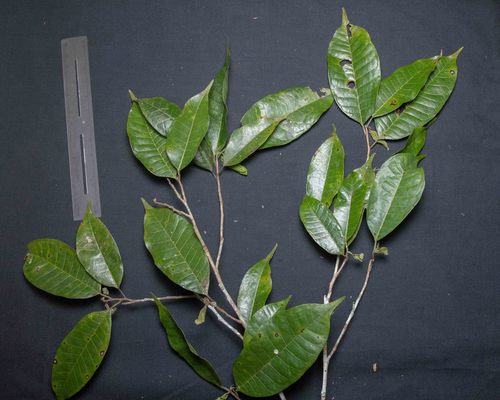
A tree. It can grow 10-35 m tall. It has white to orange latex. The twigs are hairy. The leaves are oblong and 4-16 cm long by 2-7 cm wide. The fruit are 13-15 mm long by 6-7 mm wide.
How to Grow
A dioecious species, both male and female forms need to be grown if fruit and seed are required.
Other Uses
A creamy-yellow latex exudes from the trunk. The wood is very hard.
Names & Synonyms
Arbol de pepa, Caimo, Candelo, Cristal blanco, Chilizo, Chimi, Guaimarillo, Lechero plomo, Omoye, Omoyewe, Sandio, Sangangacho, Torcarcero, Yumba
Olmedia rigida Klotzsch & H. Karst.
References (5)
- Grandtner, M. M. & Chevrette, J., 2013, Dictionary of Trees, Volume 2: South America: Nomenclature, Taxonomy and Ecology. Academic Press p 543
- Kermath, B. M., et al, 2014, Food Plants in the Americas: A survey of the domesticated, cultivated and wild plants used for Human food in North, Central and South America and the Caribbean. On line draft. p 720
- Lopez-Diago, D. & Garcia, N., 2021, Wild edible fruits of Colombia. Biota ColomBiana 22 (2) p 43
- Roa, J. A. G. & Boada, D. S. G., 2018, Fundación para el Fortalecimiento de la Fruticultura y Plantas Alimenticias no Convencionales en Colombia.
- Torre, de la, L., et al, 2008, Enciclopedia de las Plantas Útiles del Ecuador. Herbario QCA. Pontificia Universidad Católica del Ecuador. p 455