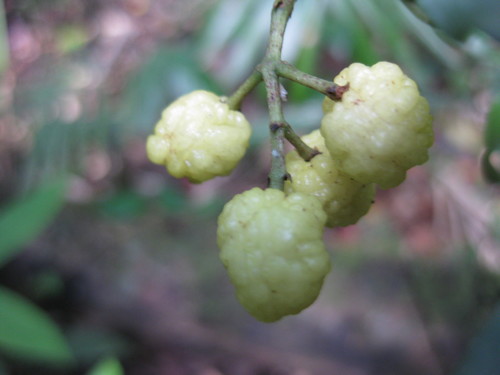
Zanthoxylum ovalifolium
Wight
Oval-leaf yellow wood
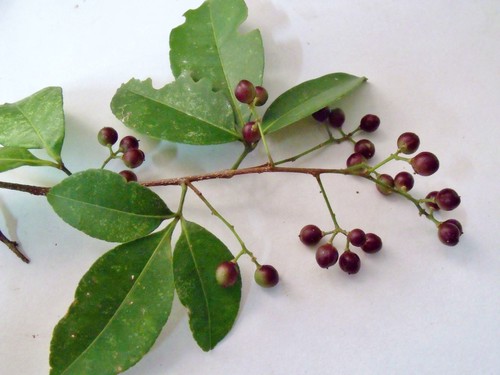
(c) Graham Bell, some rights reserved (CC BY-NC), uploaded by Graham Bell

(c) ryanthughes, some rights reserved (CC BY-NC)
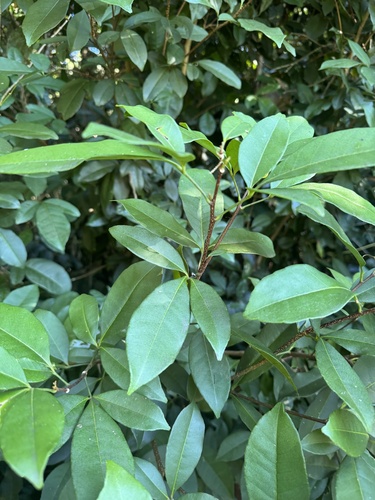
(c) ryanthughes, some rights reserved (CC BY-NC)
What to Eat
Edible parts: Fruit, Vegetable
The fruit are used to prepare pickles and chutney, with seeds typically removed before use.
Where to Find It
It is a tropical plant. It occurs in the Western Ghats in India.
Asia, Australia, India, Myanmar, Nepal, Pakistan, Papua New Guinea, PNG, SE Asia,
How to Identify
A large shrub. It can be a climber. It has short prickles. The leaves have 3 leaflets The leaflets are 7-10 cm long by 2-5 cm wide. They are narrowly oval and scalloped along the edge. The leaf stalks are stout and 3 cm long. The flowers are in dense groups on branched stems. They are white. The fruit occur singly and are round.
How to Grow
A dioecious species, both male and female forms need to be grown if seed is required.
Medicinal Uses
The fruits of this species are reported to have "astringent, stimulative, and digestive properties".
Other Uses
The fruits yield an essential oil. It contains myrcene and safrole, differing widely from the oil obtained from other members of this genus. The light yellowish-white wood is very hard and close-grained.
Wikipedia
Source ↗Zanthoxylum ovalifolium, commonly known as thorny yellowwood, oval-leaf yellow wood or little yellowwood, is a species of flowering plant in the family Rutaceae. It is a shrub or tree usually with trifoliate leaves, white, male and female flowers arranged in panicles in leaf axils or on the ends of branchlets and red, purple or brown follicles.
Production
In southern India plants fruit May to September.
Names & Synonyms
Arbampala gida
References (2)
- Peter, K. V. (Ed.), 2004, Handbook of Herbs and Spices Vol. 2 Woodhead Publishing and CRC Press.
- Ravikrishna, S., 2011, Ethno-medico-botanical survey on Wild Edible fruits of Udupi Taluq, Udupi p 113