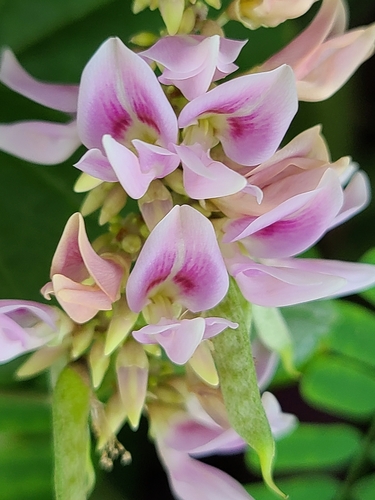
Cajanus lineatus
(Wight & Arn.) Maesen
Wild tor
iNaturalist · cc-by
(c) Siddarth Machado, some rights reserved (CC BY), uploaded by Siddarth Machado
(c) Siddarth Machado, some rights reserved (CC BY), uploaded by Siddarth Machado
iNaturalist · cc-by
(c) Siddarth Machado, some rights reserved (CC BY), uploaded by Siddarth Machado
(c) Siddarth Machado, some rights reserved (CC BY), uploaded by Siddarth Machado

iNaturalist · cc-by
(c) Ashwin Srinivasan, some rights reserved (CC BY)
(c) Ashwin Srinivasan, some rights reserved (CC BY)
What to Eat
Edible parts: Pods
The pods are edible.
Known Hazards
Where to Find It
It is a tropical plant. It grows in open spaces.
Asia, India*, Myanmar, SE Asia, Sri Lanka,
Countries: United Arab Emirates, Afghanistan, Armenia, Azerbaijan, Bangladesh, Bahrain, Brunei, Bhutan, China, Georgia, Indonesia, Israel, India, Iraq, Iran, Jordan, Japan, Kyrgyzstan, Cambodia, North Korea, South Korea, Kuwait, Kazakhstan, Laos, Lebanon, Sri Lanka, Myanmar, Mongolia, Maldives, Malaysia, Nepal, Oman, Philippines, Pakistan, Qatar, Saudi Arabia, Singapore, Syria, Thailand, Tajikistan, Timor-Leste, Turkmenistan, Turkey, Taiwan, Uzbekistan, Vietnam, Yemen
How to Identify
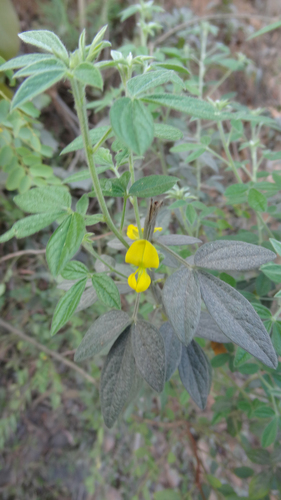
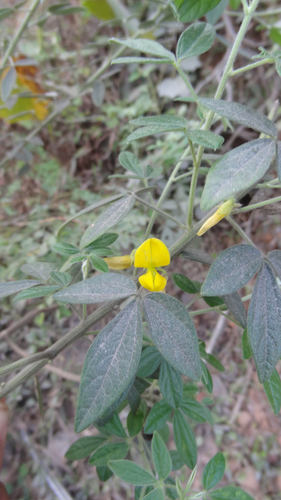
An erect shrub. It keeps growing from year to year. The branches are densely hairy. The leaves are compound and have 3 leaflets. The leaflets are 2-3 cm long by 1 cm wide. The central one is larger. It has a sharp tip. The side leaflets have a rounded base and are unequal. The flowers are pea like and yellow. The occur in groups of 1-4. The pods are 2 cm long by 0.8 cm wide. There are 3 seeds.
Notes
It is an at risk species.
Names & Synonyms
Jangli tor, Ran-tur
Atylosia lineata Wight & Arn.and others
References (2)
- Kew Plants of the World Online
- Khayde, M. S., et al, 2009, Wild Edible Plants Used by the tribes of Akole Tahasil of Ahmednagar District (MS), India. Ethnobotanical Leaflets 13:1328-36