Citrus limetta
Risso
Sweet lemon, Sweet lime
Wikimedia Commons - Citrus_limetta.jpeg

no rights reserved

no rights reserved
What to Eat
Edible parts: Fruit
Fruit - raw or made into juices. Insipidly sweet when ripe, with a slight lemon flavour. The fruit can be sweet or acid, the flavour is weak and insipid. The pulp is slightly succulent with a medium sugar content, slightly acidic, aromatic with a slightly sweet or insipid flavour. The fruit is about 6.5cm in diameter.
Where to Find It
It grows in tropical and subtropical countries. It suits hardiness zones 10-12.
Africa, Asia*, Australia, Bangladesh, Bolivia, Brazil, Central America, China, Colombia, Costa Rica, Cuba, Dominican Republic, Egypt, Europe, Haiti, Himalayas, India, Italy, Mediterranean, Mexico, Middle East, North Africa, North America, Pakistan, Peru, Saudi Arabia, South America, USA, Vietnam, West Indies,
How to Identify
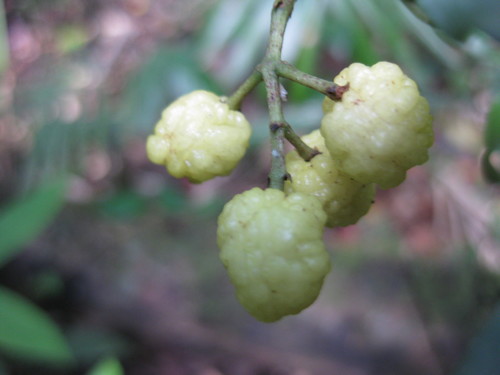
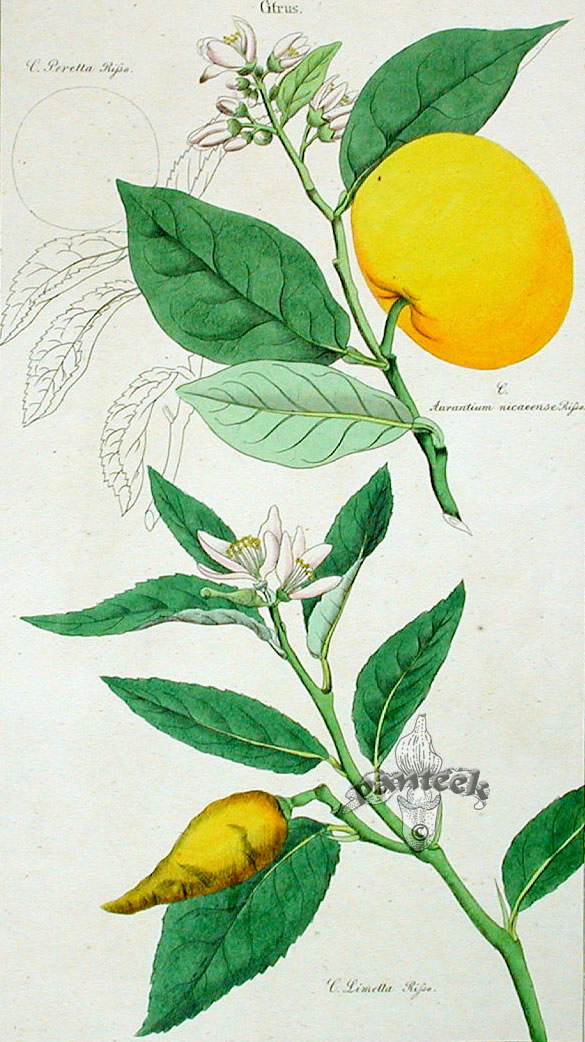
A small evergreen tree. It grows 6-12 m high. The crown is round. The leaves are simple and leathery. They are 4-8 cm long. There are small wings on the leaf stalk. The flowers are pure white. The fruit looks like a lime. It is not sour. It has a rounded base and smooth skin. The skin is thin and green. The flesh is juicy and orange. There are few seeds. Now Citrus medica L.
Nutrition Score: 28/100
| Part | Moisture | kJ | kcal | Protein | Vit A | Vit C | Iron | Zinc |
|---|---|---|---|---|---|---|---|---|
| Fruit | 89.3 | 177 | 42 | 0.7 | 2 | 48.5 | 0.5 | 0.1 |
How to Grow
Plants are grown by seed or grafting.
Propagation: The seed is best sown in containers as soon as it is ripe, after thoroughly rinsing it. Sow stored seed in containers as soon as possible]. Germination usually takes place within 2 - 3 weeks at 13°c. Seedlings are liable to damp off so they must be watered with care and kept well ventilated. The seed is usually polyembrionic, two or more seedlings arise from each seed and they are genetically identical to the parent but they do not usually carry any virus that might be present in the parent plant. When large enough to handle, prick the seedlings out into individual pots and grow them on until they are 10cm or more tall before planting out into their permanent positions. Cuttings of half-ripe wood, July/August in a frame. This species grows easily from cuttings. Layering in October.
Medicinal Uses
Sweet lime is served as juice and a good mixer for vodka or rum. It is the most common citrus juice available in the Indian subcontinent. The juice is commonly sold at mobile road stalls. Like most citrus, the fruit is rich in vitamin C, providing 50 mg per 100 g serving and antioxidants. In Iran, it is popular as a home remedy to treat influenza and the common cold. The tree is used for ornamental purposes as well as for graft stock.
Other Uses
An essential oil is obtained from the peel of the fruit. Used as a rootstock for other Citrus species.
Wikipedia
Source ↗Citrus limetta, alternatively considered to be a cultivar of Citrus limon, C. limon 'Limetta', is a species of citrus, commonly known as mousami, musami, mosambi, sweet lime, sweet lemon, and sweet limetta, it is a member of the sweet lemons. It is small and round, like a common lime. It is a cross between the citron (Citrus medica) and a bitter orange (Citrus × aurantium). It is native to the southern regions of Iran and also cultivated in the Mediterranean Basin. It is a different fruit from the Palestinian sweet lime and from familiar sour limes such as the Key lime and the Persian lime. However, genomic analysis revealed that it is highly similar to Rhobs el Arsa, and the two likely represent progeny of distinct crosses involving the same citrus parents. The South Asian cultivars originated in Mozambique and were brought to South Asia by the Portuguese. The common name mosambi and its variants trace their origin to Mozambique.
Other Information
It is occasionally cultivated.
Notes
There are 20 Citrus species. Several hybrids have been formed.
Names & Synonyms
Lima, Limetta, Lumia, Limao-doce, Mushambee, Sepen
References (22)
- Ann. Mus. Natl. Hist. Nat. 20:195, t. 2, fig. 1. 1813
- Arora, R. K., 2014, Diversity in Underutilized Plant Species - An Asia-Pacific Perspective. Bioversity International. p 63
- Blamey, M and Grey-Wilson, C., 2005, Wild flowers of the Mediterranean. A & C Black London. p 123
- Cruz, I. M., et al, 2015, Edible fruits and seeds in the State of Mexico. Revista Mexicana de Ciencias Agricolas. Vol. 6. Num. 2 pp 331-346
- Cundall, P., (ed.), 2004, Gardening Australia: flora: the gardener's bible. ABC Books. p 384
- Etherington, K., & Imwold, D., (Eds), 2001, Botanica's Trees & Shrubs. The illustrated A-Z of over 8500 trees and shrubs. Random House, Australia. p 215
- Facciola, S., 1998, Cornucopia 2: a Source Book of Edible Plants. Kampong Publications, p 217
- Garcia-Serrano, C. R., & Del Monte, J. P., 2004, The Use of Tropical Forest (Agroecosystems and wild Plant harvesting) as a Source of Food in the Bribri and Cabecar Cultures in the Caribbean Coast of Costa Rica. Economic Botany 58(1) pp 58-71
- Kiple, K.F. & Ornelas, K.C., (eds), 2000, The Cambridge World History of Food. CUP p 1802
- Lorenzi, H., Bacher, L., Lacerda, M. & Sartori, S., 2006, Brazilian Fruits & Cultivated Exotics. Sao Paulo, Instituto Plantarum de Estuados da Flora Ltda. p 535
- Miguel, E., et al, 1989, A checklist of the cultivated plants of Cuba. Kulturpflanze 37. 1989, 211-357
- Murtem, G. & Chaudhrey, P., 2016, An ethnobotanical note on wild edible plants of Upper Eastern Himalaya, India. Brazilian Journal of Biological Sciences, 2016, v. 3, no. 5, p. 63-81.
- Plants of Haiti Smithsonian Institute http://botany.si.edu/antilles/West Indies
- Rashid, H. E., 1977, Geography of Bangladesh. Westview. p 344
- Roa, J. A. G. & Boada, D. S. G., 2018, Fundación para el Fortalecimiento de la Fruticultura y Plantas Alimenticias no Convencionales en Colombia.
- Segura, S., et al, 2018, The edible fruit species in Mexico. Genet Resour Crop Evol (2018) 65:1767–1793
- Tanaka,
- Timyan, J., 1996, Bwa Yo: Important Trees of Haiti. SE Consortium for International Development. Washington. p 211
- USDA, ARS, National Genetic Resources Program. Germplasm Resources Information Network - (GRIN). [Online Database] National Germplasm Resources Laboratory, Beltsville, Maryland. Available: www.ars-grin.gov/cgi-bin/npgs/html/econ.pl (10 April 2000)
- Wiersema, J. H. & Leon, B., 2013, World Economic Plants. A Standard Reference CRC Press. 2nd Ed. p 180
- Zambrana, P, et al, 2017, Traditional knowledge hiding in plain sight – twenty-first century ethnobotany of the Chácobo in Beni, Bolivia. Journal of Ethnobiology and Ethnomedicine (2017) 13:57
- Zeven, A. C. & de West, J. M. J., 1982, Dictionary of cultivated plants and their regions of diversity. Wageningen. p 62