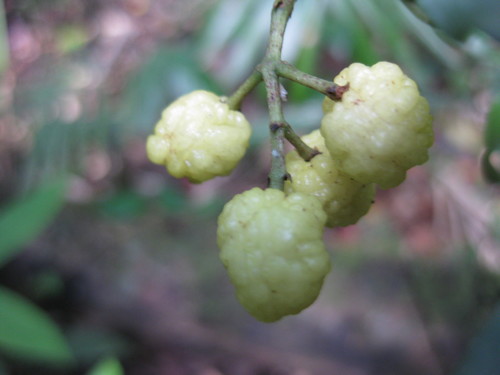
Citrus limonia
Osbeck
Rangpur lime, Mandarin lime

(c) Ricky Taylor, some rights reserved (CC BY-NC)
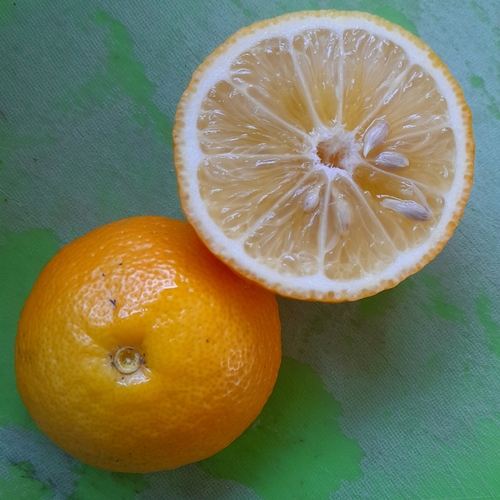
(c) Ricky Taylor, some rights reserved (CC BY-NC)
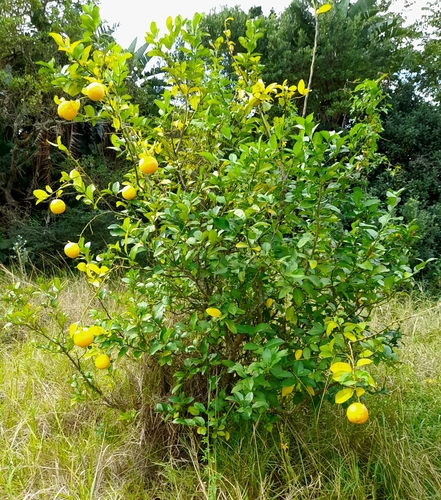
(c) Ricky Taylor, some rights reserved (CC BY-NC)
What to Eat
Edible parts: Fruit
Fruit - raw. Used to make juices. The fruit is used to add a sour taste to foods. It is also used in the production of limeade, marmalade and sweets, and can be are used as spice. A very acid, lemon-like flavour. The fruit is about 6cm in diameter.
Where to Find It
A tropical plant. It can tolerate some frost. It can tolerate salt and high pH. It suits hardiness zones 10-12.
Africa, Asia, Australia, Brazil, China, Colombia, Costa Rica, Cuba, East Africa, Egypt, Fiji, Hawaii, Himalayas, India, Indochina, Mediterranean, Middle East, Niue, North Africa, North America, Pacific, Palestine, Peru, SE Asia, South America, Tanzania, USA, Vietnam, West Indies,
How to Identify
It is probably a natural hybrid between lemon and mandarin. A small tree. It has many branches and thorns. It grows 6 m high. The flowers are white with a pink tinge and are fragrant. The fruit are round and very acid. They become deep orange when ripe. The fruit contain 7 segments. These separate easily. There are some named cultivated varieties.
How to Grow
Plants are grown from seed.
Propagation: The seed is best sown in containers as soon as it is ripe, after thoroughly rinsing it. Sow stored seed in containers as soon as possible]. Germination usually takes place within 2 - 3 weeks at 13°c. Seedlings are liable to damp off so they must be watered with care and kept well ventilated. The seed is usually polyembrionic, two or more seedlings arise from each seed and they are genetically identical to the parent but they do not usually carry any virus that might be present in the parent plant. When large enough to handle, prick the seedlings out into individual pots and grow them on until they are 10cm or more tall before planting out into their permanent positions. Cuttings of half-ripe wood, July/August in a frame. This species grows easily from cuttings. Layering in October.
Medicinal Uses
The fruits and its peel are used medicinally. The leaves, the roots and the fruit rinds possess antibacterial and demulcent properties. They are used in decoction to treat coughs, sore throats, dyspnoea, headache, ophthalmalgia, mastitis, galactophoritis, anorexia, vomiting and snake-bite. The steam from a boiling decoction of the fresh leaves is iinhaled as a treatment for coryza and influenza. Citrus species contain a wide range of active ingredients and research is still underway in finding uses for them. They are rich in vitamin C, flavonoids, acids and volatile oils. They also contain coumarins such as bergapten which sensitizes the skin to sunlight. Bergapten is sometimes added to tanning preparations since it promotes pigmentation in the skin, though it can cause dermatitis or allergic responses in some people. Some of the plants more recent applications are as sources of anti-oxidants and chemical exfoliants in specialized cosmetics.
Other Uses
The plant is used as a rootstock for other Citrus species.
Notes
There are 20 Citrus species. Several hybrids have been formed.
Names & Synonyms
Lemandarin, Limeng, Limon dulce, Mlimao
References (21)
- Arora, R. K., 2014, Diversity in Underutilized Plant Species - An Asia-Pacific Perspective. Bioversity International. p 63
- Burkill, I.H., 1966, A Dictionary of the Economic Products of the Malay Peninsula. Ministry of Agriculture and Cooperatives, Kuala Lumpur, Malaysia. Vol 1 (A-H) p 576
- Cundall, P., (ed.), 2004, Gardening Australia: flora: the gardener's bible. ABC Books. p 384
- D'Ambrosio, U., & Puri, R. K., 2016, Foodways in transition: food plants, diet and local perceptions of change in a Costa Rican Ngäbe community. Journal of Ethnobiology and Ethnomedicine (2016) 12:3 p 27
- Etherington, K., & Imwold, D., (Eds), 2001, Botanica's Trees & Shrubs. The illustrated A-Z of over 8500 trees and shrubs. Random House, Australia. p 215
- Facciola, S., 1998, Cornucopia 2: a Source Book of Edible Plants. Kampong Publications, p 217
- Giraldi, M. & Hanazaki, N., 2014, Use of Cultivated and Harvested Edible Plants by Caiçaras—What Can Ethnobotany Add to Food Security Discussions? Human Ecology Review, Volume 20, Number 2, 2014
- Hedrick, U.P., 1919, (Ed.), Sturtevant's edible plants of the world. p 200
- http://www.fao.org/forestry/25323-096344a3de335832e8f363c3ac5184a66.pdf
- Hu, Shiu-ying, 2005, Food Plants of China. The Chinese University Press. p 492
- Lorenzi, H., Bacher, L., Lacerda, M. & Sartori, S., 2006, Brazilian Fruits & Cultivated Exotics. Sao Paulo, Instituto Plantarum de Estuados da Flora Ltda. p 542
- Lyle, S., 2006, Discovering fruit and nuts. Land Links. p 132
- Miguel, E., et al, 1989, A checklist of the cultivated plants of Cuba. Kulturpflanze 37. 1989, 211-357
- Morton, J. F., 1987, Fruits of Warm Climates. Wipf & Stock Publishers p 178
- Reise Ostindien 250. 1765
- Roa, J. A. G. & Boada, D. S. G., 2018, Fundación para el Fortalecimiento de la Fruticultura y Plantas Alimenticias no Convencionales en Colombia.
- Staples, G.W. and Herbst, D.R., 2005, A tropical Garden Flora. Bishop Museum Press, Honolulu, Hawaii. p 504
- Tanaka,
- Valder, P., 1999, The Garden Plants of China. Florilegium. p 253
- Vasquez, R. and Gentry, A. H., 1989, Use and Misuse of Forest-harvested Fruits in the Iquitos Area. Conservation Biology 3(4): 350f
- Wiersema, J. H. & Leon, B., 2013, World Economic Plants. A Standard Reference CRC Press. 2nd Ed. p 180