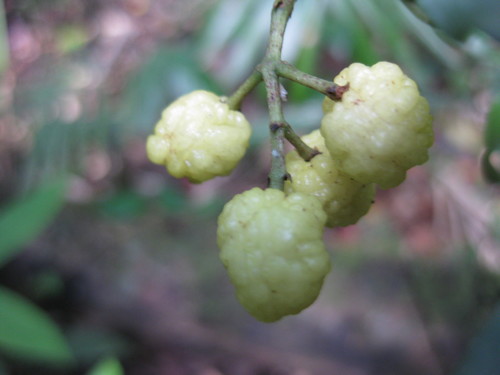
Citrus macroptera
Montrouzier
Limau hantu, Ghost lime

Wikimedia Commons - Macroptère.jpg
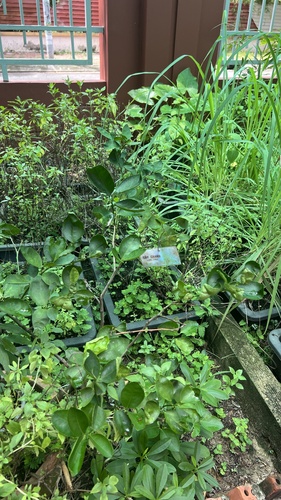
(c) dezdesz, some rights reserved (CC BY-NC)
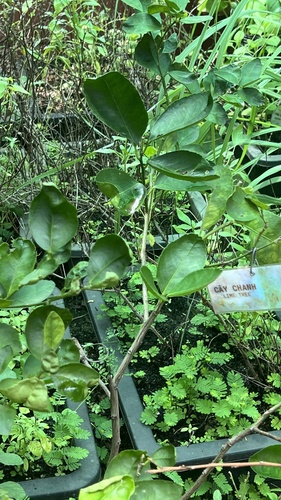
(c) dezdesz, some rights reserved (CC BY-NC)
What to Eat
Edible parts: Fruit
In Bangladesh, especially Sylhet, the thick fleshy rind of Citrus macroptera is eaten as a vegetable, while the pulp is usually discarded because of its bitter-sour taste. The thick rind is cut into small pieces and cooked (either green or ripe) in beef, mutton, and fish curries, it is also used in Dal. The rind is often sun-dried for later cooking and consumption. The fruit is also pickled.
Where to Find It
A tropical plant. Common and widely distributed in forests at low and medium altitudes throughout the Philippines. In Yunnan in China it grows between 600-800 m above sea level. It grows in seasonal rainforest. In Vanuatu it grows from sea level to 300 m altitude.
American Samoa, Asia, Bangladesh, China, Fiji, Guam, India, Indochina, Indonesia, Malaysia, Malesia*, New Caledonia, Northeastern India, Pacific, Papua New Guinea, PNG, Philippines, Polynesia, Rotuma, Samoa, SE Asia, Solomon Islands, Thailand, Tonga, Vanuatu,
How to Identify
A small tree armed with small spines. It grows 6-10 m high. The leaves are variable. They can be broadly sword shaped and 30 cm long by 6-7 cm wide. There are broad wings on the leaf stalks. The flowers are white and the fruit about 10 cm across. They have very thin skins. The fruit are pale yellow. There are 4 botanical varieties. Now Citrus hystrix
Wikipedia
Source ↗Citrus macroptera, commonly known as Melanesian papeda, or wild orange, is a semi-wild species of citrus native to the Malesian ecoregion (Island Southeast Asia and Melanesia). Some authorities consider C. macroptera to be a taxonomic synonym of C. hystrix (kaffir lime), while others consider C. macroptera var. annamensis to be a synonym of C. hystrix, but not C. macroptera var. macroptera. Citrus macroptera is cultivated widely in the Sylhet region (South Asia) of Bangladesh and the Barak Valley Division of the Indian state of Assam, where it is known as hatkhora (Sylheti: ꠢꠣꠔꠇꠞꠣ, [ɦat̪xɔɾa]).
Production
In Northeastern India fruit are available September to November.
Other Information
It is occasionally cultivated.
Notes
There are 20 Citrus species. Several hybrids have been formed.
Names & Synonyms
Chatukora, Hampur, Hatkora, Jamir, Kabuyau, Limau abang, Magei, Melanesian papeda, Moli kau, Moli kurukuru, Moli u'u, Saataokra, Sathkora, Som manao, Wild orange
References (17)
- Arora, R. K., 2014, Diversity in Underutilized Plant Species - An Asia-Pacific Perspective. Bioversity International. p 63
- Biswas, S. C., et al, 2018, Diversity of wild edible minor fruits used by the ethnic communities of Tripura, India. Indian Journal of Traditional Knowledge. Vol 17(2), April 2018, pp 282-289
- Blench, R., 2004, Fruits and Arboriculture in the Indo-Pacific Region. Indo-Pacific Prehistory Association Bulletin 24. (Taipei Papers Volume 2) p 36
- Burkill, I.H., 1966, A Dictionary of the Economic Products of the Malay Peninsula. Ministry of Agriculture and Cooperatives, Kuala Lumpur, Malaysia. Vol 1 (A-H) p 576
- Elevitch, C.R.(ed.), 2006, Traditional Trees of the Pacific Islands: Their Culture, Environment and Use. Permanent Agriculture Resources, Holualoa, Hawaii. p 245
- Ethnobotany of Karbis. Chapter 4 in p 107 (var. assamensis)
- Jin, Chen et al, 1999, Ethnobotanical studies on Wild Edible Fruits in Southern Yunnan: Folk Names: Nutritional Value and Uses. Economic Botany 53(1) pp 2-14 (var. kerrii)
- Kar, A., et al, 2013, Wild Edible Plant Resources used by the Mizos of Mizoram, India. Kathmandu University Journal of Science, Engineering and Technology. Vol. 9, No. 1, July, 2013, 106-126
- Mem. Acad. Roy. Sci. Lyon, Sect. Sci. ser. 2, 10:187. 1860
- Monsalud, M.R., Tongacan, A.L., Lopez, F.R., & Lagrimas, M.Q., 1966, Edible Wild Plants in Philippine Forests. Philippine Journal of Science. p 537
- Partha, P., 2014, Ethnobotany of the Laleng (Patra) Community in Bangladesh. Journal of Pharmacognosy and Phytochemistry. 2(6):173-184
- Smith, A.C., 1985, Flora Vitiensis Nova, Lawaii, Kuai, Hawaii, Volume 3 p 523
- Soepadmo, E. and Wong, K. M., 1995, Tree Flora of Sabah and Sarawak. Forestry Malaysia. Volume One. p 366
- Teron, R. & Borthakur, S. K., 2016, Edible Medicines: An Exploration of Medicinal Plants in Dietary Practices of Karbi Tribal Population of Assam, Northeast India. In Mondal, N. & Sen, J.(Ed.) Nutrition and Health among tribal populations of India. p 155
- Upadhaya, A., et al, 2016, Utilization of wild Citrus by Khasi and Garo tribes of Meghalaya. Indian Journal of Traditional Knowledge. Vol. 15 (1):pp. 121-127
- Verheij, E. W. M. and Coronel, R.E., (Eds.), 1991, Plant Resources of South-East Asia. PROSEA No 2. Edible fruits and nuts. Pudoc Wageningen. p 326
- Walter, A. & Sam C., 2002, Fruits of Oceania. ACIAR Monograph No. 85. Canberra. p 139