Cleome gynandra
L.
Spider flower, Cat's-whiskers
no rights reserved, uploaded by 葉子

(c) Dave U, some rights reserved (CC BY-SA), uploaded by Dave U
(c) Eric Knight, some rights reserved (CC BY), uploaded by Eric Knight
What to Eat
Edible parts: Leaves, Flowers, Pods, Seeds, Vegetable, Caution, Seeds - oil
Leaves - raw or cooked as a potherb. The bitter leaves are used as a vegetable after cooking, soaking or fermentation in order to reduce the bitterness. They are also added to soups and stews, pickled, or used as a flavouring in sauces. The leaves are said to provide a piquant taste, or a sourness, to the meal. They probably contain sinapin (could this mean sinalbin), the substance which gives mustard its 'biting' taste. They are considered very good for the stomach and to have antiscorbutic properties. The vitamin C content has been recorded at 6.0 mg per 100 gm dry weight. They are rich in minerals and the content of aluminium (at 1,390 ppm) and of iron (470 ppm), is unusually high. Flowers. The pungent seeds are sometimes eaten as a food when nothing better is available. They are also used as a condiment where they are a substitute for mustard seeds . The seeds contain around 17.6% oil. It is a good quality edible oil. The seed contains an edible polyunsaturated oil, which is extracted by simple pressing and does not need refining. Roots - cooked.
Known Hazards
Where to Find It
A tropical plant. It commonly occurs as a self sown weed on cultivated land. It grows in warm or tropical regions. It grows at a range of elevations but especially above 600 m altitude. It will grow in semi arid, to wet humid climates. It will grow on many soil types, but needs fertile soil for good leaf production. A temperature of 18-25°C seems best. Plants need plenty of sunlight. They are not drought resistant but can produce a crop with short periods of rain. Plants cannot withstand flooding. A common weed of waste places throughout the Philippines as well as other tropical countries. It is often abundant near the sea and near Baguio. It can grow in arid places. In Yunnan. In Ethiopia it grows between 450-1,300 m above sea level.
Afghanistan, Africa, Angola, Argentina, Asia, Australia, Bahamas, Bangladesh, Benin, Bhutan, Bolivia, Botswana, Brazil, Britain, Burkina Faso, Burundi, Cambodia, Cameroon, Central Africa, Central African Republic, CAR, Central America, Chad, Chile, China, Colombia, Comoros, Congo DR, Côte d'Ivoire, Cuba, Dominican Republic, East Africa, East Timor, Egypt, Equatorial-Guinea, Eritrea, Eswatini, Ethiopia, Europe, Fiji, France, Gabon, Gambia, Ghana, Guiana, Guinea, Guianas, Guinée, Guinea-Bissau, Haiti, Hawaii, Himalayas, India, Indochina, Indonesia, Italy, Ivory Coast, Jamaica, Japan, Kenya, Korea, Laos, Lesser Antilles, Liberia, Madagascar, Malawi, Malaysia, Mali, Marquesas, Mauritania, Mauritius, Mediterranean, Mexico, Middle East, Mozambique, Myanmar, Namibia, Nepal, New Zealand, Niger, Nigeria, North Africa, North America, Oman, Pacific, Pakistan, Papua New Guinea, PNG, Paraguay, Peru, Philippines, Puerto Rico, Reunion, Rwanda, Sahel, Sao Tome and Principe, SE Asia, Senegal, Seychelles, Sierra Leone, Somalia, South Africa, Southern Africa, South America, South Sudan, Spain, Sri Lanka, Sudan, Suriname, Swaziland, Tanzania, Thailand, Timor-Leste, Togo, Uganda, Uruguay, USA, Venezuela, Vietnam, Virgin Islands, West Africa, West Indies, Yemen, Zambia, Zimbabwe,
How to Identify
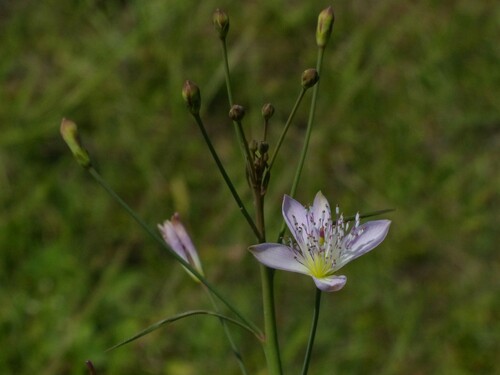
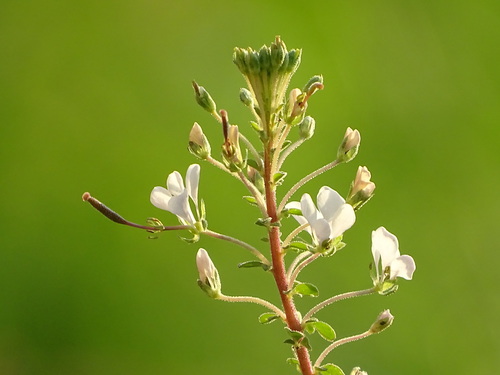
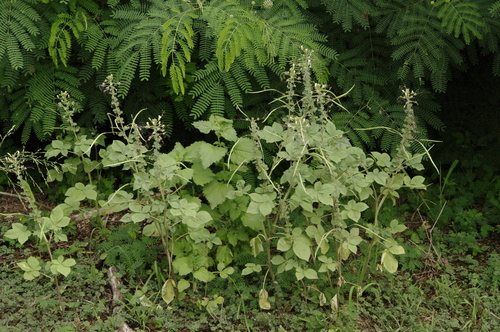
An annual herb. It grows to 0.6-0.9 m. It has a long tap root. It is erect and somewhat hairy. It usually has purple stems. The leaves occur one after another along the stalk. The leaf stalk is long. There are 5-7 leaflets which are unequal and spread out at the end. They are oblong and about 2.5-6 cm long by 1.4-3.2 cm wide. The leaflets are pointed at the base and a rounder near the tip with a rounder point at the tip. There are fine teeth along the edges of the leaves. The flowers are white or purple They occur in long flower clusters at the end of branches. These are 30 cm long. The flower clusters are showy with white or purplish flowers and a spidery like appearance. The fruit are a slender capsule with 2 valves and with many small seeds. They are 5-10 cm long and very narrow. The seeds are kidney shaped and rough. They are brown and have fine lines along them. They are 1-1.5 mm across.
Nutrition Score: 45/100
| Part | Moisture | kJ | kcal | Protein | Vit A | Vit C | Iron | Zinc |
|---|---|---|---|---|---|---|---|---|
| Leaves | 86.6 | 142 | 34 | 4.8 | — | 26 | 6 | — |
How to Grow
The plant is grown from seed. The seed are broadcast. Fertile soil is needed to get plants with good leaf coverage. The seed germinate erratically, because the seed have a rest period after harvest. Seed germinate best 6 months after harvest. Once they are ready to grow, they germinate in 4-5 days. Leaves or whole plants can be harvested when 15 cm high. Picking out the tops encourages side growth and longer leaf production. Removing flowers extends the harvest period.
Propagation: Surface sow or only lightly cover seed in spring in a greenhouse. Germination usually takes 5–14 days at 25°c. Prick seedlings into individual pots when large enough to handle and plant out in late spring. Daytime temperatures below 20°c depress germination, though a night-time drop to 20°c is necessary.
Medicinal Uses
A decoction of the root is used to treat fevers. Root juice is applied to relieve scorpion stings. The leaves, used as a poultice, act as a vesicant and rubefacient in treating rheumatism. Leaf juice serves as a remedy for ear pain. The seeds are anthelmintic and rubefacient. The whole plant is used in the treatment of scorpion stings and snake bites.
Other Uses
No other uses are known for this plant.
Wikipedia
Source ↗Cleome gynandra is a species of Cleome that is used as a leaf vegetable. It is known by many common names including Shona cabbage, African cabbage, spiderwisp, cat's whiskers, and stinkweed. It is an annual wildflower native to Africa but has become widespread in many tropical and sub-tropical parts of the world.
Production
Leaves can be harvested 4-5 weeks after planting. They can be harvested regularly or the whole plant up-rooted. Seeds reach maturity about 5 months after sowing. Leaves can be dried and stored.
Other Information
It is a commercially cultivated vegetable. This plant is being recognised by scientists as a useful vegetable. It is popular in Malawi and Zimbabwe. It is not known if it is eaten in Papua New Guinea. It is sold in local markets.
Notes
Plants are high in Vitamin A and Vitamin C and calcium and iron. There are about 150 Cleome species. It has a C4 photosynthetic pathway. It has 6.7 mg per 100 g dry weight and 3.6 mg fresh weight of alpha-tocopherol (Vitamin E).
Names & Synonyms
Adikyakharan, African spider-flower, Akaya, Akeo, Akeyo, Akiya, Alot dek, Amazonde, Amokabek, Ansarisha, Apoy-apoyan, Arkapushpika, Arwouessamboe, Bagra, Balaya, Bangara, Bastard-mustard, Bhubhuwan, Booti, Caravalla, Chamani, Churota, Ditchefouwounti, Ecadoi, Ejjobyo, Ekaboi, Ekeyo, Ekiau, Enceng-enceng, Eshoje, Eyobyo, Foubeyi, Gandhuli, Gangala, Garcia, Gasaya, Ghandhatu, Hingala, Hulul, Hurhura, Irraiso, Isaga, Ithea-utuka, Jirri, Junge phool, Kadughoo, Kanphodi, Karavela, Kathal, Kattkadugu, Kec nuom, Ketota, Kiyepieti, Knasi, Kokomen, Kornia, Langsana, Lerote, Lerotho, Lothue, Lubanga, Lude, Luni, Mamang, Manabo, Mangmang trang, Marang charmani, Mgagani, Mgange, Momienh, Motitlavan, Mukakai, Mumpala, Murudi, Mutaka, Mwaanzo, Mwaianzo, Nah sebe, Narum byale soppu, Neivaylla, Nimvi, Nsila, Nyevhe, Nyovhi, Pak-sian, Paksienedit, Pandharitilavan, Pandri-tilwan, Pandru sirio, Parhar, Phak sian, Raab, Rothwe, Rudhe, Runi, Sabo, Sada hurhuria, Sageti, Sake, Satitalvani, Seta kata arak, Shemeda, Sienz, Sishungwa, Shungwa, Sowounboyi, Spiderwisp, Suntha, Surjavarta, Taivela, Taiwela, Tamaleka, Taw-hingala, Tegeri, Thaivalaikeerai, Tichawoch, Tim-Légué, Titchefouwounti, Tsisaka, Tsuna, Ulube, Ulude, Umzonde, Vainta, Valay keeray, Vaminta, Velai, Velakura
References (151)
- Abbiw, D.K., 1990, Useful Plants of Ghana. West African uses of wild and cultivated plants. Intermediate Technology Publications and the Royal Botanic Gardens, Kew. p 40 (As Gynandropsis gynandra)
- Achigan-Dako, E, et al (Eds), 2009, Catalogue of Traditional Vegetables in Benin. International Foundation for Science.
- Acipa, A. et al, 2013, Nutritional Profile of some Selected Food Plants of Otwal and Ngai Counties, Oyam District, Northern Uganda. African Journal or Food, Agriculture, Nutrition and Development. 13(2)
- Addis, G., et al, 2005, Ethnobotanical Study of Edible Wild Plants in Some Selected Districts of Ethiopia. Human Ecology, Vol. 33, No. 1, pp. 83-118
- Addis, G., Asfaw, Z & Woldu, Z., 2013, Ethnobotany of Wild and Semi-wild Edible Plants of Konso Ethnic Community, South Ethiopia. Ethnobotany Research and Applications. 11:121-141
- Agea, J. G., et al 2011, Wild and Semi-wild Food Plants of Bunyoro-Kitara Kingdom of Uganda: etc. Environmental Research Journal 5(2) 74-86
- Ajain, M., Ali, T., & Siddiqui, M.F., 2015, A Survey of Ethnobotanically Important Herbaceous Plants of Tehsil Jatoi,District Muzaffar Garh, Punjab, Pakistan. Int. J. Biol. Res., 3(2): 87-92, 2015.
- Al-Fatimi, M. A., Wild Edible Plants Traditionally Collected and Used in Southern Yemen. Research Square. University of Aden. p 17
- Ambasta, S.P. (Ed.), 2000, The Useful Plants of India. CSIR India. p 253 (As Gynandropsis gynandra)
- Anderson, E. F., 1993, Plants and people of the Golden Triangle. Dioscorides Press. p 207
- Andabati, B., & Muyonga, J., 2014, Phenolic content and antioxidant activity of selected Ugandian traditional medicinal foods. African Journal of Food Science. 8(8), pp 427-434
- Arinathan, V., et al, 2007, Wild edibles used by Palliyars of the western Ghats, Tamil Nadu. Indian Journal of Traditional Knowledge. 6(1) pp 163-168
- Arnold, T.H., Wells, M.J. & Wehmeyer, A.S., Khoisan food plants: taxa with potential for future economic exploitation, in Wickens, G.E., Goodin, J.R., and Field, D.V.,(Eds.) 1985, Plants for Arid Lands. Unwin Hyman, London, p 73 (As Gynandropsis gynandra)
- Asfaw, Z. and Tadesse, M., 2001, Prospects for Sustainable Use and Development of Wild Food Plants in Ethiopia. Economic Botany, Vol. 55, No. 1, pp. 47-62
- Awas, T., 1997, A Study on the Ecology and Ethnobotany of Non-cultivated Food Plants and Wild Relatives of Cultivated crops in Gambella Region, Southwestern Ethiopia. Addis Ababa University. p 46
- Batawila, K., et al, 2007, Diversite et gestion des legumes de cueillete au Togo. African Journal of Food, Agriculture, Nutrition and Development 7( 3& 4): 65
- Burkill, H. M., 1985, The useful plants of west tropical Africa, Vol. 1. Kew.
- Ching, L. S. & Mohamed, S., 2001, Alpha-Tocopherol Content in 62 Edible Tropical Plants. J. Agric. Food Chem. 2001, 49, 3101−3105 (As Gynandropsis gynandra)
- Chweya, James A. and Nameus A. Mnzava. 1997. Cat’s whiskers. Cleome gynandra L. Promoting the conservation and use of underutilized and neglected crops. 11. Institute of Plant Genetics and Crop Plant Research, Gatersleben/International Plant Genetic Resources Institute, Rome, Italy.
- Codjia, J. T. C., et al, 2003, Diversity and local valorisation of vegetal edible products in Benin. Cahiers Agricultures 12:1-12 (As Gynandropsis gynandra)
- CRÉAC'H, (As Gynandropsis pentaphylla)
- Dalziel, J. M., 1937, The Useful plants of west tropical Africa. Crown Agents for the Colonies London.
- Dansi, A., et al, 2008, Traditional leafy vegetables and their use in the Benin Republic. Genet Resour Crop Evol (2008) 55:1239–1256
- Dansi, A., et al, 2012, Diversity of the Neglected and Underutilized Crop Species of Importance in Benin. The Scientific World Journal. Volume 2012, Article ID 932947, 19 pages
- Diarra, N. et al, 2016, Etude ethnobotanique des plantes alimentaires utilisées en période de soudure dans les régions Sud du Mali. Int. J. Biol. Chem. Sci. 10(1): 184-197
- Dobriyal, M. J. R. & Dobriyal, R., 2014, Non Wood Forest Produce an Option for Ethnic Food and Nutritional Security in India. Int. J. of Usuf. Mngt. 15(1):17-37
- Etkin, N.L. (Ed.), 1994, Eating on the Wild Side, Univ. of Arizona. p 50 (As Gynandropsis gynandra)
- Facciola, S., 1998, Cornucopia 2: a Source Book of Edible Plants. Kampong Publications, p 78 (As Gynandropsis gynandra)
- Flora of China. www.eFloras.org (As Gynandropsis gynandra)
- FAO, 1988, Traditional Food Plants, FAO Food and Nutrition Paper 42. FAO Rome p 203
- Flora of Australia, Volume 8, Lecythidales to Batales, Australian Government Publishing Service, Canberra (1982) p 226
- Fowler, D. G., 2007, Zambian Plants: Their Vernacular Names and Uses. Kew. p 16
- Flyman, M. V. & Afolayan, A. J., 2006, A Survey of plants used as wild vegetables in four districts of Botswana. Ecology of Food and Nutrition, 45:405-415
- Food Composition Tables for use in Africa FAO http://www.fao.org/infoods/directory No. 802 (As Gynandropis gynandra)
- Gemedo-Dalle, T., et al, 2005, Plant Biodiversity and Ethnobotany of Borana Pastoralists in Southern Oromia, Ethiopia. Economic Botany 59(1) pp. 43-65
- Fox, F. W. & Young, M. E. N., 1982, Food from the Veld. Delta Books. p 146
- Gallagher, D. E., 2010, Farming beyond the escarpment: Society, Environment, and Mobility in Precolonial Southeastern Burkina Faso. PhD University of Michigan.
- Godfrey, J. et al, 2013, Harvesting, preparationand preservation of commonly consumed wild and semi-wild food plants in Bunyoro-Kitara Kingdom, Uganda. Int. J. Med. Arom. Plants. Vol.3 No.2 pp 262-282
- Goode, P., 1989, Edible Plants of Uganda. FAO p 26 (As Gynandropsis gynandra)
- Goode, P., 1989, Edible Plants of Uganda. FAO p 36
- Goode, P., 1989, Edible Plants of Uganda. FAO p 39
- Grubben, G. J. H. and Denton, O. A. (eds), 2004, Plant Resources of Tropical Africa 2. Vegetables. PROTA, Wageningen, Netherlands. p 191
- Harkonen, M. & Vainio-Mattila, K., 1998, Some examples of Natural Products in the Eastern Arc Mountains. Journal of East African Natural History 87:265-278 (As Gynandropsis gynandra)
- Hedrick, U.P., 1919, (Ed.), Sturtevant's edible plants of the world. p 336 (As Gynandropsis pentaphylla)
- Henty, E.E., & Pritchard, G.S., 1973, Weeds of New Guinea and their control. Botany Bulletin No 7, Division of Botany, Lae, PNG. p 63
- High, C. & Shackleton, C. M., 2000, The comparative value of wild and domestic plants in home gardens of a South African rural village. Agroforestry Systems 48: 141–156, 2000
- Hussey, B.M.J., Keighery, G.J., Cousens, R.D., Dodd, J., Lloyd, S.G., 1997, Western Weeds. A guide to the weeds of Western Australia. Plant Protection Society of Western Australia. p 126
- Jacobs, 1960, Caparidaceae, Flora Malesiana, Ser. 1 Vol. 6(1) p 101
- Jacquat, C., 1990, Plants from the Markets of Thailand. D.K. Book House p 37
- Jadhav, R., et al, 2015, Forest Foods of Northern Western Ghats: Mode of Consumption, Nutrition and Availability. Asian Agri-History Vol. 19, No. 4: 293-317
- Japanese International Research Centre for Agricultural Science www.jircas.affrc.go.jp/project/value_addition/Vegetables
- Jardin, C., 1970, List of Foods Used In Africa, FAO Nutrition Information Document Series No 2.p 79 (As Gynandropsis gynandra)
- Johns, T., and Kokwaro, J.O., 1991, Food Plants of the Luo of Siayo District, Kenya. Economic Botany 45(1), pp 103-113 (As Gynandropsis gynandra)
- Johns, T., Mhoro, E. B. and Sanaya, P., 1996, Food Plants and Masticants of the Batemi of Ngorongoro District, Tanzania. Economic Botany, Vol. 50, No. 1, pp. 115-121
- Karhagomba, I. B., et al, 2013, The cultivation of wild food and medicinal plants for improving community livelihood: The case of the Buhozi site, DR Congo. Nutrition Research and Practice (Nutr Res Pract) 2013;7(6):510-518 (As Gynandropsis gynandra)
- Kays, S. J., and Dias, J. C. S., 1995, Common Names of Commercially Cultivated Vegetables of the World in 15 languages. Economic Botany, Vol. 49, No. 2, pp. 115-152
- Kidane, B., et al, 2014, Wild and semi-wild leafy vegetables used by the Maale and Ari ethnic communities in southern Ethiopia. Genetic Resour Crop Evol. Springer. p 8
- Latham, P., 2004, Useful Plants of Bas-Congo province. Salvation Army & DFID p 82
- Lazarides, M. & Hince, B., 1993, Handbook of Economic Plants of Australia, CSIRO. p 61
- Long, C., 2005, Swaziland's Flora - siSwati names and Uses http://www.sntc.org.sz/flora/
- Lulekal, E., et al, 2011, Wild edible plants in Ethiopia: a review on their potential to combat food insecurity. Afrika Focus - Vol. 24, No 2. pp 71-121
- Lyimo, M., et al, 2003, Identification and nutrient composition of indigenous vegetables of Tanzania. Plant Foods for Human Nutrition. 58: 85-92
- Lykke, A. M., Mertz, O, and Ganaba, S., 2002, Food Consumption in Rural Burkina Faso, Ecology of Food and Nutrition, 41:119-152
- Macmillan, H.F. (Revised Barlow, H.S., et al), 1991, Tropical Planting and Gardening. Sixth edition. Malayan Nature Society. Kuala Lumpur. p 356
- Magwede, K., van Wyk, B.-E., & van Wyk, A. E., 2019, An inventory of Vhavenḓa useful plants. South African Journal of Botany 122 (2019) 57–89
- Malaisse, F., 1997, Se nourrir en floret claire africaine. Approche ecologique et nutritionnelle. CTA., p 59
- Malaisse, F., 2010, How to live and survive in Zambezian open forest (Miombo Ecoregion). Les Presses Agronomiques de Gembloux.
- Marandi, R. R. & Britto, S. J., 2015, Medicinal Properties of Edible Weeds of Crop Fields and Wild plants Eaten by Oraon Tribals of Latehar District, Jharkhand. International Journal of Life Science and Pharma Research. Vo. 5. (2) April 2015
- Maroyi, A., 2011, The Gathering and Consumption of Wild Edible Plants in Nhema Communal Area, Midlands Province, Zimbabwe. Ecology of Food and Nutrition 50:6, 506-525
- Maroyi, A., 2013, Use of weeds as traditional vegetables in Shurugwi District, Zimbabwe. Journal of Ethnobiology and Ethnomedicine 9:60
- Martin, F.W. & Ruberte, R.M., 1979, Edible Leaves of the Tropics. Antillian College Press, Mayaguez, Puerto Rico. p 181
- Martin, F.W. & Ruberte, R.M., 1979, Edible Leaves of the Tropics. Antillian College Press, Mayaguez, Puerto Rico. p 181 (As Gynandropsis gynandra)
- Marshall, F., Agriculture and Use of Wild and Weedy Greens by the Piik ap Oom Okiek of Kenya. Economic Botany, Vo. 55, No. 1, pp. 32-47
- Masters, T., 2021, Traditional food plants of the upper Aswa River catchment of northern Uganda—a cultural crossroads. Journal of Ethnobiology and Ethnomedicine (2021) 17:24
- Maundu, P. et al, 1999, Traditional Food Plants of Kenya. National Museum of Kenya. 288p
- McMakin, P.D., 2000, Flowering Plants of Thailand. A Field Guide. White Lotus. p 89 (As Gynandropsis pentaphylla)
- Menninger, E.A., 1977, Edible Nuts of the World. Horticultural Books. Florida p 117 (As Gynandropsis pentaphylla)
- Mnzava, N.A. & Chigumira Ngwerume, F., 2004. Cleome gynandra L. [Internet] Record from Protabase. Grubben, G.J.H. & Denton, O.A. (Editors). PROTA (Plant Resources of Tropical Africa), Wageningen, Netherlands. < http://database.prota.org/search.htm>. Accessed 14 October 2009.
- Molla, A., Ethiopian Plant Names. http://www.ethiopic.com/aplants.htm (As Gynadropsis gynadra)
- Monsalud, M.R., Tongacan, A.L., Lopez, F.R., & Lagrimas, M.Q., 1966, Edible Wild Plants in Philippine Forests. Philippine Journal of Science. p 451 (As Gynandropis gynandra)
- MORTIMORE,
- Mot So Rau Dai an Duoc O Vietnam. Wild edible Vegetables. Ha Noi 1994, p 52
- Mpasiwakomu, R. A., 2017, The Diversity and Utilization of Wild Edible and Medicinal Plant Species found in Uvinza Miombo Woodlands, Tanzania. M. Sc. thesis University of Tanzania. (As Gynandropis gynandra)
- Msuya, T. S., et al, 2010, Availability, Preference and Consumption of Indigenous Foods in the Eastern Arc Mountains, Tanzania, Ecology of Food and Nutrition, 49:3, 208-227
- Musinguzi, E., et al, 2006, Utilization of Indigenous Food Plants in Uganda: A Case Study of South-Western Uganda. AJFAND Vol. 6(2):
- Mutie, F. G., 2020, Conservation of Wild Food Plants and Their Potential for Combatting Food Insecurity in Kenya as Exemplified by the Drylands of Kitui County. Plants 2020, 9, 1017
- Mutie, F. M., et al, 2023, Important Medicinal and Food Taxa (Orders and Families) in Kenya, Based on Three Quantitative Approaches. Plants 2023, 12, 1145
- Nakahara, K. et al, 2002, Antimutagenicity of Some Edible Thai Plants, and a Biocative Carbazole Alkaloid, Mahanine, Isolated from Micromelum minutum. Journal of Agricultural and Food Chemistry. 50: 4796-4892
- N'Danikou, S. et al, 2010, Eliciting Local Values of Wild Edible Plants in Southern Bénin to Identify Priority Species for Conservation. Economic Botany, 20(10), 2011, pp. 1–15.
- Neudeck, L. et al, 2012, The Contribution of Edible Wild Plants to Food Security, Dietary Diversity and Income of Households in Shorobe Village, Northern Botswana. Ethnobotany Research & Applications 10:449-462
- Ngugi, G., 2000, Case Study from Kenya on Indigenous Wild Vegetables. Paper 4 Workshop in Kenya 1999. p 35 (As Gynandropsis)
- Nyadanu, D., et al, 2015, Agro-biodiversity and challenges of on-farm conservation: the case of plant genetic resources of neglected and underutilized crop species in Ghana. Genet. Resourc. Crop Evol. 62(7):
- Ochse, J.J. et al, 1931, Vegetables of the Dutch East Indies. Asher reprint. p 96
- Okigbo, B.N., Vegetables in Tropical Africa, in Opena, R.T. & Kyomo, M.L., 1990, Vegetable Research and development in SADCC countries. Asian Vegetable Research and development Centre. Taiwan. p 38 (As Gynandropsis pentaphylla)
- Peters, C. R., O'Brien, E. M., and Drummond, R.B., 1992, Edible Wild plants of Sub-saharan Africa. Kew. p 77
- Pham-Hoang Ho, 1999, An Illustrated Flora of Vietnam. Nha Xuat Ban Tre. p 597
- Phatlamphu, N., et al, 2021, Ethnobotany of edible plants in Muang District, Kalasin Province, Thailand, Biodiversitas Vol. 22, No. 12 pp 5432-5444
- Phon, P., 2000, Plants used in Cambodia. © Pauline Dy Phon, Phnom Penh, Cambodia. p 162
- Pickering, H., & Roe, E., 2009, Wild Flowers of the Victoria Falls Area. Helen Pickering, London. p 48
- Plants of Haiti Smithsonian Institute http://botany.si.edu
- Plowes, N. J. & Taylor, F. W., 1997, The Processing of Indigenous Fruits and other Wildfoods of Southern Africa. in Smartt, L. & Haq. (Eds) Domestication, Production and Utilization of New Crops. ICUC p 188
- PROSEA handbook Volume 13 Spices. p 275
- Rajkalkshmi, P. et al, 2001, Total carotenoid and beta-carotene contents of forest green leafy vegetables consumed by tribals of south India. Plant Foods for Human Nutrition 56:225-238 (As Gynandropsis pentaphylla)
- Raponda-Walker, A & Sillans, R., 1961, Les Plantes Utiles du Gabon. Editions Paul Lechevalier, Paris. p 118 (As Gynandropsis gynandra)
- Rodin, R.J., The Ethnobotany of the Kwanyama Ovambos, Missouri Botanical Garden. p 147 (As Gynandropsis gynandra)
- Royal Botanic Gardens, Kew (1999). Survey of Economic Plants for Arid and Semi-Arid Lands (SEPASAL) database. Published on the Internet; http://www.rbgkew.org.uk/ceb/sepasal/internet [Accessed 7th April 2011]
- Rubaihayo, E. B., Conservation and use of traditional vegetables in Uganda. Bioversity International. (As Gynandropsis gynandra)
- Ruiters-Welcome, A. K., 2019, Food plants of southern Africa. Ph.D. thesis. Univ. of Johannesburg p 44
- Saidulu, P. et al, 2015, Ethnobotanical Knowledge Studied in Pocharam Wildlife Sanctuary, Telangana, India. Not Sci Biol, 2015, 7(2):164 -170
- Segnon, A. C. & Achigan-Dako, E. G., 2014, Comparative analysis of diversity and utilization of edible plants in arid and semi-arid areas in Benin. Journal of Ethnobiology and Ethnomedicine 2014, 10:80
- Seidemann J., 2005, World Spice Plants. Economic Usage, Botany, Taxonomy. Springer. p 111
- Shackleton, S. E., et al, 1998, Use and Trading of Wild Edible Herbs in the Central Lowveld Savanna Region, South Africa. Economic Botany, Vol. 52, No. 3, pp. 251-259
- Shava, S., et al, 2009, Traditional food crops as a source of community resilience in Zimbabwe. International Journal of the African Renaissance 4(1)
- SHORTT, (As Gynandropsis pentaphylla)
- SHORTT,
- Siemonsma, J. S. and Piluek, K. (Eds), 1994, Plant Resources of South-East Asia No. 8 Vegetables. Prosea Foundation, Bogor, Indonesia, p 148
- Singh, H.B., Arora R.K.,1978, Wild edible Plants of India. Indian Council of Agricultural Research, New Delhi. p 39
- Sp. pl. 2:671. 1753
- Sivakumar, A. & Murugesan, M., 2005, Ethnobotanical Studies of the wild edible plants used by the tribals of the Anaimalai Hills, the Western Ghats. Ancient Science of Life. XXV(2) Oct-Dec.
- Srichaiwong, P., et al, 2014, A Study of the Biodiversity of Natural Food Production to Support Community Upstream of Chi Basin, Thailand. Asian Social Science 10 (2):
- Strangeland, T et al, 2009, Total antioxidant activity in 35 Ugandan fruits and vegetables. Food Chemistry 113: 85-91
- Sullivan, S., 1998, People plants and practice in drylands: Socio-political and ecological dimensions of resource-use by Damara farmers in north-west Namibia. Ph.D. Univ. College London. p 28
- Swaziland's Flora Database http://www.sntc.org.sz/flora
- Termote, C., et al, 2014, Assessing the potential of wild foods to reduce the cost of a nutritionally adequate diet: An example from eastern Baringo District, Kenya. Food and Nutrition Bulletin, vol. 35, no. 4
- Terra, G.J.A., 1973, Tropical Vegetables. Communication 54e Royal Tropical Institute, Amsterdam, p 50 (As Gynandropsis gynandra)
- Tindall, H.D., & Williams, J.T., 1977, Tropical Vegetables and their Genetic Resources, International Board for Plant Genetic Resources, Rome, p 108 (As Gynandropsis gynandra)
- Tredgold, M.H., 1986, Food Plants of Zimbabwe. Mambo Press. p 41
- Ulian, T., et al, 2020, Unlocking plant resources to support food security and promote sustainable agriculture. Plants, People, Planet. 2020;2:421–445.
- Uprety, Y., et al, 2016, Traditional use and management of NTFPs in Kangchenjunga Landscape: implications for conservation and livelihoods. Journal of Ethnobiology and Ethnomedicine (2016) 12:19
- USDA, ARS, National Genetic Resources Program. Germplasm Resources Information Network - (GRIN). [Online Database] National Germplasm Resources Laboratory, Beltsville, Maryland. Available: www.ars-grin.gov/cgi-bin/npgs/html/econ.pl (10 April 2000)
- Vainio-Mattila, K., 2000, Wild vegetables used by the Sambaa in the Usumbara Mountains, NE Tanzania. Ann. Bot. Fennici 37:57-67
- Vanderjagt, F. J., et al, 2000, The trypsin inhibitor content of 61 wild edible plant foods of Niger. Plant Foods for Human Nutrition 55: 335–346, 2000.
- van Wyk, Be., & Gericke, N., 2007, People's plants. A Guide to Useful Plants of Southern Africa. Briza. p 68
- van Wyk, B-E., 2011, The potential of South African plants in the development of new food and beverage products. South African Journal of Botany 77 (2011) 857–868
- Vernon, R., 1983, Field Guide to Important Arable Weeds of Zambia. Dept of Agriculture, Chilanga, Zambia. p 36
- WATT, (As Gynandropsis pentaphylla)
- Wehmeyer, A. S, 1986, Edible Wild Plants of Southern Africa. Data on the Nutrient Contents of over 300 species
- Weinberger, K., Msuya J., 2004, Indigenous Vegetables in Tanzania. Significance and Prospects. Technical Bulletin No. 31 AVRDC, Taiwan/FAO p 4
- Welcome, A. K. & Van Wyk, B.-E., 2019, An inventory and analysis of the food plants of southern Africa. South African Journal of Botany 122 (2019) 136–179
- Wheeler, J.R.(ed.), 1992, Flora of the Kimberley Region. CALM, Western Australian Herbarium, p 260
- Wiersema, J. H. & Leon, B., 2013, World Economic Plants. A Standard Reference CRC Press. 2nd Ed. p 185, 334 (As Gynandropsis gynandra)
- WILLIS, (As Gynandropsis pentaphylla)
- Williamson, J., 2005, Useful Plants of Malawi. 3rd. Edition. Mdadzi Book Trust. p 128
- World Checklist of Useful Plant Species 2020. Royal Botanic Gardens, Kew
- www.zimbabweflora.co.zw 2011
- www.efloras.org Flora of China Volume 7 (As Gynandropsis gynandra)
- Xu, You-Kai, et al, 2004, Wild Vegetable Resources and Market Survey in Xishuangbanna, Southwest China. Economic Botany. 58(4): 647-667.
- Yimer, A., et al, 2021, Ethnobotanical study of wild edible plants used by Meinit Ethnic Community at Bench-Maji Zone, Southwest Ethiopia. Research Square. p 5
- Zeven, A. C. & de West, J. M. J., 1982, Dictionary of cultivated plants and their regions of diversity. Wageningen. p 123 (As Gynandropsis gynandra)
- Zon, A.P.M. van der, Grubben, G.J.H., 1976, Les legumes-feuilles spontanes et cultives du Sud-Dahomey, Communication 65, Royal Tropical Institute, Amsterdam, p 65 (As Gynandropsis gynandra)
- Mertz, O., Lykke, A. M., and Reenberg, A., 2001, Importance and Seasonality of