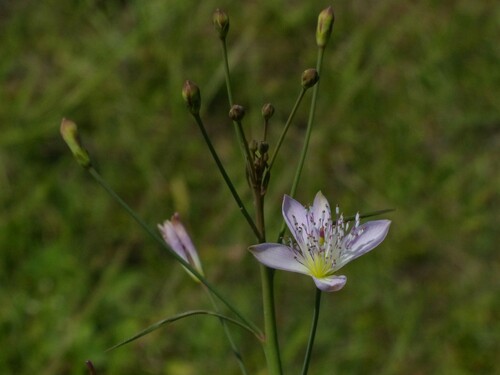
Cleome monophylla
L.
Single-leaved cleome

(c) Grant Reed, some rights reserved (CC BY-NC), uploaded by Grant Reed
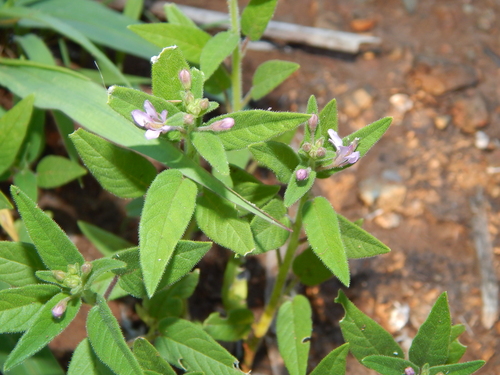
(c) Moira FitzPatrick, some rights reserved (CC BY-NC), uploaded by Moira FitzPatrick

(c) Prajwal J Ullal, some rights reserved (CC BY-NC), uploaded by Prajwal J Ullal
What to Eat
Edible parts: Leaves, Flowers, Fruit, Seeds - oil, Seeds - flavouring, Vegetable
Leaves are cooked and used like spinach. Young shoots and flowers can also be eaten. The pungent seed is used as a mustard substitute.
Known Hazards
Where to Find It
A tropical plant. It grows in the Sahel regions in West Africa. It grows in areas with a rainfall of about 100 mm per year. It grows in hot arid places. It grows between 30-2,100 m above sea level. It can grow in arid places.
Africa, Asia, Bangladesh, Botswana, Burkina Faso, Central Africa, Congo, East Africa, Eswatini, Ethiopia, Ghana, India, Kenya, Lesotho, Madagascar, Malawi, Mali, Mozambique, Namibia, Niger, Nigeria, Rwanda, Sahel, Senegal, Somalia, South Africa, Southern Africa, Sri Lanka, Sudan, Swaziland, Tanzania, Uganda, West Africa, Zambia, Zimbabwe,
How to Identify
A small annual herb. It is erect and hairy. It grows 30-60 cm high. It can be spreading. The leaves are simple and undivided. They are 2.5-8 cm long and narrow. The flowers are pink and purple. The pods are long and thin. They are 5-11 mm long by 3 mm wide. They contain several small flat seeds.
Nutrition Score: 43/100
| Part | Moisture | kJ | kcal | Protein | Vit A | Vit C | Iron | Zinc |
|---|---|---|---|---|---|---|---|---|
| Leaves | 76.5 | 297 | 71 | 21.9 | — | — | — | — |
| Leaves cooked | 73 | 17 | 3 | — | — | 9.2 | 0.43 | — |
How to Grow
Prefers a light fertile soil in a warm dry sunny position with plenty of room to spread. A frost tender plant, it can be grown as a summer annual in Britain.
Propagation: Surface sow or only lightly cover seed in spring in a greenhouse. Germination usually takes 5–14 days at 25°c. Prick seedlings into individual pots when large enough to handle and plant out in late spring. Daytime temperatures below 20°c depress germination, though a night-time drop to 20°c is necessary.
Medicinal Uses
The pounded root is placed on the lips to restore consciousness in cases of fainting.
Other Uses
No other uses are known for this plant.
Wikipedia
A compact annual reaching 0.5 m in height. Frost tender with foliage from May to October. Hermaphroditic flowers. Prefers light sandy and medium loamy well-drained soils in mildly acidic, neutral, and alkaline conditions. Cannot tolerate shade and adapts to dry or moist soil.
Production
Leaves are collected during the rainy season.
Other Information
It is widely eaten throughout Africa.
Notes
There are about 150 Cleome species. It can be a problem weed. The Vitamin C content is 4.3 mg/100 g dry weight.
Names & Synonyms
African cabbage, Akeo-jok, Doran, Hurhuria sag, Isiwisa esiluhlaza, Kanzota, Kawal, Kayuniyuni, Kazuamwalonde, Lerokwa, Lesanye, Lovedu, Lutegeri, Mhuu, Mmusa-pelo monyenyae, Mthoathoa, Musemwasemwa, Mushangishangi, Mutohotoho, Mutitimbudzi, muTsemwaysemwa, Mwanjerenjedza, Njerenjedza, Nsonyo, Nyiragasogereza, Ranga-sorisha, Rimin samara, Sekalerothane, Shimbangana, Shinburbucha, Sosa, Spindlepod, Thokothokgo, Thotha sirio, Tota sirio, Vellai
References (47)
- Assefa, A. & Abebe, T., 2010, Wild Edible Trees and Shrubs in the Semi-arid Lowlands of Southern Ethiopia. Journal of Science and Development 1 (1) 2010
- Burkill, H. M., 1985, The useful plants of west tropical Africa, Vol. 1. Kew.
- Dey, A. & Mukhererjee, A., 2015, Living and Survival Amidst Hunger: Wild Edible Botanicals as a Prime Forest Productivity in the Rural Purulia District, West Bengal, India from Colonial to Present. Research Journal of Forestry 9(3): 71-86
- Food Composition Tables for use in Africa FAO http://www.fao.org/infoods/directory No. 719
- Fox, F. W. & Young, M. E. N., 1982, Food from the Veld. Delta Books. p 147
- High, C. & Shackleton, C. M., 2000, The comparative value of wild and domestic plants in home gardens of a South African rural village. Agroforestry Systems 48: 141–156, 2000
- Jardin, C., 1970, List of Foods Used In Africa, FAO Nutrition Information Document Series No 2.p 68
- Flyman, M. V. & Afolayan, A. J., 2006, A Survey of plants used as wild vegetables in four districts of Botswana. Ecology of Food and Nutrition, 45:405-415
- Goode, P., 1989, Edible Plants of Uganda. FAO p 30
- Grivetti, L. E., 1980, Agricultural development: present and potential role of edible wild plants. Part 2: Sub-Saharan Africa, Report to the Department of State Agency for International Development. p 41, 70
- Grubben, G. J. H. and Denton, O. A. (eds), 2004, Plant Resources of Tropical Africa 2. Vegetables. PROTA, Wageningen, Netherlands. p 196
- Kidane, B., et al, 2014, Wild and semi-wild leafy vegetables used by the Maale and Ari ethnic communities in southern Ethiopia. Genetic Resour Crop Evol. Springer. p 8
- Long, C., 2005, Swaziland's Flora - siSwati names and Uses http://www.sntc.org.sz/flora/
- Lulekal, E., et al, 2011, Wild edible plants in Ethiopia: a review on their potential to combat food insecurity. Afrika Focus - Vol. 24, No 2. pp 71-121
- Magwede, K., van Wyk, B.-E., & van Wyk, A. E., 2019, An inventory of Vhavenḓa useful plants. South African Journal of Botany 122 (2019) 57–89
- Malaisse, F., 1997, Se nourrir en floret claire africaine. Approche ecologique et nutritionnelle. CTA., p 59
- Malaisse, F., 2010, How to live and survive in Zambezian open forest (Miombo Ecoregion). Les Presses Agronomiques de Gembloux.
- Marandi, R. R. & Britto, S. J., 2015, Medicinal Properties of Edible Weeds of Crop Fields and Wild plants Eaten by Oraon Tribals of Latehar District, Jharkhand. International Journal of Life Science and Pharma Research. Vo. 5. (2) April 2015
- Maroyi, A., 2011, The Gathering and Consumption of Wild Edible Plants in Nhema Communal Area, Midlands Province, Zimbabwe. Ecology of Food and Nutrition 50:6, 506-525
- Maroyi, A., 2013, Use of weeds as traditional vegetables in Shurugwi District, Zimbabwe. Journal of Ethnobiology and Ethnomedicine 9:60
- Martin, F.W. & Ruberte, R.M., 1979, Edible Leaves of the Tropics. Antillian College Press, Mayaguez, Puerto Rico. p 181
- Masters, T., 2021, Traditional food plants of the upper Aswa River catchment of northern Uganda—a cultural crossroads. Journal of Ethnobiology and Ethnomedicine (2021) 17:24
- Misra, S., 2020, Survey of edible plants for human consumption in south Odisha, India. Journal of Emerging Technologies and Innovative Research (JETIR) Vol. 7, Issue 12 p 278
- Mutie, F. M., et al, 2023, Important Medicinal and Food Taxa (Orders and Families) in Kenya, Based on Three Quantitative Approaches. Plants 2023, 12, 1145
- Peters, C. R., O'Brien, E. M., and Drummond, R.B., 1992, Edible Wild plants of Sub-saharan Africa. Kew. p 77
- Plants for a Future database, The Field, Penpol, Lostwithiel, Cornwall, PL22 0NG, UK. http://www.scs.leeds.ac.uk/pfaf/
- Plowes, N. J. & Taylor, F. W., 1997, The Processing of Indigenous Fruits and other Wildfoods of Southern Africa. in Smartt, L. & Haq. (Eds) Domestication, Production and Utilization of New Crops. ICUC p 188
- Ramachandran, V. S., 2007, Wild edible plants of the Anamalais, Coimbatore district, western Ghats, Tamil Nadu. Indian Journal or Traditional Knowledge. 6(1) pp 173-176
- Reis, S. V. and Lipp, F. L., 1982, New Plant Sources for Drugs and Foods from the New York Botanical Garden herbarium. Harvard. p 91
- Rajkalkshmi, P. et al, 2001, Total carotenoid and beta-carotene contents of forest green leafy vegetables consumed by tribals of south India. Plant Foods for Human Nutrition 56:225-238
- Ramachandran, V.S., 1987, Further Notes on the Ethnobotany of Cannanore District, Kerala. J. Econ. Tax. Bot. Vol. 11 No. 1 pp 47-
- Royal Botanic Gardens, Kew (1999). Survey of Economic Plants for Arid and Semi-Arid Lands (SEPASAL) database. Published on the Internet; http://www.rbgkew.org.uk/ceb/sepasal/internet [Accessed 7th April 2011]
- Ruffo, C. K., Birnie, A. & Tengnas, B., 2002, Edible Wild Plants of Tanzania. RELMA p 206
- Ruiters-Welcome, A. K., 2019, Food plants of southern Africa. Ph.D. thesis. Univ. of Johannesburg p 44
- Seidemann J., 2005, World Spice Plants. Economic Usage, Botany, Taxonomy. Springer. p 112
- Shackleton, S. E., et al, 1998, Use and Trading of Wild Edible Herbs in the Central Lowveld Savanna Region, South Africa. Economic Botany, Vol. 52, No. 3, pp. 251-259
- Shava, S., et al, 2009, Traditional food crops as a source of community resilience in Zimbabwe. International Journal of the African Renaissance 4(1)
- Scudder, 1971,
- Smith, F. I. and Eyzaquirre, P., 2007, African leafy vegetables: Their role in the World Health Organization's global Fruit and Vegetables Initiative. AJFAND, Vol. 7 No. 3
- Swaziland's Flora Database http://www.sntc.org.sz/flora
- Tredgold, M.H., 1986, Food Plants of Zimbabwe. Mambo Press. p 41
- van Wyk, Be., & Gericke, N., 2007, People's plants. A Guide to Useful Plants of Southern Africa. Briza. p 68
- Vernon, R., 1983, Field Guide to Important Arable Weeds of Zambia. Dept of Agriculture, Chilanga, Zambia. p 36
- Welcome, A. K. & Van Wyk, B.-E., 2019, An inventory and analysis of the food plants of southern Africa. South African Journal of Botany 122 (2019) 136–179
- Williamson, J., 2005, Useful Plants of Malawi. 3rd. Edition. Mdadzi Book Trust. p 68
- World Checklist of Useful Plant Species 2020. Royal Botanic Gardens, Kew
- Young, H., et al, 2005, Darfur - Livelihoods under Siege. Feinstein International Famine Center. p 175