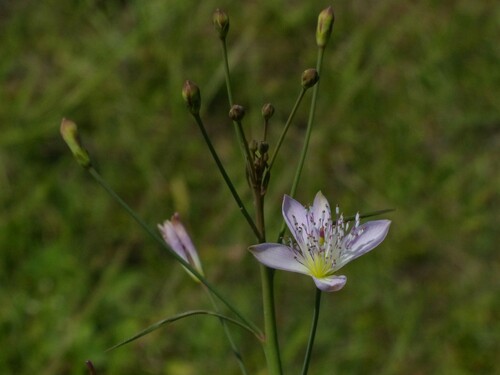
Cleoserrata speciosa
(Raf.) Iltis
Spider plant
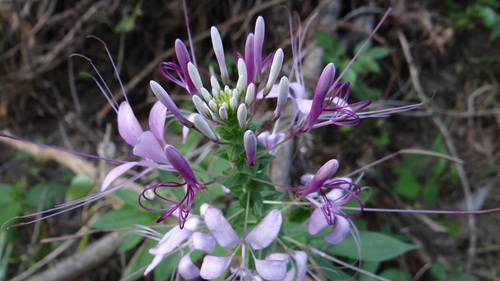
(c) Aurelio Molina Hernández., some rights reserved (CC BY-NC), uploaded by Aurelio Molina Hernández.
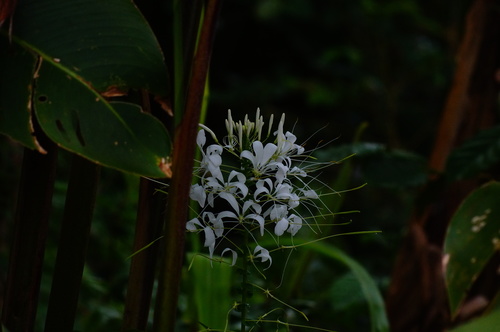
(c) Carlos Domínguez-Rodríguez, some rights reserved (CC BY-NC)
What to Eat
Edible parts: Leaves
The leaves are cooked and used as a pot-herb and are highly palatable.
Where to Find It
A tropical plant. It is often along streams and grows up to 1,800 m above sea level. In Yunnan.
Africa, Asia, Central America, China, Costa Rica, Dominican Republic, East Africa, Ethiopia, Fiji, Guatemala, Guyana, Haiti, India, Indochina, Jamaica, Mexico, Myanmar, North America, Pacific, Peru, Puerto Rico, SE Asia, South Africa, South America*, Southern Africa, Taiwan, Tanzania, Thailand, Venezuela, Vietnam, West Indies,
How to Identify
A herb up to 1.5 m tall. The lower leaves are 6 pointed and like fingers on a hand. The flowers are white, pink or purple. The flowers are on an erect spike. It is covered with small leaflets. The fruit are seed pods which hang from long stems.
How to Grow
Plants can be grown by seeds.
Other Information
It is highly palatable.
Notes
There are about 150 Cleome species.
Names & Synonyms
Bee plant, Lerotho, Pak-sian-farang
References (9)
- Ambasta, S.P. (Ed.), 2000, The Useful Plants of India. CSIR India. p 253
- Fl. ludov. 86. 1817
- Grivetti, L. E., 1980, Agricultural development: present and potential role of edible wild plants. Part 2: Sub-Saharan Africa, Report to the Department of State Agency for International Development. p 49, 75
- Kermath, B. M., et al, 2014, Food Plants in the Americas: A survey of the domesticated, cultivated and wild plants used for Human food in North, Central and South America and the Caribbean. On line draft. p 243 (As Cleome speciosa)
- Martin, F.W. & Ruberte, R.M., 1979, Edible Leaves of the Tropics. Antillian College Press, Mayaguez, Puerto Rico. p 181
- McMakin, P.D., 2000, Flowering Plants of Thailand. A Field Guide. White Lotus. p 13
- Molla, A., Ethiopian Plant Names. http://www.ethiopic.com/aplants.htm (As Gynadropsis speciosa)
- Pham-Hoang Ho, 1999, An Illustrated Flora of Vietnam. Nha Xuat Ban Tre. p 597
- Plants of Haiti Smithsonian Institute http://botany.si.edu