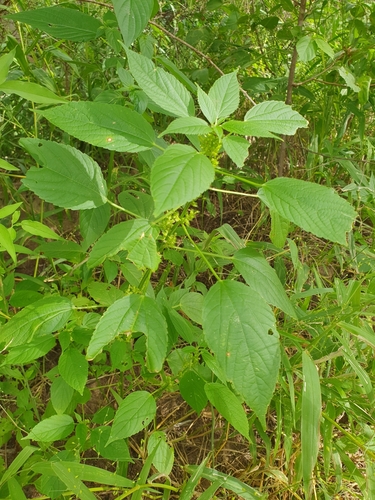
Cnidoscolus maculatus
(Brandegee) Pax & K. Hoffm.
EuphorbiaceaeSeeds/Nuts

iNaturalist · cc-by-nc
(c) Glenn Ehrenberg, some rights reserved (CC BY-NC), uploaded by Glenn Ehrenberg
(c) Glenn Ehrenberg, some rights reserved (CC BY-NC), uploaded by Glenn Ehrenberg

iNaturalist · cc-by-nc
(c) Glenn Ehrenberg, some rights reserved (CC BY-NC), uploaded by Glenn Ehrenberg
(c) Glenn Ehrenberg, some rights reserved (CC BY-NC), uploaded by Glenn Ehrenberg

iNaturalist · cc-by-nc
(c) jrebman, some rights reserved (CC BY-NC), uploaded by jrebman
(c) jrebman, some rights reserved (CC BY-NC), uploaded by jrebman
What to Eat
Edible parts: Seeds
Seeds are edible.
Where to Find It
A tropical plant.
Central America, Mexico, North America,
Countries: Antigua & Barbuda, Barbados, Bahamas, Belize, Canada, Costa Rica, Cuba, Dominica, Dominican Republic, Grenada, Guatemala, Honduras, Haiti, Jamaica, St Kitts & Nevis, St Lucia, Mexico, Nicaragua, Panama, Puerto Rico, El Salvador, Trinidad & Tobago, United States, St Vincent
How to Identify
A tropical shrub in the Euphorbiaceae family, native to tropical America.
Notes
There are 65 Cnidoscolus species in tropical America.
Names & Synonyms
Bad woman, Caribe
Jatropha maculata Brandegee
References (2)
- Nabhan, G.P. & Felger, R.S., Wild desert relatives of crops: their direct uses as food in Wickens, G.E., Goodin, J.R., and Field, D.V.,(Eds.) 1985, Plants for Arid Lands. Unwin Hyman, London, p 26
- Pio-Leon, J. F., et al, 2017, Prioritizing Wild Edible Plants of potential new crops based on Deciduous Forest traditional knowledge by a Rancher community. Botanical Sciences 95(1): 47-59