Podocarpus salignus
D.Don

(c) Claudio Maureira, some rights reserved (CC BY-NC-SA), uploaded by Claudio Maureira

(c) Claudio Maureira, some rights reserved (CC BY-NC-SA), uploaded by Claudio Maureira
(c) Benjamin Silva Ahumada, some rights reserved (CC BY-NC), uploaded by Benjamin Silva Ahumada
What to Eat
Edible parts: Fruit, Shoots - drink
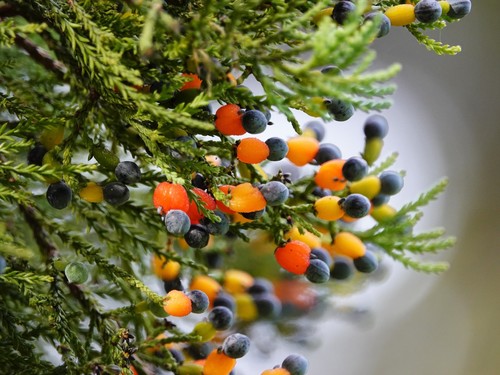
The fruit is approximately 8mm long and can be eaten raw or cooked. No specific reports exist for this species, but the fruit is considered most likely to be edible.
Known Hazards
Where to Find It
It is a tropical plant. Arboretum Tasmania.
Australia, Chile, South America, Tasmania,
How to Identify
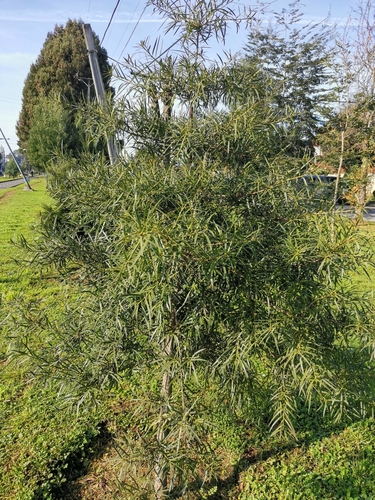
Podocarpus salignus is a slow-growing evergreen tree reaching 12 m tall with a 5 m spread, hardy to UK zone 8. Foliage persists year-round with October seed ripening. The species is dioecious, wind-pollinated, and requires both male and female plants for viable seed; self-fertility is absent. It grows in light sandy, medium loamy, and heavy clay soils with good drainage, preferring mildly acidic to neutral soil pH. The plant tolerates semi-shaded woodland or full sun exposure and requires moist soil conditions.
How to Grow
Prefers a rich moist non-alkaline soil. Shade tolerant, at least when young. This species is hardy to about -25°c, but the plants grow best in humid areas with high rainfall and mild winters. Plants often fruit freely in Britain and self-sow freely in Cornwall. A good plant for the rock garden. Very tolerant of pruning. Plants in this genus are notably resistant to honey fungus. Dioecious. Male and female plants must be grown if seed is required.
Propagation: Seed can be sown at any time of year in sandy soil in a warm greenhouse, though sowing as soon as it is ripe is ideal. Prick seedlings into individual pots once large enough to handle and grow them on in the greenhouse for at least their first winter. Plant out into permanent positions in late spring or early summer, after the last expected frosts. Cuttings of half-ripe terminal shoots, 5–10cm long, can be taken in July or August and rooted in a frame.
Medicinal Uses
None known.
Other Uses
The wood is straight-grained, reddish, and very durable, lasting a long time even in water, though it can be brittle. It is used in construction work and cabinet making.
Wikipedia
Source ↗Podocarpus salignus, the willow-leaf podocarp, is a species of coniferous evergreen tree in the family Podocarpaceae. It is found only in Chile, from 35 to 42° south latitude, where it is threatened by habitat loss. Growing up to 20 m (66 ft) in height and 1 m (3 ft) in diameter, the trunk is straight and cylindrical, with reddish-gray bark. The arching branches bear long, narrow, willow-like leaves, and red fleshy oval fruits where male and female plants are grown together. In Chile it is known as Mañío de hojas largas (long-leaved).
Names & Synonyms
Manio
References (2)
- Abdillahi, H. S., 2009, Ethnobotany, phytochemistry and pharmacology of Podocarpus sensu latissimo (s.l.). South African Journal of Botany 76 (2010) 1–24
- Rapoport, E. H. & Ladio, A. H., 1999, Plantas comestibles. Bosque Volume 20 No. 2. ISSN 0314-8799
More from Podocarpaceae