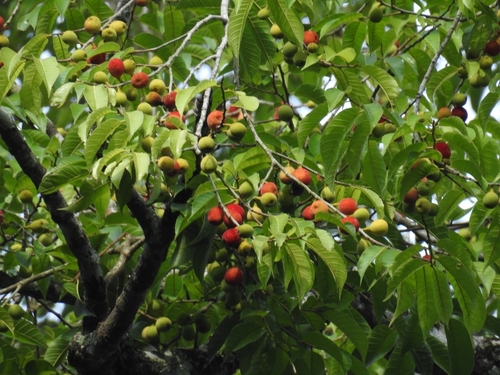
Ficus glomerata
Roxb.
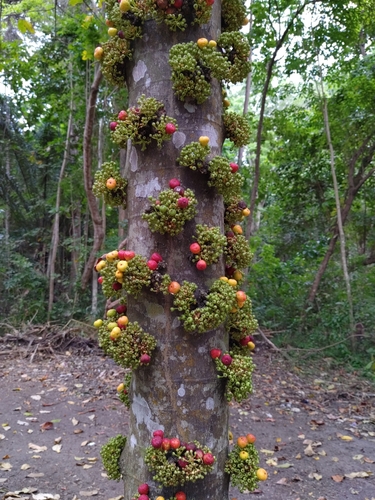
(c) susanneleonhartsberger, some rights reserved (CC BY-NC)
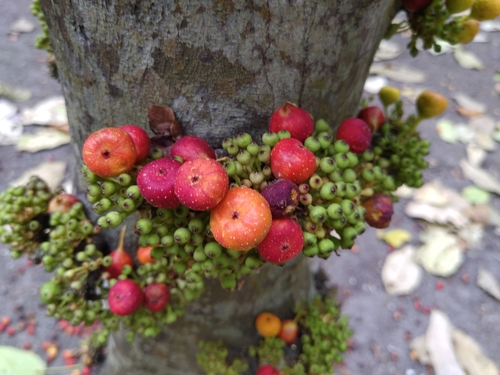
(c) susanneleonhartsberger, some rights reserved (CC BY-NC)
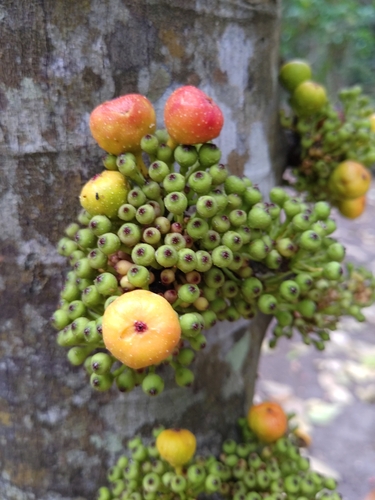
(c) susanneleonhartsberger, some rights reserved (CC BY-NC)
What to Eat
Edible parts: Leaves, Fruit
The fruit and seeds are eaten raw, and the leaves are also consumed.
Where to Find It
It is a subtropical plant. It grows between 300-1,200 m above sea level in Sikkim.
Asia, Cuba, Himalayas, India, Northeastern India, Sikkim, West Indies,
How to Identify
A fig tree (Moraceae, now classified as Ficus racemosa) found in subtropical regions of Sikkim, growing between 300–1,200 m above sea level. Both the fruit and leaves are edible.
Nutrition Score: 22/100
| Part | Moisture | kJ | kcal | Protein | Vit A | Vit C | Iron | Zinc |
|---|---|---|---|---|---|---|---|---|
| Fruit | 14 | — | — | 7.4 | — | — | — | — |
Medicinal Uses
The figs can be eaten when ripe, or used while still green as a vegetable in stir-fries and curries, or made into preserves. The shoots and young leaves are also edible. The Ovambo people call the fruit of the cluster fig eenghwiyu and use it to distill ombike, a traditional liquor. In India, a home remedy is prepared by rubbing the bark on a stone with water to make a poultice to treat boils and mosquito bites. The poultice is left to dry on the skin and reapplied after a few hours. The leaves of the plant can also be used to remove caterpillar hairs lodged in the skin. The affected skin is rubbed lightly with a leaf, effectively dislodging the stinging hairs. The leaves are called lá sung in Vietnam, where they are eaten raw with meat dishes. They are used with rice paper and edible leaves of other plants, such as woolly sewervine, shiso or Ming aralia, to wrap pieces of chicken, pork or goat and eaten in a style similar to the Korean ssam. The figs, called quả sung, are harvested while still green and pickled in a mixture of salt and sugar, then seasoned with chilli, garlic, lime juice and fish sauce.
Names & Synonyms
Atthi, Dumri, Gular, Medi pandlu, Pakhri
References (10)
- Chandrashekara, U. M., 2009, Tree species yielding edible fruit in the coffee-based homegardens of Kerala, India: their diversity, uses and management. Food Sec. 1:361-370
- Dobriyal, M. J. R. & Dobriyal, R., 2014, Non Wood Forest Produce an Option for Ethnic Food and Nutritional Security in India. Int. J. of Usuf. Mngt. 15(1):17-37
- Ghosh, C. & Das A. P., 2011, Some useful and poisonous tea garden weeds from the Darjiling District of West Bengal, India. Pleione 5(1): 91 - 114
- Kuhnlein, H. V., et al, 2009, Indigenous Peoples' food systems. FAO Rome p 195
- Miguel, E., et al, 1989, A checklist of the cultivated plants of Cuba. Kulturpflanze 37. 1989, 211-357
- Namsa, N. D., et al, 2011, Ethnobotany of the Monpa ethnic group ay Arunachal Pradesh, India. Journal of Ethnobiology and Ethnomedicine 7:31
- Pradhan, R., et al, 2020, Potential Wild Edible Plants and its Significance in Livelihood of Indigenous People of Male Mahadeshwara Hills, Karnataka. Economic Affairs Vol. 64, No. 4 pp. 01-14
- Sharma, G., et al, 2016, Agrobiodiversity in the Sikkim Himalaya. International Centre for Integrated Mountain Development, ICIMOD Working Paper 2016/5 p 20
- Sundriyal, M., et al, 2004, Dietary Use of Wild Plant Resources in the Sikkim Himalaya, India. Economic Botany 58(4) pp 626-638
- Wild edible plants of Himachal Pradesh