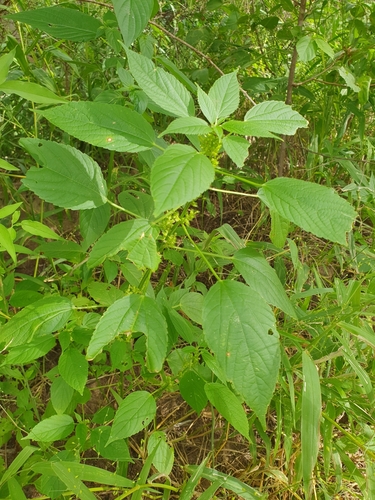
Euphorbia prostrata
Aiton
Prostrate spurge

(c) Douglas Goldman, some rights reserved (CC BY-SA), uploaded by Douglas Goldman
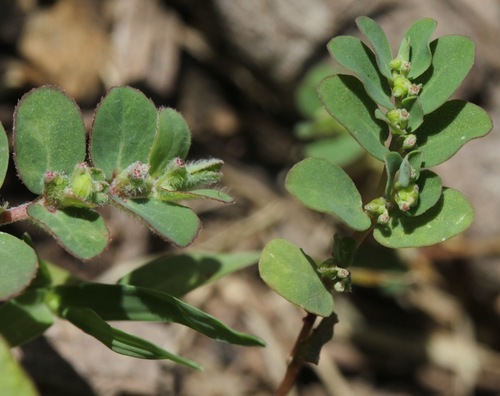
(c) Nathan Taylor, some rights reserved (CC BY-NC), uploaded by Nathan Taylor

(c) Sune Holt, some rights reserved (CC BY-NC), uploaded by Sune Holt
What to Eat
Edible parts: Leaves
The leaves are eaten.
Known Hazards
Where to Find It
It is a tropical plant. It grows from sea level to 1,200 m above sea level in Costa Rica.
Africa, Albania, Algeria, Andaman Is., Argentina, Asia, Australia, Austria, Bahamas, Bangladesh, Benin, Bolivia, Botswana, Brazil, British Indian Ocean Terr., BIOT, Bulgaria, Burkina Faso, Burundi, Cameroon, Canary Is., Central America, Chad, China, Colombia, Congo DR, Congo R, Cook Is., Costa Rica, Cuba, Cyprus, Czech Republic, Djibouti,Dominican Republic, Ecuador, Eritrea, Ethiopia, Fiji, France, French Guiana, Gabon, Germany, Ghana, Greece, Guinea, Guinea-Bissau, Guatemala, Guyana, Haiti, Hawai, Himalayas, Honduras, Hungary, India, Indonesia, Iran, Italy, Ivory Coast, Kiribati, Jamaica, Japan, Liberia, Malawi, Mexico, Mozambique, Narau, Nepal, New Caledonia, Nicaragua, Nigeria, Niue, Norfolk Is., North America, Northeastern India, Pacific, Pakistan, Palestine, Peru, Portugal, Puerto Rico, Romania, Rwanda, Samoa, Senegal, Seychelles, Sierra Leone, Spain, St Helena, Sudan, Suriname, Switzerland, Taiwan, Thailand, Togo, Tokelau, Tonga, Trinidad-Tobago, Ukraine, USA, Vanuatu, Venezuela, Yugoslavia, Zambia, Zimbabwe,
How to Identify
A herb. It is low growing and occurs in lawns and gardens. It is 5-20 cm long. The leaves are 2-9 mm long and 1-5 mm wide.
How to Grow
The plant is a prolific seed producer. Most seeds will germinate at the same time when ecological conditions are favourable, especially during the rainy season. It is considered a weed, and can be a nuisance in crops due to the large number of seedlings. Euphorbia prostrata grows rapidly, flowering and producing fruits just 12 - 14 weeks after germination. It can be found flowering and fruiting throughout the year if enough water is available.
Medicinal Uses
Euphorbia prostrata extract has been found effective for treatment of bleeding hemorrhoids due to its contents of flavonoids, phenolics and phenolic acids. Euphorbia prostrata extract tablets have been marketed in India and the US by Panacea Biotec Ltd.
Other Uses
The plant is known to accumulate heavy metals from the soil.
Wikipedia
Source ↗Euphorbia prostrata is a species of spurge known by the common name prostrate spurge or prostrate sandmat. It is native to the Caribbean and certain parts of South America. It is widely naturalized in many other parts of the world, where it can be found in varied habitat types and in many areas grows as a roadside weed.
Names & Synonyms
Toto fifine
References (4)
- Dobriyal, M. J. R. & Dobriyal, R., 2014, Non Wood Forest Produce an Option for Ethnic Food and Nutritional Security in India. Int. J. of Usuf. Mngt. 15(1):17-37
- Kew Plants of the World Online
- Parham, B. E. V., 1971, The Vegetation of the Tokelau Islands with special reference to the Plants of Nukunonu Atoll. New Zealand Journal of Botany. 9:4, 576-609
- Topp, J. M. W., 1988, An Annotated Check List of the Flora of Diego Garcia, British Ocean Territory. Atoll Research Bulletin No. 313