Rhodiola imbricata
Edgew.
Rose root
CrassulaceaeLeaves
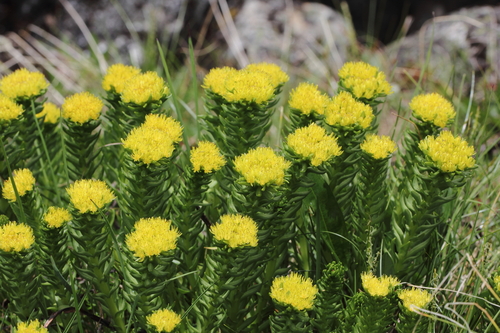
iNaturalist · cc-by-nc
(c) Suresh Ghimire, some rights reserved (CC BY-NC), uploaded by Suresh Ghimire
(c) Suresh Ghimire, some rights reserved (CC BY-NC), uploaded by Suresh Ghimire
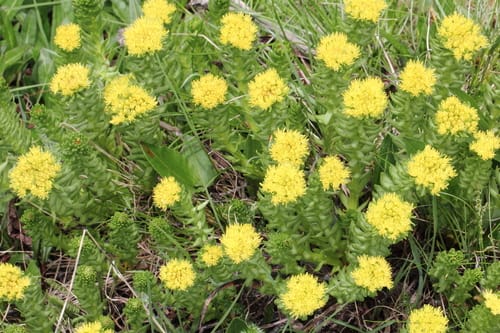
iNaturalist · cc-by-nc
(c) Suresh Ghimire, some rights reserved (CC BY-NC)
(c) Suresh Ghimire, some rights reserved (CC BY-NC)
What to Eat
Edible parts: Leaves
The young leaves are boiled and eaten with curd.
Where to Find It
It is a temperate plant. In the Indian Himalayas it grows between 3,500-5,000 m above sea level.
Asia, Central Asia, Himalayas, India, Tajikistan,
Countries: United Arab Emirates, Afghanistan, Armenia, Azerbaijan, Bangladesh, Bahrain, Brunei, Bhutan, China, Georgia, Indonesia, Israel, India, Iraq, Iran, Jordan, Japan, Kyrgyzstan, Cambodia, North Korea, South Korea, Kuwait, Kazakhstan, Laos, Lebanon, Sri Lanka, Myanmar, Mongolia, Maldives, Malaysia, Nepal, Oman, Philippines, Pakistan, Qatar, Saudi Arabia, Singapore, Syria, Thailand, Tajikistan, Timor-Leste, Turkmenistan, Turkey, Taiwan, Uzbekistan, Vietnam, Yemen
How to Identify
A temperate herb of the Crassulaceae family that grows in the Indian Himalayas at elevations of 3,500-5,000 m.
Names & Synonyms
Shrolo, Shrolo-serpo
Sedum imbricatum (Edgew.) Walp.
References (3)
- Dobriyal, M. J. R. & Dobriyal, R., 2014, Non Wood Forest Produce an Option for Ethnic Food and Nutritional Security in India. Int. J. of Usuf. Mngt. 15(1):17-37
- Dorjey, K., et al, 2012, Ethnobotanical observations in Trans-Himalayan Region of Ladakh. Journal of Plant Development Sciences Vol. 4 (4): 459-464.
- Sharma, L. et al, 2018, Diversity, distribution pattern, endemism and indigenous uses of wild edible plants in Cold Desert Biosphere Reserve of Indian Trans Himalaya. Indian Journal of Traditional Knowledge. Vol 17(1) January 2018 pp 122-131