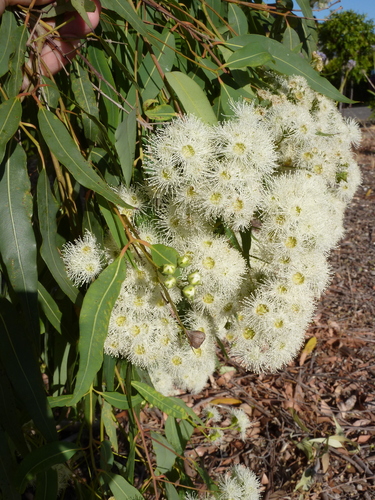
Psidium myrtoides
O. Berg
Aracacica

(c) Júlia Gava Sandrini, some rights reserved (CC BY-NC), uploaded by Júlia Gava Sandrini

(c) João Medeiros, some rights reserved (CC BY)

(c) João Medeiros, some rights reserved (CC BY)
What to Eat
Edible parts: Fruit
Fruit - raw. A fleshy and sweetish pulp.The red to greeny-yellow globose fruit can be 25mm in diameter, containing several small, hard seeds.
Where to Find It
It is a tropical plant.
Brazil, South America,
How to Identify
A tropical tree in the Myrtaceae family growing 4-6 m tall, bearing edible fruit.
How to Grow
Succeeds in full sun and in dappled shade. Established plants are drought tolerant. Trees are generally slow growing.
Propagation: Seed - best sown as soon as it is ripe in a partially shaded position in a nursery seedbed. A low germination rate can be expected, with the seed sprouting within a few weeks. When the seedlings are 5 - 7cm tall, pot them up into individual containers and they should be ready to plant out 7 - 8 months later.
Other Uses
The wood is of medium texture, compact, moderately heavy, hard, with moderate mechanical properties and moderately durable. Its small size limits it to uses such as light cabinet making, small general constructions, boxes, crates, tool handles, agricultural implements etc. The wood is used for fuel and to make charcoal.
Wikipedia
Source ↗Psidium myrtoides, commonly known as purple forest guava or araçá-una, is a species of plant in the family Myrtaceae. It is found in Atlantic Forest in São Paulo and northern Paraná, Brazil. The plant grows up to 4–6 meter and sometimes 8 meters tall. It blooms from October to December with solitary white flowers. Fruits are round and 2.5–4.2 cm wide with a reddish pulp that is somewhat bitter and with around ten white seeds. It is sometimes misidentified as the nonexistent Psidium eugeniaefolia. The plant is tolerant of different types of soil with pH ranging from 5.5 to 6.2. It can take temperatures of up to −4 degrees Celsius.
Names & Synonyms
References (1)
- www.colecionandofrutas.org