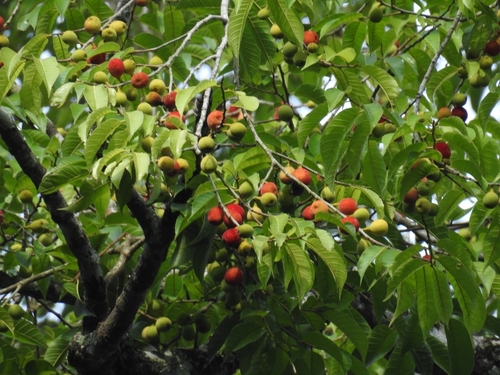
Ficus chartacea
(Wall. ex Kurz) Wall. ex King
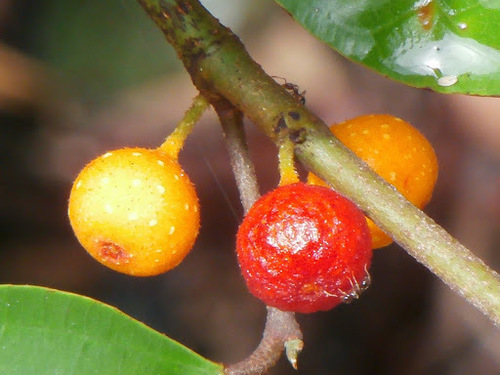
MoraceaeFruit
iNaturalist · cc-by-nc-sa
(c) 106611639464075912591, some rights reserved (CC BY-NC-SA), uploaded by 106611639464075912591
(c) 106611639464075912591, some rights reserved (CC BY-NC-SA), uploaded by 106611639464075912591
iNaturalist · cc-by-nc
(c) chugbug111, some rights reserved (CC BY-NC)
(c) chugbug111, some rights reserved (CC BY-NC)

iNaturalist · cc-by-nc
(c) chugbug111, some rights reserved (CC BY-NC)
(c) chugbug111, some rights reserved (CC BY-NC)
What to Eat
Edible parts: Fruit
The fruit are eaten.
Where to Find It
It is a tropical plant. In Yunnan in China it grows along streams between 1,400-1,800 m above sea level.
Asia, China, Indonesia, Malaysia, Myanmar, SE Asia, Thailand, Vietnam,
Countries: United Arab Emirates, Afghanistan, Armenia, Azerbaijan, Bangladesh, Bahrain, Brunei, Bhutan, China, Georgia, Indonesia, Israel, India, Iraq, Iran, Jordan, Japan, Kyrgyzstan, Cambodia, North Korea, South Korea, Kuwait, Kazakhstan, Laos, Lebanon, Sri Lanka, Myanmar, Mongolia, Maldives, Malaysia, Nepal, Oman, Philippines, Pakistan, Qatar, Saudi Arabia, Singapore, Syria, Thailand, Tajikistan, Timor-Leste, Turkmenistan, Turkey, Taiwan, Uzbekistan, Vietnam, Yemen
How to Identify
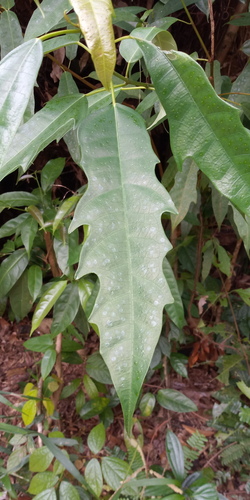
A shrub. The leaf stalks are 2-3 cm long. The leaves are narrowly oval and 9-10 cm long by 3-4 cm wide. The figs are in the axils of leaves on normal branches. The figs are single or in pairs and 5-7 mm across.
Names & Synonyms
Ding-za
Ficus chartacea var. torulosa Kingand others
References (1)
- Kuhnlein, H. V., et al, 2009, Indigenous Peoples' food systems. FAO Rome p 175 (As Ficus chartacea var. torulosa)