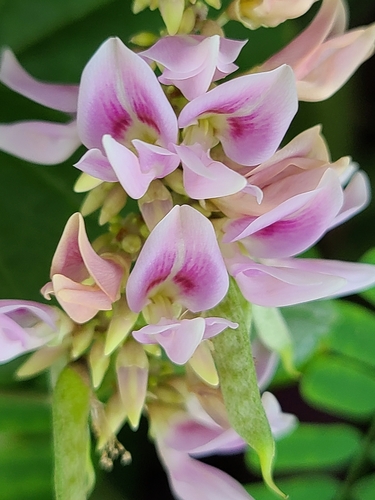
Cassia renigera
Benth.
FabaceaeFlowers

iNaturalist · cc-by-nc
(c) rodneydcunha, some rights reserved (CC BY-NC)
(c) rodneydcunha, some rights reserved (CC BY-NC)

iNaturalist · cc-by-nc
(c) rodneydcunha, some rights reserved (CC BY-NC)
(c) rodneydcunha, some rights reserved (CC BY-NC)

iNaturalist · cc-by-nc
(c) rodneydcunha, some rights reserved (CC BY-NC)
(c) rodneydcunha, some rights reserved (CC BY-NC)
What to Eat
Edible parts: Flowers
The flowers are eaten.
Where to Find It
It is a tropical plant.
Asia, India,
Countries: United Arab Emirates, Afghanistan, Armenia, Azerbaijan, Bangladesh, Bahrain, Brunei, Bhutan, China, Georgia, Indonesia, Israel, India, Iraq, Iran, Jordan, Japan, Kyrgyzstan, Cambodia, North Korea, South Korea, Kuwait, Kazakhstan, Laos, Lebanon, Sri Lanka, Myanmar, Mongolia, Maldives, Malaysia, Nepal, Oman, Philippines, Pakistan, Qatar, Saudi Arabia, Singapore, Syria, Thailand, Tajikistan, Timor-Leste, Turkmenistan, Turkey, Taiwan, Uzbekistan, Vietnam, Yemen
How to Identify
A tropical tree in the Fabaceae family.
Medicinal Uses
It is used medicinally as a substitute to Cassia fistula for treating constipation, colic, chlorosis and urinary disorders. Its leaves are effective against herpes simplex and the bark of C. javanica is one of the ingredients in ayurvedic and other traditional medicine antidiabetic formulations. C. javanica yields a lightweight to heavy hardwood that is used for general construction, furniture and cabinet making. The bark of C. javanica is used for tanning in the leather processing industry.
Names & Synonyms
Cassia javanica subsp. renigera Benth.
References (1)
- Ekka, N. S. & Ekka, A., 2016, Wild Edible plants Used by Tribals of North-east Chhattisgarh (Part-I), India. Research Journal of Recent Sciences. Vol. 5(ISC-2015), 127-131 (2016) With different authorities.