Willughbeia tenuiflora
Dyer ex Hook.f.
ApocynaceaeFruit
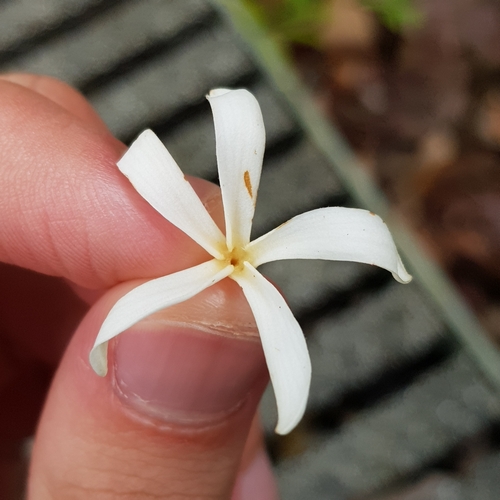
iNaturalist · cc-by
(c) pbsg, some rights reserved (CC BY), uploaded by pbsg
(c) pbsg, some rights reserved (CC BY), uploaded by pbsg
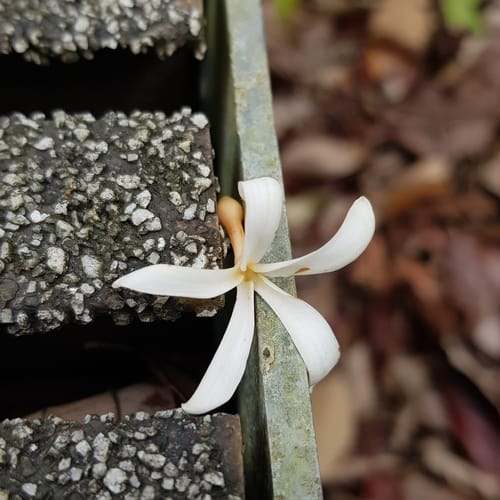
iNaturalist · cc-by
(c) pbsg, some rights reserved (CC BY)
(c) pbsg, some rights reserved (CC BY)
What to Eat
Edible parts: Fruit
The pear-shaped fruit is eaten.
Where to Find It
It is a tropical plant.
Asia, Malaysia, SE Asia, Singapore,
Countries: United Arab Emirates, Afghanistan, Armenia, Azerbaijan, Bangladesh, Bahrain, Brunei, Bhutan, China, Georgia, Indonesia, Israel, India, Iraq, Iran, Jordan, Japan, Kyrgyzstan, Cambodia, North Korea, South Korea, Kuwait, Kazakhstan, Laos, Lebanon, Sri Lanka, Myanmar, Mongolia, Maldives, Malaysia, Nepal, Oman, Philippines, Pakistan, Qatar, Saudi Arabia, Singapore, Syria, Thailand, Tajikistan, Timor-Leste, Turkmenistan, Turkey, Taiwan, Uzbekistan, Vietnam, Yemen
How to Identify
A woody climber. The branches have rusty hairs. The leaf stalks are 1-2 cm long. The leaves are oblong and 5-22 cm long by 2-9 cm wide. The base is wedge shaped and they taper to the tip. The flowers are in the axils of leaves. There are 8-18 flowers in a group/ The fruit are pear shaped and 6-15 cm long by 5-11 cm wide. The seeds are 2 cm long by 1 cm wide.
Names & Synonyms
Akar getah gerip
Ancylocladus tenuiflorus (Dyer ex Hook.f.) Kuntze
References (3)
- Middleton, D. J. & Rodda, M., 2019, Apocynaceae. Flora of Singapore (Vol. 13:421-630, 2019) p 490
- Milow, P., et al, 2013, Malaysian species of plants with edible fruits or seeds and their evaluation. International Journal of Fruit Science. 14:1, 1-2
- World Checklist of Useful Plant Species 2020. Royal Botanic Gardens, Kew


