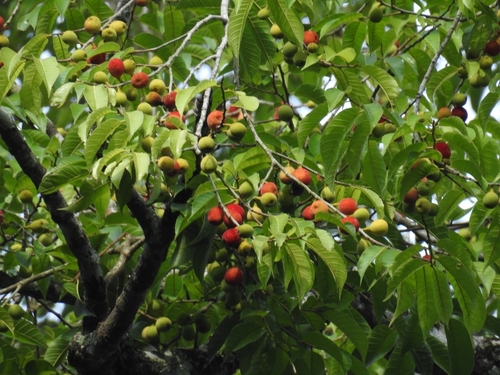
Ficus abelii
Miq.
MoraceaeFruit

iNaturalist · cc-by-nc-sa
(c) Johannes Lundberg, some rights reserved (CC BY-NC-SA)
(c) Johannes Lundberg, some rights reserved (CC BY-NC-SA)

iNaturalist · cc-by-nc-sa
(c) Johannes Lundberg, some rights reserved (CC BY-NC-SA)
(c) Johannes Lundberg, some rights reserved (CC BY-NC-SA)
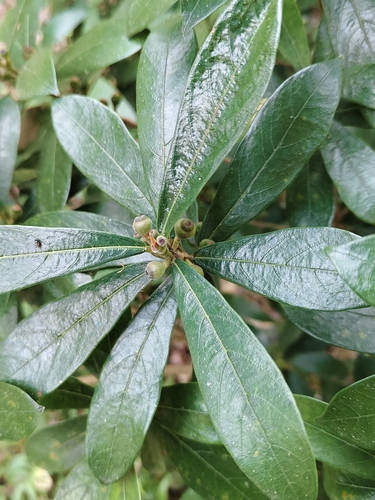
iNaturalist · cc-by-nc
(c) 綾蛾Actias, some rights reserved (CC BY-NC)
(c) 綾蛾Actias, some rights reserved (CC BY-NC)
What to Eat
Edible parts: Fruit
The figs are eaten as fruit.
Where to Find It
It is a tropical plant. In Sichuan and Yunnan.
Asia, Bangladesh, Cambodia, China, India, Myanmar, Nepal, SE Asia, Thailand, Vietnam,
Countries: United Arab Emirates, Afghanistan, Armenia, Azerbaijan, Bangladesh, Bahrain, Brunei, Bhutan, China, Georgia, Indonesia, Israel, India, Iraq, Iran, Jordan, Japan, Kyrgyzstan, Cambodia, North Korea, South Korea, Kuwait, Kazakhstan, Laos, Lebanon, Sri Lanka, Myanmar, Mongolia, Maldives, Malaysia, Nepal, Oman, Philippines, Pakistan, Qatar, Saudi Arabia, Singapore, Syria, Thailand, Tajikistan, Timor-Leste, Turkmenistan, Turkey, Taiwan, Uzbekistan, Vietnam, Yemen
How to Identify
A shrub that lies over. It can grow 1-2.5 m tall. The bark is dark grey. The small branches and leaf stalks have short grey-white hairs. The leaf stalks are 4-10 mm long. The leaves are narrowly oval and 4-9 cm long by 1-2 cm wide. They are hairy underneath. The figs are in the axils of leaves on normal branches. They are red to brown and up to 2 cm across.
Names & Synonyms
Chrey teuk
Ficus pyriformis var. abelii (Miq.) KingFicus schinzii H. Lev. & VaniotFicus subpyriformis Miq.
References (1)
- Cengel, D. J. & Dany, C., (Eds), 2016, Integrating Forest Biodiversity Resource Management and Sustainable Community Livelihood Development in the Preah Vihear Protected Forest. International Tropical Timber Organization p 121 (As Ficus subpyriformis)