Begonia crenata
Dryand.
BegoniaceaeLeaves
iNaturalist · cc-by-nc
(c) swanand kesari, some rights reserved (CC BY-NC), uploaded by swanand kesari
(c) swanand kesari, some rights reserved (CC BY-NC), uploaded by swanand kesari

iNaturalist · cc-by
(c) Ramesh Shenai Jr., some rights reserved (CC BY), uploaded by Ramesh Shenai Jr.
(c) Ramesh Shenai Jr., some rights reserved (CC BY), uploaded by Ramesh Shenai Jr.

iNaturalist · cc-by-nc
(c) diptihumraskar, some rights reserved (CC BY-NC), uploaded by diptihumraskar
(c) diptihumraskar, some rights reserved (CC BY-NC), uploaded by diptihumraskar
What to Eat
Edible parts: Leaves
The leaves are eaten raw in salads, used for pickling, or cooked as a vegetable.
Where to Find It
It is a tropical plant. It grows on humus rich cliffs and along streams.
Asia, India,
Countries: United Arab Emirates, Afghanistan, Armenia, Azerbaijan, Bangladesh, Bahrain, Brunei, Bhutan, China, Georgia, Indonesia, Israel, India, Iraq, Iran, Jordan, Japan, Kyrgyzstan, Cambodia, North Korea, South Korea, Kuwait, Kazakhstan, Laos, Lebanon, Sri Lanka, Myanmar, Mongolia, Maldives, Malaysia, Nepal, Oman, Philippines, Pakistan, Qatar, Saudi Arabia, Singapore, Syria, Thailand, Tajikistan, Timor-Leste, Turkmenistan, Turkey, Taiwan, Uzbekistan, Vietnam, Yemen
How to Identify
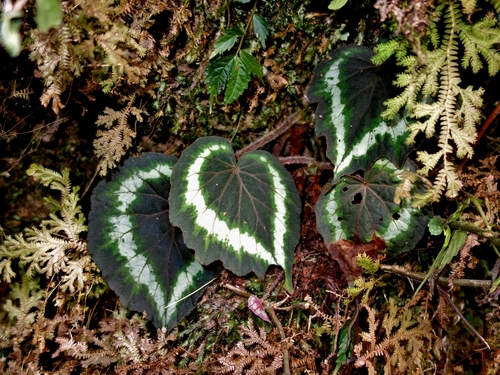
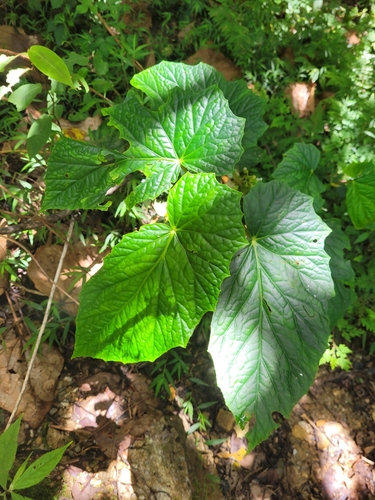
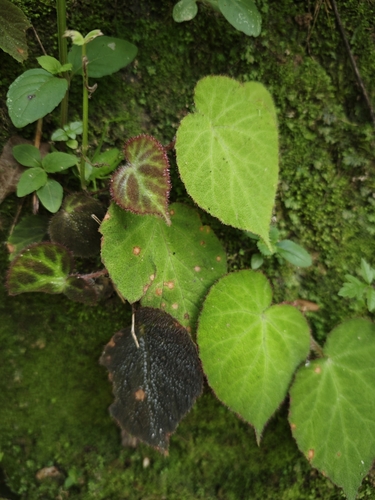
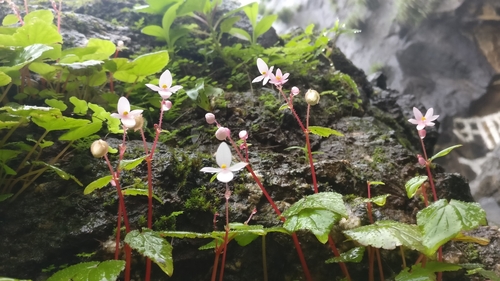
A tropical herb in the Begoniaceae family that grows on humus-rich cliffs and along streams, with edible leaves.
Wikipedia
Source ↗Begonia crenata is a species of plant in the family Begoniaceae.
Names & Synonyms
Ambadi, Kapru, Khadak-ambadi, Khattibhaji, Mutia
Begonia minima Bedd.Saueria crenata (Dryand.) Hassk.
References (4)
- Bhogaonkar, P. Y. & Devarkar, V. D., 2018. Inventory for ethnovegetable knowledge of the tribals of Satpura hill area-Melghat, Dist. Amravati (India), Plantae Scientia, 2018; Vol. 01 Issue 01: 01-08
- Jadhav, R., et al, 2015, Forest Foods of Northern Western Ghats: Mode of Consumption, Nutrition and Availability. Asian Agri-History Vol. 19, No. 4: 293-317
- Kiran, K. C., et al, 2019, Diversity and Seasonal Availability of Potential Wild Edible Plants from Vidarbha Region of Maharashtra State, India. Int.J.Curr.Microbiol.App.Sci (2019) 8(2): 1434-1446
- Prabha, Y. P., et al, 2010, Documentation of Wild Edible Plants of Melghat Forest, Dist. Amravati, Maharashtra State, India. Ethnobotanical Leaflets 14: 751-58, 2010.