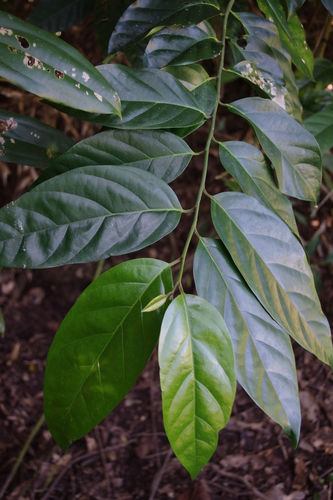
Gomphandra quadrifida
(Blume) Sleumer
StemonuraceaeLeaves

iNaturalist · cc-by-nc-nd
(c) loupok, some rights reserved (CC BY-NC-ND)
(c) loupok, some rights reserved (CC BY-NC-ND)
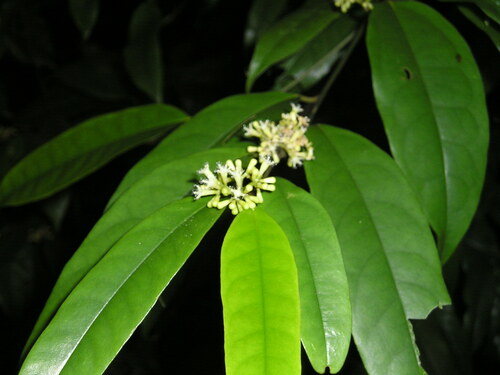
iNaturalist · cc-by-nc
(c) setapion, some rights reserved (CC BY-NC)
(c) setapion, some rights reserved (CC BY-NC)
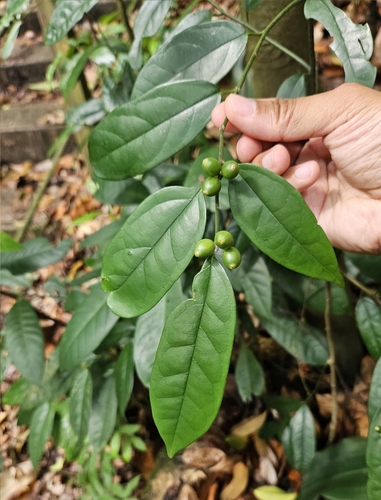
iNaturalist · cc-by-nc
(c) kaigrr, some rights reserved (CC BY-NC)
(c) kaigrr, some rights reserved (CC BY-NC)
What to Eat
Edible parts: Leaves
Young leaves are cooked and eaten.
Where to Find It
It is a tropical plant.
Asia, Malaysia, SE Asia,
Countries: United Arab Emirates, Afghanistan, Armenia, Azerbaijan, Bangladesh, Bahrain, Brunei, Bhutan, China, Georgia, Indonesia, Israel, India, Iraq, Iran, Jordan, Japan, Kyrgyzstan, Cambodia, North Korea, South Korea, Kuwait, Kazakhstan, Laos, Lebanon, Sri Lanka, Myanmar, Mongolia, Maldives, Malaysia, Nepal, Oman, Philippines, Pakistan, Qatar, Saudi Arabia, Singapore, Syria, Thailand, Tajikistan, Timor-Leste, Turkmenistan, Turkey, Taiwan, Uzbekistan, Vietnam, Yemen
How to Identify
A tropical tree in the family Stemonuraceae. Young leaves are cooked and eaten as a leafy vegetable.
How to Grow
A dioecious species, both male and female forms need to be grown if fruit and seed are required.
Medicinal Uses
A decoction of the root is taken after giving birth. A decoction of the roots (var ovalifolia) is used in the treatment of rheumatism.
Names & Synonyms
Belhau
Gomphandra affinis var. floribunda Ridl.and several others
References (1)
- Ong, H., et al, 2012, Traditional knowledge and usage of edible plants among the Semai community of Kampung Batu 16, Tapah, Perak, Malaysia. Scientific Research and Essays Vol. 7(4), pp. 441-445, 30 January, 2012