Cuscuta australis
R. Br.
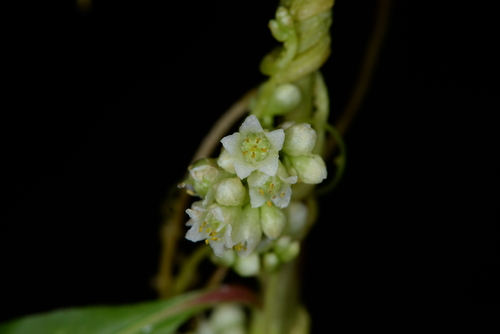
(c) lecanorchis, some rights reserved (CC BY-NC)

(c) Molnár Ábel Péter, some rights reserved (CC BY-NC), uploaded by Molnár Ábel Péter

(c) MP Zhou, some rights reserved (CC BY-NC), uploaded by MP Zhou
Known Hazards
Where to Find It
It is a tropical plant.
Asia, Europe, Korea, Mongolia, SE Asia, Thailand,
How to Identify
A herb. It is a slender thread like creeper. It grows attached to other plants. The flowers are about 2 mm across in compact heads.
How to Grow
Plants can grow from seed.
Wikipedia
Source ↗Cuscuta australis, commonly known as Australian dodder, is a herb in the family Convolvulaceae. The annual parasitic twining herb or climber that is associated with many hosts. It blooms between November and March producing 5-merous white-cream-yellow flowers in compact clusters on pedicels which are less than 2.5 millimetres (0.1 in) long. The lobes are rounded-triangular and shorter than or equal in length to the corolla tube. It parasitises both native and exotic plants. To maximize its seed yield, it synchronizes its flowering to that of its host plant via detection of a signaling protein in the host.
Other Information
These Cuscuta parasite plants can cause significant crop losses, especially for pulses.
Notes
Probably mainly as medicine. Cuscuta plants are parasites growing on other plants. Sometimes also put in the family Cuscutaceae.
Names & Synonyms
References (1)
- Maisuthisakul, P., 2012, Phenolic Constituents and Antioxidant Properties of some Thai Plants. Chp. 9 in Book Phytochemicals - A Global Perspective of Their Role in Nutrition and Health


