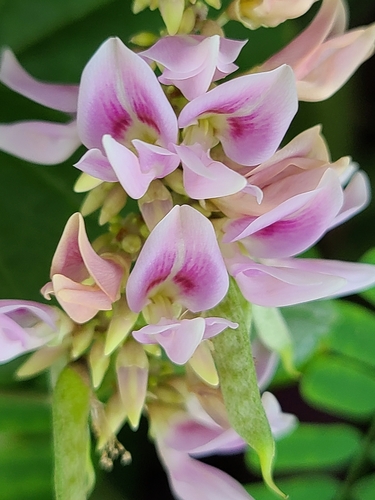
Astragalus cicer
L.
fodder
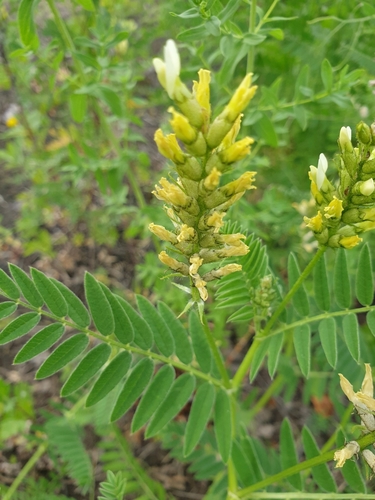
iNaturalist · cc-by-nc
(c) Tatyana Zarubo, some rights reserved (CC BY-NC), uploaded by Tatyana Zarubo
(c) Tatyana Zarubo, some rights reserved (CC BY-NC), uploaded by Tatyana Zarubo
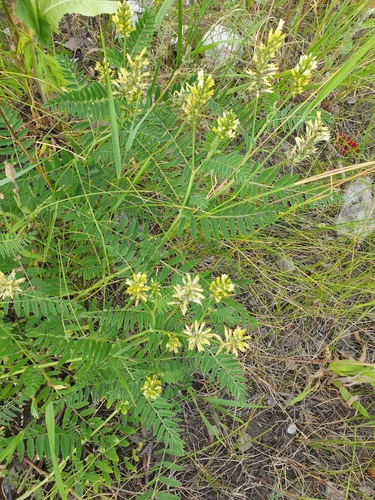
iNaturalist · cc-by-nc
(c) Tatyana Zarubo, some rights reserved (CC BY-NC), uploaded by Tatyana Zarubo
(c) Tatyana Zarubo, some rights reserved (CC BY-NC), uploaded by Tatyana Zarubo
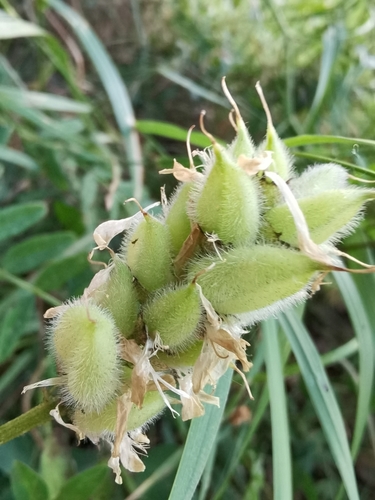
iNaturalist · cc-by-nc
(c) Andreas Berger, some rights reserved (CC BY-NC), uploaded by Andreas Berger
(c) Andreas Berger, some rights reserved (CC BY-NC), uploaded by Andreas Berger
What to Eat
Edible parts: Fruit
The fruit are cooked and eaten as a vegetable.
Where to Find It
It is a temperate plant.
Europe, Slovenia, Switzerland,
Countries: Andorra, Albania, Austria, Bosnia & Herzegovina, Belgium, Bulgaria, Belarus, Switzerland, Cyprus, Czechia, Germany, Denmark, Estonia, Spain, Finland, France, United Kingdom, Greece, Croatia, Hungary, Ireland, Iceland, Italy, Liechtenstein, Lithuania, Luxembourg, Latvia, Monaco, Moldova, Montenegro, North Macedonia, Malta, Netherlands, Norway, Poland, Portugal, Romania, Serbia, Russia, Sweden, Slovenia, Slovakia, San Marino, Ukraine
How to Identify
A temperate herbaceous plant in the Fabaceae family, cultivated for its edible fruit.
Wikipedia
Source ↗Astragalus cicer, the chickpea milkvetch, chick-pea milk-vetch or cicer milkvetch, is a perennial flowering plant native to Eastern Europe, popularized and subsequently transported to areas in Southern Europe, North America, and South America. It produces pods that resemble those of chickpeas. Its flowers are usually of pale yellow tint (sometimes white), and attract bumble or European honey bees for pollination. Growth often exceeds 0.6 meters, up to a height of 1 meter in length.
Names & Synonyms
čičkasti grahovec
Astragalus cicer var. angustifolius Celak.Astragalus cicer var. dieffenbachii HegiAstragalus cicer var. heldaviensis FussAstragalus cicer var. major DC.Astragalus cicer var. microphyllus (L.) Asch. & Graebn.Astragalus cicer var. pseudo-cicer (Opiz) BeckAstragalus cicer var. speciosus SchurAstragalus microphyllus L.Astragalus mucronatus DC.Astragalus pseudo-cicer OpizAstragalus vesicarius Lam.Cystium cicer (L.) StevenGlaux astragaloides Medik.Tragacantha cicer (L.) Kuntze
References (1)
- Abbet, C., et al, 2014, Ethnobotanical survey on wild alpine food plants in Lower and Central Valais (Switzerland). Journal of Ethnopharmacology 151 (2014) 624–634