Dimorphandra polyandra
Benoist
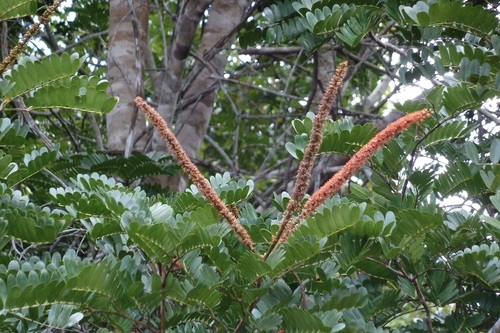
(c) coqwallon, some rights reserved (CC BY-NC)
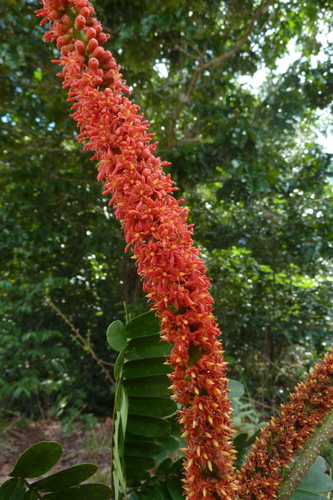
(c) coqwallon, some rights reserved (CC BY-NC)

(c) Guillaume Delaitre, some rights reserved (CC BY)
What to Eat
Edible parts: Seeds
The seeds are eaten.
Where to Find It
It is a tropical plant.
Amazon, Brazil, French Guiana, Guianas, Guyana, Suriname, Venezuela,
How to Identify
A tropical tree in the Fabaceae family.
Other Uses
The heartwood is light yellow when freshly cut, quickly turning light brown to brown or reddish brown; it is not clearly demarcated from the 4 - 6cm wide band of sapwood. The texture is coarse; the grain usually straight but sometimes it is slightly irregular interlocked. The wood is of moderate weight, moderately hard; not very durable, being susceptible to dry wood borers and moderately resistant to fungi and termites. It seasons normally, with only a slight risk of checking but a high risk of distortion; once dry it is moderately stable to stable in service. It works with ordinary tools; nailing and screwing are good; gluing is correct. Because of a prevalence of brittleheart there can be low yields, with less than 30% of the wood being suitable for use. It is used for purposes such as joinery, light carpentry, furniture components, boxes and crates.
Names & Synonyms
Aie-oueko, Dakama, Huruhurudan, Saramaccan
References (1)
- Grandtner, M. M. & Chevrette, J., 2013, Dictionary of Trees, Volume 2: South America: Nomenclature, Taxonomy and Ecology. Academic Press p 200




