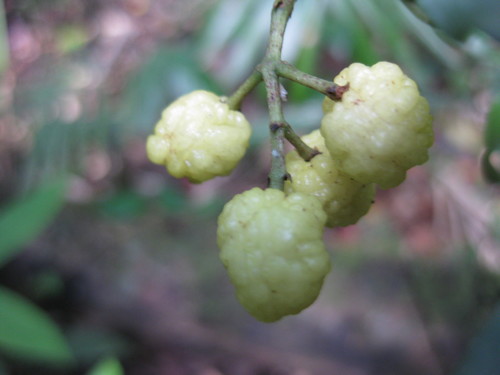
Fagara inaequalis
Engl.
RutaceaeSeeds/Nuts

wikimedia · cc-by-sa
Wikimedia Commons - Ji-Elle
Wikimedia Commons - Ji-Elle

wikimedia · cc-by-sa
Wikimedia Commons - Ji-Elle
Wikimedia Commons - Ji-Elle
What to Eat
Edible parts: Seeds - oil
Oil is extracted from the seeds.
Where to Find It
It is a tropical plant.
Africa, Central Africa, Congo DR, Nigeria, Zambia,
Countries: Angola, Burkina Faso, Burundi, Benin, Botswana, Congo (DRC), Central African Republic, Congo (Republic), Cote d'Ivoire, Cameroon, Cape Verde, Djibouti, Algeria, Egypt, Eritrea, Ethiopia, Gabon, Ghana, Gambia, Guinea, Equatorial Guinea, Guinea-Bissau, Kenya, Comoros, Liberia, Lesotho, Libya, Morocco, Madagascar, Mali, Mauritania, Mauritius, Malawi, Mozambique, Namibia, Niger, Nigeria, Rwanda, Seychelles, Sudan, Sierra Leone, Senegal, Somalia, South Sudan, Sao Tome & Principe, Eswatini, Chad, Togo, Tunisia, Tanzania, Uganda, South Africa, Zambia, Zimbabwe
How to Identify
A tree. It grows 10-40 m tall. The trunk can be 40-100 cm across. The leaves are 20-80 cm long and have leaflets along the stalk and one at the end. There are 8-14 pairs of leaflets. The seeds are round and 3-4 mm across.
Names & Synonyms
Bolongolo, Dongolo, Ikungusele, Kamasumu, Kanyabumbu, Kimpanga, Kitutube, Kysanga, Mbi, Mulungulu, Nzongo, Olongo, Zongo
Fagara iturensis Engl.Fagara melanorachis Hoyle
References (2)
- Gilbert, G., 1958, Flore du Congo Belge et du Ruanda-Urundi: Rutaceae. vol. 7, p. 88
- The Digital Flora of Central Africa (Democratic Republic of Congo, Rwanda & Burundi) Botanical Garden Meise