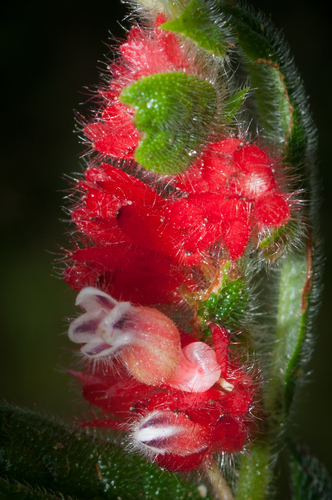
Drymonia coriacea
(Oerst. ex Hanst.) Wiehler
GesneriaceaeFlowers

iNaturalist · cc-by-nc
(c) Florence Le Strat, some rights reserved (CC BY-NC), uploaded by Florence Le Strat
(c) Florence Le Strat, some rights reserved (CC BY-NC), uploaded by Florence Le Strat
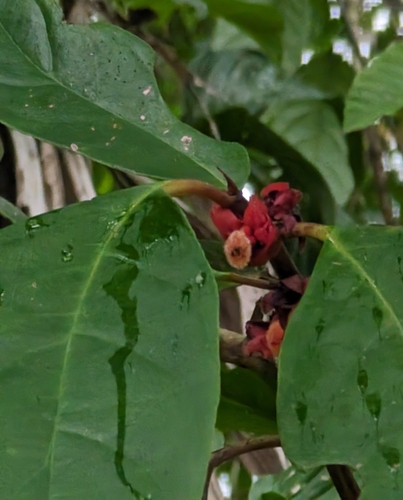
iNaturalist · cc-by
(c) Alan Prather, some rights reserved (CC BY), uploaded by Alan Prather
(c) Alan Prather, some rights reserved (CC BY), uploaded by Alan Prather

iNaturalist · cc-by-nc
(c) alfredofzm, some rights reserved (CC BY-NC)
(c) alfredofzm, some rights reserved (CC BY-NC)
What to Eat
Edible parts: Flowers
The flowers are eaten.
Where to Find It
It is a tropical plant. It grows in secondary forests up to 600 m above sea level.
Bolivia, Central America, Colombia, Costa Rica, Ecuador, Nicaragua, Panama, Peru, South America,
How to Identify
A shrub that grows attached to other plants. It can be climbing. The stems are up to 2.5 m long.
Medicinal Uses
A decoction of the crushed leaves is used as a remedy for toothache and mouth ulcers. The decoction is gargled when warm and may be kept in mouth for five minutes.
Names & Synonyms
Fimu pini tape kumuinchi bulu kuras as delaanu, Kiyanchi kushnu tape, Pini ja
Alloplectus coriaceus (Oerst. ex Hanst.) Hanst.Alloplectus ventricosus Donn.Sm.Crantzia coriacea (Oerst. ex Hanst.) FritschErythranthus coriaceus Oerst. ex Hanst.
References (3)
- Barfod, A. S. & Kvist, L. P., 1996, Comparative Ethnobotanical Studies of the Amerindian Groups in Coastal Ecuador. The Danish Academy of Sciences and Letters. p 81
- Torre, de la, L., et al, 2008, Enciclopedia de las Plantas Útiles del Ecuador. Herbario QCA. Pontificia Universidad Católica del Ecuador. p 373
- Useful Tropical Plants.