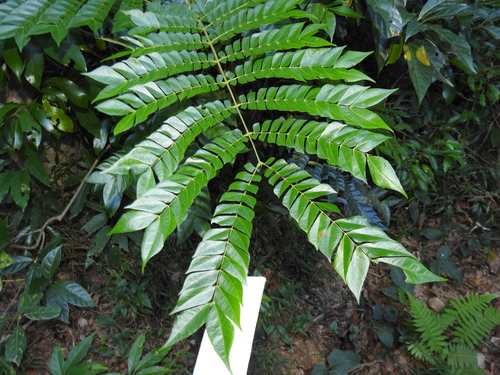
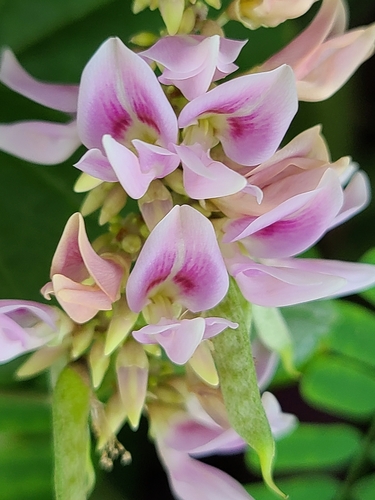
Caution — Parts of this plant may be toxic or require specific preparation. Verify with multiple sources before consuming.
iNaturalist · cc-by (c) portioid, some rights reserved (CC BY), uploaded by portioid
iNaturalist · cc-by-nc-sa (c) Johannes Lundberg, some rights reserved (CC BY-NC-SA)
iNaturalist · cc-by-nc (c) Alan Kwok (King Lun), Ada Tai (Ah Heung) / 阿達蘭 AdAlan, some rights reserved (CC BY-NC)
What to Eat
Edible parts: Fruit, Seeds
The fruit pods and seeds are eaten.
Known Hazards
Although we have no specific information for this species, the seeds of several other members of this genus contain the amino acid derivative djenkolic acid. Ingestion of seed containing this substance can cause the formation of sharp needle-like crystals of djenkolic acid in the kidney or urinary tract. In severe cases, crystals of djenkolic acid have been found in urine. Indeed, people who are suffering from djenkolism show similar symptoms to those suffering from kidney or urinary stones, a condition for which it has been frequently mistaken.
Where to Find It
It is a tropical plant. It grows in rainforest and swamp forest. It grows up to 1,700 m above sea level.
Asia, Bangladesh, China, Indochina, Laos, Malaysia, SE Asia, Sri Lanka, Thailand, Vietnam,
A small tree. It grows 10-15 m tall. The trunk is straight and cylinder shaped and has grooves along it. The bark is smooth or with fine cracks. The small branches are angled. The leaves are twice divided and have a leaflet at the end. They leaves are 15-50 cm long. There are 3-10 pairs of pinnae 2-15 cm long with 3-10 pairs of leaflets on each. The fruit are pods 20 cm long by 1 cm wide. They are twisted into a spiral. They are red when mature.
How to Grow
A plant mainly of the moist, lowland tropics, where it also extends to elevations of 1,700 metres.
Trees can flower and fruit all year round.
This species has a symbiotic relationship with certain soil bacteria, these bacteria form nodules on the roots and fix atmospheric nitrogen. Some of this nitrogen is utilized by the growing plant but some can also be used by other plants growing nearby.
Medicinal Uses
A stem bark decoction is used as a poultice for abscesses.
Other Uses
The leaves and bark are sources of tannins.
The leaves are used for colouring rattan.
The leaves and bark are used to stain cloth black.
The timber is used for light construction, interior joinery, furniture and cabinet work, knife handles, weapon sheaths, boxes, coffins etc.
The wood can be used as fuel.