Coprinus atramentarius
(Bull.) Fries
Common ink cap

iNaturalist · cc-by-nc
(c) marktwixt, some rights reserved (CC BY-NC)
(c) marktwixt, some rights reserved (CC BY-NC)
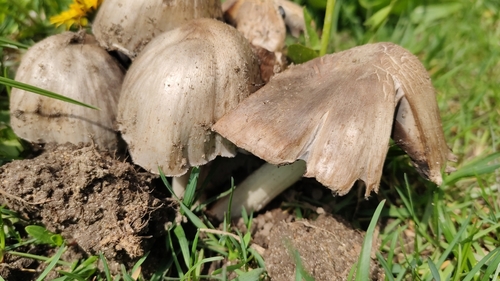
iNaturalist · cc-by-nc
(c) Марина Горбунова-Ëлкина, some rights reserved (CC BY-NC)
(c) Марина Горбунова-Ëлкина, some rights reserved (CC BY-NC)
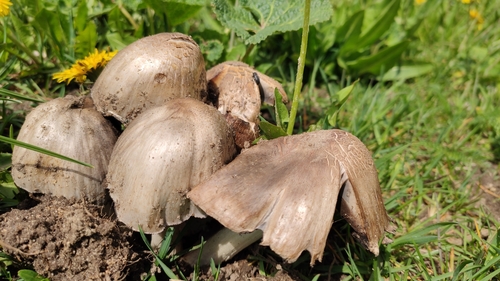
iNaturalist · cc-by-nc
(c) Марина Горбунова-Ëлкина, some rights reserved (CC BY-NC)
(c) Марина Горбунова-Ëлкина, some rights reserved (CC BY-NC)
What to Eat
Edible parts: Fungus, Mushroom
It can be eaten when young and fresh as a mushroom.
Known Hazards
Where to Find It
It is eaten among the Dani of Papua Indonesia.
Alaska, Asia, Australia, Chile, China, India, Indonesia, Kyrgyzstan, New Zealand, North America, Papua, Russia, SE Asia, South Africa, Southern Africa, South America, Turkey, Türkiye, USA,
Countries: United Arab Emirates, Afghanistan, Antigua & Barbuda, Armenia, Argentina, Australia, Azerbaijan, Barbados, Bangladesh, Bahrain, Brunei, Bolivia, Brazil, Bahamas, Bhutan, Botswana, Belize, Canada, Chile, China, Colombia, Costa Rica, Cuba, Dominica, Dominican Republic, Ecuador, Grenada, Georgia, French Guiana, Guatemala, Guyana, Honduras, Haiti, Indonesia, Israel, India, Iraq, Iran, Jamaica, Jordan, Japan, Kyrgyzstan, Cambodia, St Kitts & Nevis, North Korea, South Korea, Kuwait, Kazakhstan, Laos, Lebanon, St Lucia, Sri Lanka, Lesotho, Myanmar, Mongolia, Maldives, Malawi, Mexico, Malaysia, Mozambique, Namibia, Nicaragua, Nepal, Oman, Panama, Peru, Philippines, Pakistan, Puerto Rico, Paraguay, Qatar, Russia, Saudi Arabia, Singapore, Suriname, El Salvador, Syria, Eswatini, Thailand, Tajikistan, Timor-Leste, Turkmenistan, Turkey, Trinidad & Tobago, Taiwan, United States, Uruguay, Uzbekistan, St Vincent, Venezuela, Vietnam, Yemen, South Africa, Zambia, Zimbabwe
How to Identify
A mushroom eaten among the Dani people of Papua Indonesia.
Names & Synonyms
Ink coprinus, Inky cap, Mozhi guisan, Supa taropong
References (15)
- Boa, E. R., 2004, Wild edible fungi and their importance to people. FAO Non Wood Forest Products Booklet 17
- Burkill, I.H., 1966, A Dictionary of the Economic Products of the Malay Peninsula. Ministry of Agriculture and Cooperatives, Kuala Lumpur, Malaysia. Vol 1 (A-H) p 663
- Cribb, A.B. & J.W., 1976, Wild Food in Australia, Fontana. p 202
- Crowe, A., 1997, A Field Guide to the Native Edible Plants of New Zealand. Penguin. p 133
- Ertug, F., 2000, An Ethnobotanical Study in Central Anatolia (Turkey). Economic Botany Vol. 54. No. 2. pp. 155-182
- Fox, F. W. & Young, M. E. N., 1982, Food from the Veld. Delta Books. p 234
- Fuhrer, B., 2005, A field guide to Australian Fungi. Bloomings Books. p 43
- Guild, B., 1979, The Alaskan Mushroom Hunter's Guide. Alaska Northwest Publishing Company. p 160
- Hall, I. R., et al, 2003, Edible and Poisonous Mushrooms of the World. Timber Press. p 198
- Heyne, K., 1927 ed.
- Kaufmann, B. et al, 1999, The Great Encyclopedia of Mushrooms. Konemann. p 156
- Kaul, 1981,
- Kiple, K.F. & Ornelas, K.C., (eds), 2000, The Cambridge World History of Food. CUP p 318
- Pace, G., 1998, Mushrooms of the world. Firefly books. p 50
- Walulo, E. B., 2008, Review: Research Ethnobotany in Indonesia and the Future Perspectives. Biodiversitas Vol. 9 Nomor 1. Halaman 59-63 http://www.unsjournals.com/D/D0901/D090114.pdf


