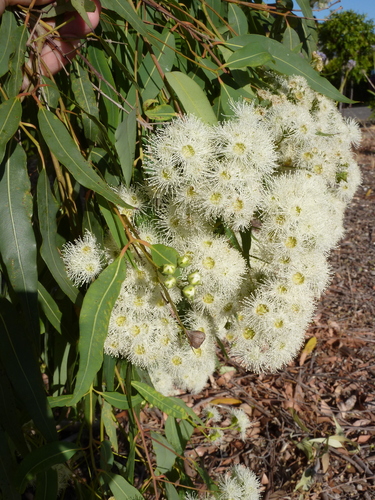
Hexachlamys edulis
(O. Berg.) Kausel & D. Legrand
Edible hexachlamys
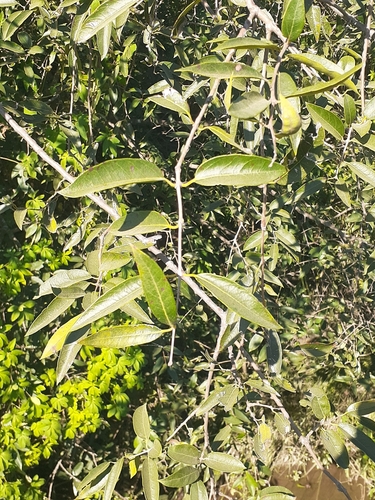
(c) joaquin, some rights reserved (CC BY-NC)
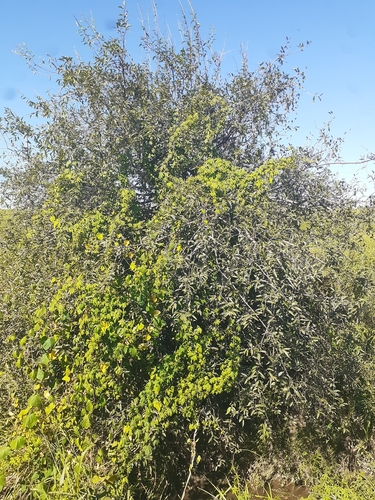
(c) joaquin, some rights reserved (CC BY-NC)
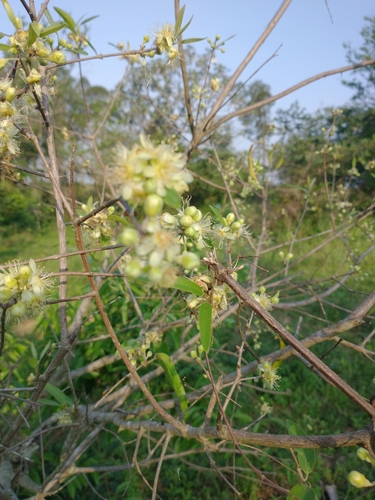
(c) Pablo Preliasco, some rights reserved (CC BY-NC)
What to Eat
Edible parts: Fruit
Fruit - raw or cooked. A succulent, aromatic pulp with a somewhat pleasant, acidic-sweet flavour. The fruit is used to make juices, jams and jellies. The fruit is considered by some people to be slightly laxative. The fruit is about 5cm in diameter.
Where to Find It
It is a tropical plant.
Argentina, Bolivia, Brazil, South America, Paraguay, Uruguay,
How to Identify
A small tree. It grows 4-6 m tall. The trunk is 20-30 cm across. The leaves are simple and opposite. The are round. The fruit are 5 cm across.
How to Grow
Plants can be grown from seed.
Propagation: Seed - best sown as soon as it is ripe in a partially shaded position in individual containers. A germination rate in excess of 60% can be expected, with the seed sprouting within 30 - 50 days. Seedlings grow away moderately quickly.
Other Uses
The wood is compact, moderately heavy, hard, durable. It is used for cabinet making, internal work, tool handles etc. A natural pioneer species within its native range, providing an edible fruit, this species is a very good choice as part of a mixed planting for re-establishing native woodland or forest gardens.
Names & Synonyms
Aguara yva'y, Cagaiteira, Cereja-de-rio-grande, Ibajai, Ivai, Ivajai, Ocorocillo, Pessego-do-mato, Pessegueiro-do-mato, Ubajai, Ubajay, Ubujai
References (5)
- Bortolotto, I. M., et al, 2018, Lista preliminar das plantas alimenticias nativas de Mato Grosso do Sul, Brasil. Iheringia, Serie Botanica, Porto Alegre, 73 (supl.):101-116
- Grandtner, M. M. & Chevrette, J., 2013, Dictionary of Trees, Volume 2: South America: Nomenclature, Taxonomy and Ecology. Academic Press p 301
- Ferns, Useful Tropical plants
- Vignale, B., et al, 2016, Selección de frutales nativos en Uruguay. 19 Horticultura Argentina 35 (87): May.-Ago. 2016
- Wiersema, J. H. & Leon, B., 2013, World Economic Plants. A Standard Reference CRC Press. 2nd Ed. p 348