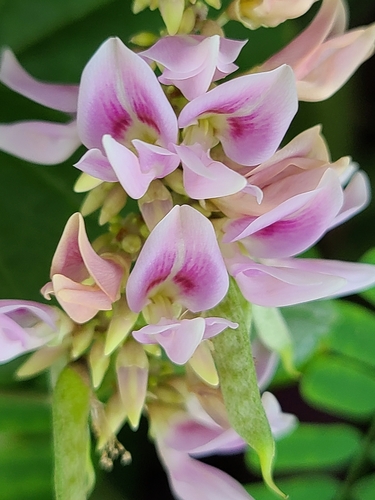
Copaifera multijuga
Hayne
Copaiba
(c) mapoflife_rapidassessments, some rights reserved (CC BY-NC)
(c) mapoflife_rapidassessments, some rights reserved (CC BY-NC)
(c) mapoflife_rapidassessments, some rights reserved (CC BY-NC)
What to Eat
The resin of Copaifera multijuga has been officially approved in the U.S. as a food additive and is used in small amounts as a flavouring agent in foods and beverages.
Where to Find It
It is a tropical plant.
Brazil, South America,
How to Identify
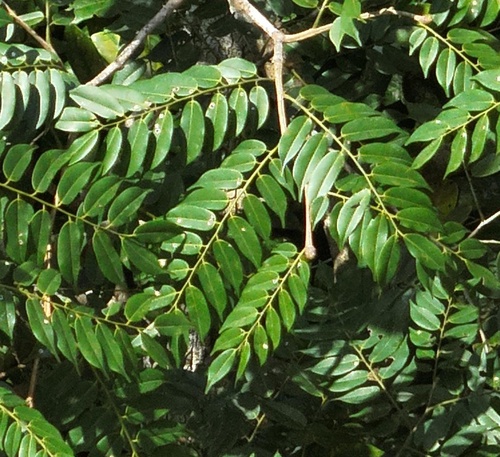
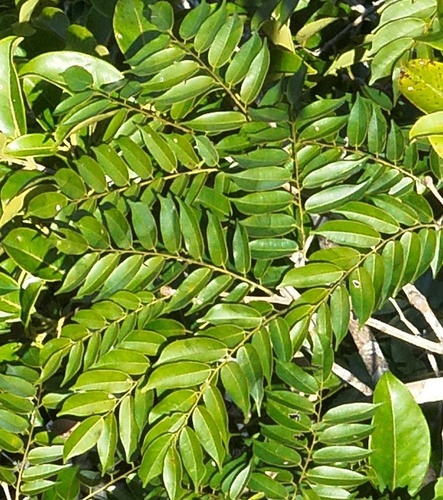
Evergreen tree reaching 20 m × 20 m at slow growth rate with nitrogen-fixing capability. Grows in light sandy and medium loamy well-drained soil including nutrient-poor conditions. Tolerates mildly acid, neutral, and mildly alkaline pH. Established in full shade to semi-shade and withstands both dry and moist soil plus drought. Hardy to UK zone 10.
How to Grow
Prefers a well-drained sandy soil and a position in shade. A single copaiba tree can provide about 40 litres of oleoresin annually, making it a sustainable rainforest resource that can be harvested without destroying the tree or the forest in which it grows. Trees can yield up to 55 litres of resin per year. The resin accumulates in cavities within the tree trunk and is harvested by tapping or drilling holes into the wood of the trunk and collecting the resin that drips out, much in the same manner as harvesting maple syrup. When tapped, the initial oily resin is clear, thin, and colourless; it thickens and darkens upon contact with air. Commercially sold resins are a thick, clear liquid, with a colour that varies from pale yellow to golden light brown.
Propagation: Grow from seed or firm softwood cuttings.
Medicinal Uses
Copaiba balsam, an oily oleoresin tapped from the trunk, has a long history of medicinal use among South American indigenous peoples, a practice later adopted by European settlers. It is particularly valued for clearing mucous from the chest and genito-urinary system. The resin has a bitter, burning, aromatic taste and acts as a stimulant herb. Both the resin and the bark are anodyne, antacid, antibacterial, antifungal, anti-inflammatory, antimicrobial, astringent, cytostatic, demulcent, digestive, disinfectant, diuretic, expectorant, mildly laxative, vermifuge, and vulnerary. The resin contains 30–90% essential oils and unusual condensed tannins; the essential oil includes alpha- and beta-caryophyllene, sesquiterpenes, resins, and terpenic acids. It supports digestion, has diuretic and expectorant effects, and combats bacterial infections. Clinical research has confirmed traditional uses, particularly as a topical wound healer and anti-inflammatory agent. The anti-inflammatory action is largely attributed to sesquiterpenes, especially caryophyllene, which also demonstrates pain-relieving properties, antifungal activity against nail fungus, and gastroprotective effects. The whole resin and two of its diterpenes — copalic acid and kaurenic acid — show significant antimicrobial activity against gram-positive bacteria. Kaurenoic acid has also shown selective antibacterial activity against gram-positive bacteria. Other constituents have demonstrated notable antitumour activity. Taken internally, it treats respiratory conditions including tuberculosis, bronchitis, and sinusitis, as well as urinary and reproductive conditions such as cystitis, kidney and bladder infections, vaginal discharge, and gonorrhoea. It is also used for stomach ulcers, tetanus, herpes, pleurisy, and haemorrhages. Applied externally, it treats insect bites, eczema, chilblains, sores, psoriasis, wounds, and bleeding. As an antiseptic gargle it is used for sore throats and tonsillitis. The resin is used in infusions or distilled for its essential oil, and should be used with care given its noted toxicity.
Other Uses
An oleoresin obtained from the tree has a delightful, coumarin-like aroma and serves as an important fixative in perfumes, particularly those with violet, woody, or spicy notes. In the United States, the resin is used as a fragrance component in perfumes and cosmetic preparations — including soaps, bubble baths, detergents, creams, and lotions — valued for its antibacterial, anti-inflammatory, and emollient properties. It is also used in varnishes and lacquers, and can be used directly from the tree as a substitute for diesel oil. Tannin is obtained from the bark. The heartwood is pink to red-brown with copper-coloured veins, clearly demarcated from a 2–3cm wide sapwood band. The texture is medium, with straight or interlocked, sometimes wavy grain. The wood is light to very light in weight, soft to moderately hard, and somewhat durable — resistant to dry wood borers but susceptible to fungi and termites. It seasons quickly with minimal risk of checking or distortion and is moderately stable to stable once dry. It can be worked with standard tools kept sharp to avoid fuzzy surfaces; nailing and screwing are often poor, but gluing is satisfactory. Uses include light carpentry, interior panelling and joinery, flooring, boxes and crates, furniture, veneer, and fibre boards.
Wikipedia
Evergreen tree reaching 20 m × 20 m at slow growth rate with nitrogen-fixing capability. Grows in light sandy and medium loamy well-drained soil including nutrient-poor conditions. Tolerates mildly acid, neutral, and mildly alkaline pH. Established in full shade to semi-shade and withstands both dry and moist soil plus drought. Hardy to UK zone 10.
Names & Synonyms
Copaifera multijug or Hayne Oil, other Names: Copahiba, Copaiba, Copaibera