Rhus parviflora
Roxb.
AnacardiaceaeFruit

iNaturalist · cc-by-sa
(c) Dinesh Valke, some rights reserved (CC BY-SA)
(c) Dinesh Valke, some rights reserved (CC BY-SA)

iNaturalist · cc-by-sa
(c) Dinesh Valke, some rights reserved (CC BY-SA)
(c) Dinesh Valke, some rights reserved (CC BY-SA)

iNaturalist · cc-by-sa
(c) Dinesh Valke, some rights reserved (CC BY-SA)
(c) Dinesh Valke, some rights reserved (CC BY-SA)
What to Eat
Edible parts: Fruit
The ripe fruit are eaten.
Where to Find It
It is a subtropical plant. It grows in open forest in the Himalayas between 800-2,000 m above sea level.
Asia, Himalayas, India, Nepal,
Countries: United Arab Emirates, Afghanistan, Armenia, Azerbaijan, Bangladesh, Bahrain, Brunei, Bhutan, China, Georgia, Indonesia, Israel, India, Iraq, Iran, Jordan, Japan, Kyrgyzstan, Cambodia, North Korea, South Korea, Kuwait, Kazakhstan, Laos, Lebanon, Sri Lanka, Myanmar, Mongolia, Maldives, Malaysia, Nepal, Oman, Philippines, Pakistan, Qatar, Saudi Arabia, Singapore, Syria, Thailand, Tajikistan, Timor-Leste, Turkmenistan, Turkey, Taiwan, Uzbekistan, Vietnam, Yemen
How to Identify
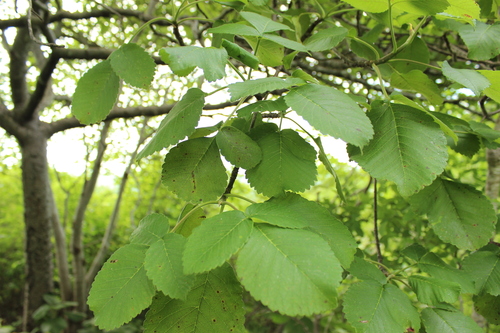
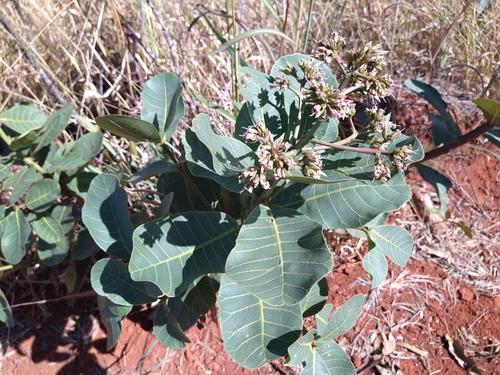
A shrub or small tree. It can lose many leaves during the year. The leaves have 3 leaflets. These are broadly oval and have teeth near the end. The flowers are yellowish-green in loose rusty groups near the ends of branches. The fruit are oval and shiny. They are pale red to brown when ripe.
How to Grow
It can be grown as a hedge.
Notes
An unresolved name in The Plant List.
Names & Synonyms
Ninawa, Satibayer, Tanga, Tungla
Searsia parviflora (Roxb.) F. A. BarkleyToxicodendron parviflorum Kuntze
References (7)
- Agarwal, R. & Chandra, V., 2019, Diversity of wild edible plants in the Mandal-Chopta forest, Uttarakhand. Journal of Medicinal Plants Studies 2019; 7(1): 89-92
- Dangol, D. R. et al, 2017, Wild Edible Plants in Nepal. Proceedings of 2nd National Workshop on CUAOGR, 2017.
- Gautam, R. S., et al, 2020, Wild Edible Fruits of Nepal. Int. J. Appl. Sci. Biotechnol. Vol 8(3): 289-304
- Gautam, R. S., et al, 2022, Ethnobotanical Review of Wild Edible Plants of Nepal. Journal of Natural History Museum Volume 32, 2021-22 p 102
- Karki, S., et al, 2017, Minor Fruits in Nepal: Utilization and Conservation Efforts. Proceedings of 2nd National Workshop on CUAPGR, 2017.
- Shah, S. K., 2014, Dietary contribution of underutilized minor crops and indigenous plants collected from uncultivated lands and forests in Nepal. in Promotion of Underutilized Indigenous Food Resources for Food Security and Nutrition in Asia and Pacific. FAO. Bangkok p 64
- Upreti, K., et al, 2010, Diversity and Distribution of Wild Edible Fruit Plants of Uttarakhand. Bioversity Potentials of the Himalaya. p 183