Cordia laevigata
Lam.
West Indian Cherry
(c) Juan Gabriel, some rights reserved (CC BY-NC), uploaded by Juan Gabriel
(c) Juan Gabriel, some rights reserved (CC BY-NC), uploaded by Juan Gabriel

(c) Roqui Bello, some rights reserved (CC BY-NC), uploaded by Roqui Bello
What to Eat
Edible parts: Fruit
Although we have seen no specific information for this species, the fruits of most Cordia species are comprised of a thin to fairly thick layer of pulpy, sweetish-tasting flesh surrounding a single seed and are more or less edible, (though some are known to cause gastric disturbances).
Where to Find It
A tropical plant. It needs an average, well drained soil. It needs full sun. It suits plant hardiness zones 10-12.
Asia, Central America, Costa Rica, Dominican Republic, Haiti, Honduras, India, Jamaica, Panama, Puerto Rico, Virgin Islands, West Indies,
How to Identify
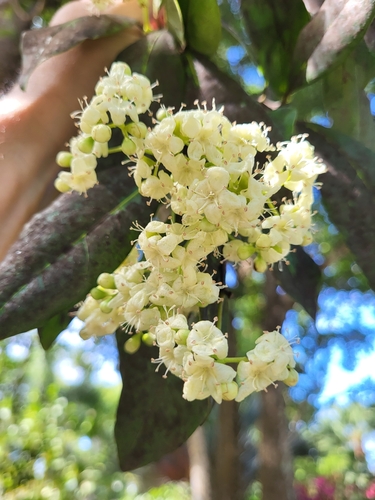
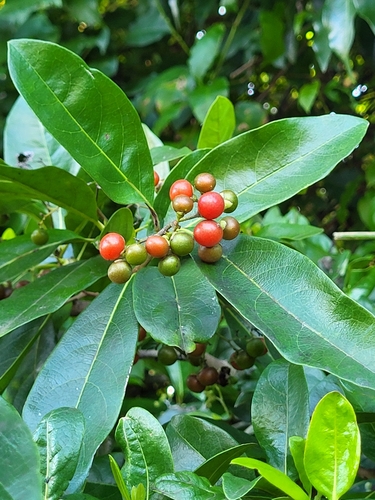
An evergreen tree. It grows 10-20 m high. The leaves are broadly oval and 10 cm long. They are glossy dark green. The flowers are small and white. There are many flowers in a cluster. The fruit is small and red. It is 0.8 cm across.
How to Grow
The plant flowers and produces fruit at irregular periods through the year, frequently producing quantities of fruit.
Other Uses
The wood is used chiefly for posts. The wood of most species in this genus is hard and, where the plants grow large enough, the wood is often harvested at least locally for use in construction etc and also for making charcoal.
Notes
There are about 300 Cordia species.
Names & Synonyms
Glossy Cordia, Red manjack
References (4)
- Ekman Herbarium records Haiti
- Fouqué, A. 1972. Espèces fruitières d'Amérique tropicale. Institut français de recherches fruitierès outre-mer (ifac) (As Cordia nitida)
- Llamas, K.A., 2003, Tropical Flowering Plants. Timber Press. p 148
- West, Bidrag Ste.-croix 275. 1793