Brosimum rubescens
Taub.
Para breadnut tree
(c) pp201936, some rights reserved (CC BY-NC)

(c) Nils Servientis - Bivouac Naturaliste, some rights reserved (CC BY-NC)

(c) Nils Servientis - Bivouac Naturaliste, some rights reserved (CC BY-NC)
What to Eat
Edible parts: Latex, Fruit
None known
Where to Find It
It is a tropical plant. It grows in wet evergreen forests at low altitudes.
Bolivia, Brazil, Central America, Colombia, Costa Rica, Panama, Peru, South America,
How to Identify
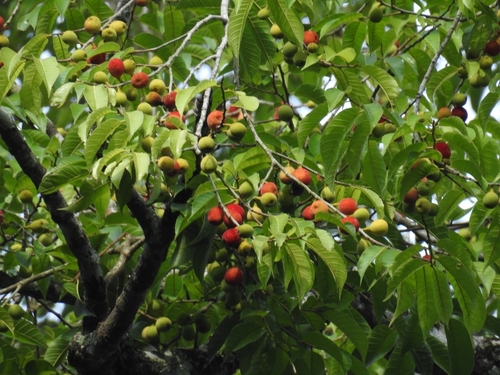
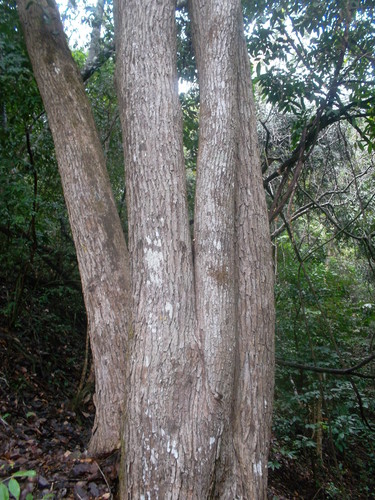
A tree. It can grow up to 40 m tall. The trunk is straight and has prop roots. It can be 50-70 cm across. The leaves are simple and alternate. They tend to be clustered towards the end of the branches. The fruit is a small berry that turns purple when ripe.
How to Grow
It can be grown from seed.
Propagation: Seed - best sown as soon as it is ripe. Sow in individual containers, placed in partial shade. Germination rates are usually low, with the seed sprouting within 40 - 60 days.
Medicinal Uses
Antitussive The latex is drunk as a medication for colds or for coughing.
Other Uses
Furniture Latex Wood Other uses rating: High (4/5). Other Uses: The heartwood is dark red, often with darker veins; it is clearly demarcated from the 4 - 20cm wide band of sapwood. The texture is fine; the grain straight or interlocked. The wood is very hard, dense, very heavy; durable, with a high resistance to wood-eating organisms. It is slow to season, with only a slight risk of checking or distortion; once dry it is stable in service. The wood has a fairly high blunting effect, stellite-tipped and tungsten carbide tools are recommended; it finishes well with a beautiful polish; nailing and screwing are good, but pre-boring is required; gluing is correct for internal purposes, but requires care because of the denseness of the wood. A very good quality wood, it is used for making high value items such as furniture, musical instruments, parquet flooring, wood ware, turned goods and fancy carpentry. Special Uses
Wikipedia
Source ↗Brosimum rubescens, the bloodwood, is a widespread species of flowering plant in the family Moraceae. It is native to Panama and wet tropical South America. A straight-trunked tree reaching 40 m (130 ft), it is typically found in lowland forests and in forest edges between rainforest and savannah. Often forming monotypic stands, it is harvested for its timber, but is assessed as Least Concern.
Notes
The latex is also used as a medicine.
Names & Synonyms
Amap-amargoso, Amao-rana, Condudu, Bloodwood catique, Brazilian red wood, Brosimum satine, Cajiman, Chimico, Conza negro, Doctoa, Doekaliballi, Guanacaste, Ibiberoebaria, Ipguayoi, Jaiveciidi, Karana, Pairi seine, Lechero, Marequende, Marima, Mirapiranga, Mui, Palisangre, Palo brasil, Sande
References (3)
- Ferns, Useful Tropical Plants
- Grandtner, M. M. & Chevrette, J., 2013, Dictionary of Trees, Volume 2: South America: Nomenclature, Taxonomy and Ecology. Academic Press p 73
- Roa, J. A. G. & Boada, D. S. G., 2018, Fundación para el Fortalecimiento de la Fruticultura y Plantas Alimenticias no Convencionales en Colombia.