Cornus iberica
G. Woronow

Royal Botanic Gardens, Kew

Royal Botanic Gardens, Kew

Royal Botanic Gardens, Kew
What to Eat
Edible parts: Fruit, Oil
The fruit can be eaten raw or cooked, though it has a bitter flavour and can have an emetic effect on the body, making it not particularly worthwhile. The fruit is about 8mm in diameter. An oil extracted from the seed is edible once refined.
Known Hazards
Where to Find It
Temperate. Melbourne Botanical Gardens.
Caucasus, Georgia,
How to Identify
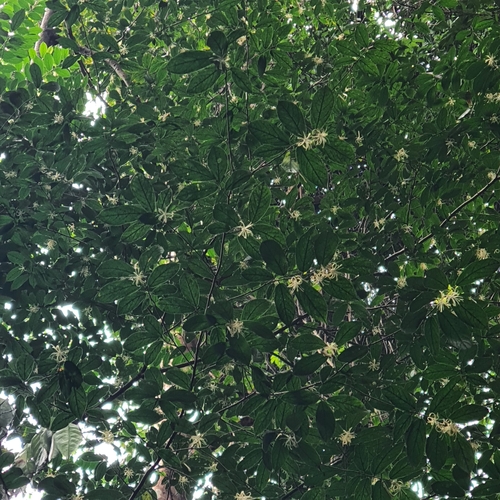
A deciduous shrub reaching 4 m tall with hermaphroditic flowers pollinated by insects. Thrives in light sandy, medium loamy, or heavy clay soils across a wide pH range from mildly acidic to mildly alkaline. Grows in semi-shade or full sun and prefers consistently moist conditions.
How to Grow
We have very little information on this species and do not know if it will be hardy in Britain, though judging by its native range it should succeed outdoors in many parts of this country. The following notes are based on the general needs of the genus. An easily grown plant, it succeeds in any soil of good or moderate fertility, ranging from acid to shallow chalk. Grows well in heavy clay soils. Succeeds in full sun or light shade. Plants in this genus are notably resistant to honey fungus.
Propagation: Seed is best sown as soon as it is ripe, either in a cold frame or an outdoor seedbed if sufficient seed is available. The seed must be separated from the fruit flesh, which contains germination inhibitors. Stored seed should be cold stratified for 3–4 months and sown as early in the year as possible. Scarification may also help, as may a period of warm stratification before the cold stratification. Germination, especially of stored seed, can be very slow, taking 18 months or more. Prick out cold-frame seedlings into individual pots once large enough to handle, grow on through their first winter under glass, and plant out in spring after the last expected frosts. Cuttings of half-ripe side shoots can be taken in July/August in a frame. Cuttings of mature wood of the current year's growth, taken with a heel if possible, can be taken in autumn in a cold frame, with a high success rate. Layering of new growth in June/July takes around 9 months to root.
Medicinal Uses
None known.
Other Uses
The seed contains 45% of a non-drying oil used in soap making and lighting. A non-drying oil is also obtained from the pericarp, which itself contains 19–35% oil, and is used for lighting. A greenish-blue dye is obtained from the fruit. The young stems are very flexible and are used in basketry. The wood is tough and hard, used for small items such as tool handles and turnery. Good quality charcoal is obtained from the wood, which also makes an excellent fuel.
Wikipedia
A deciduous shrub reaching 4 m tall with hermaphroditic flowers pollinated by insects. Thrives in light sandy, medium loamy, or heavy clay soils across a wide pH range from mildly acidic to mildly alkaline. Grows in semi-shade or full sun and prefers consistently moist conditions.
Notes
There are about 45 Cornus species.
Names & Synonyms
References (1)
- Plants for a Future database, The Field, Penpol, Lostwithiel, Cornwall, PL22 0NG, UK. http://www.scs.leeds.ac.uk/pfaf/